

For centuries, Christians have traveled to Jerusalem to kneel before the tomb of Jesus Christ in the Church of the Holy Sepulchre.
Archaeologists have spent several years digging beneath the ancient church. And what they have found is remarkably similar to what St. John described nearly 2,000 years ago.
The Gospel tells us:
“Now in the place where he was crucified there was a garden, and in the garden a new tomb where no one had ever been laid.” (John 19:41, RSV-CE)
According to archaeologists from Sapienza University of Rome, the area beneath the Holy Sepulchre was originally a stone quarry. As portions of the quarry fell out of use, some areas were filled with soil and cultivated, while tombs were cut into the rock nearby.
In a Newsweek article from August 28, 2026:
"Archaeologists found evidence of an ancient burial ground and cultivated landscape beneath Jerusalem’s Church of the Holy Sepulchre, the excavation’s leader said, potentially strengthening the site’s connection to biblical accounts of Jesus Christ’s burial."
In other words, before the magnificent church stood there, there were cultivated fields and rock-cut tombs, a landscape remarkably similar to the garden and tomb St. John describes.
Prof. Francesca Romana Stasolla, the archaeologist leading the excavations, made the connection herself in a 2025 interview with The Times of Israel:
“The Gospel mentions a green area between the Calvary and the tomb, and we identified these cultivated fields.”
Stasolla has been careful to distinguish between what archaeology can establish and what belongs to faith. But it is no doubt remarkable where all of this evidence is being found.
Christians didn't wait for modern archaeologists to tell them where to look.
The Church of the Holy Sepulchre has stood on this site since the fourth century, when Emperor Constantine built a great Christian complex around the locations already identified with Christ's Crucifixion and burial. Constantine's builders isolated the particular rock-cut tomb that was being venerated as Christ's tomb from other burials around it.
 And now, some 1,700 years later, archaeologists have been able to investigate what lies beneath the floors of that ancient church. Perhaps just as fascinating is what the excavation tells us about the generations of Christians who came before us.
“The real treasure we are revealing is the history of the people who made this site what it is by expressing their faith here,” Stasolla told The Times of Israel in April 2025.
She also made the following observation:
“Whether someone believes or not in the historicity of the Holy Sepulchre, the fact that generations of people did is objective.”
This isn't the first time archaeology has supported a tradition that Christians have held for centuries.
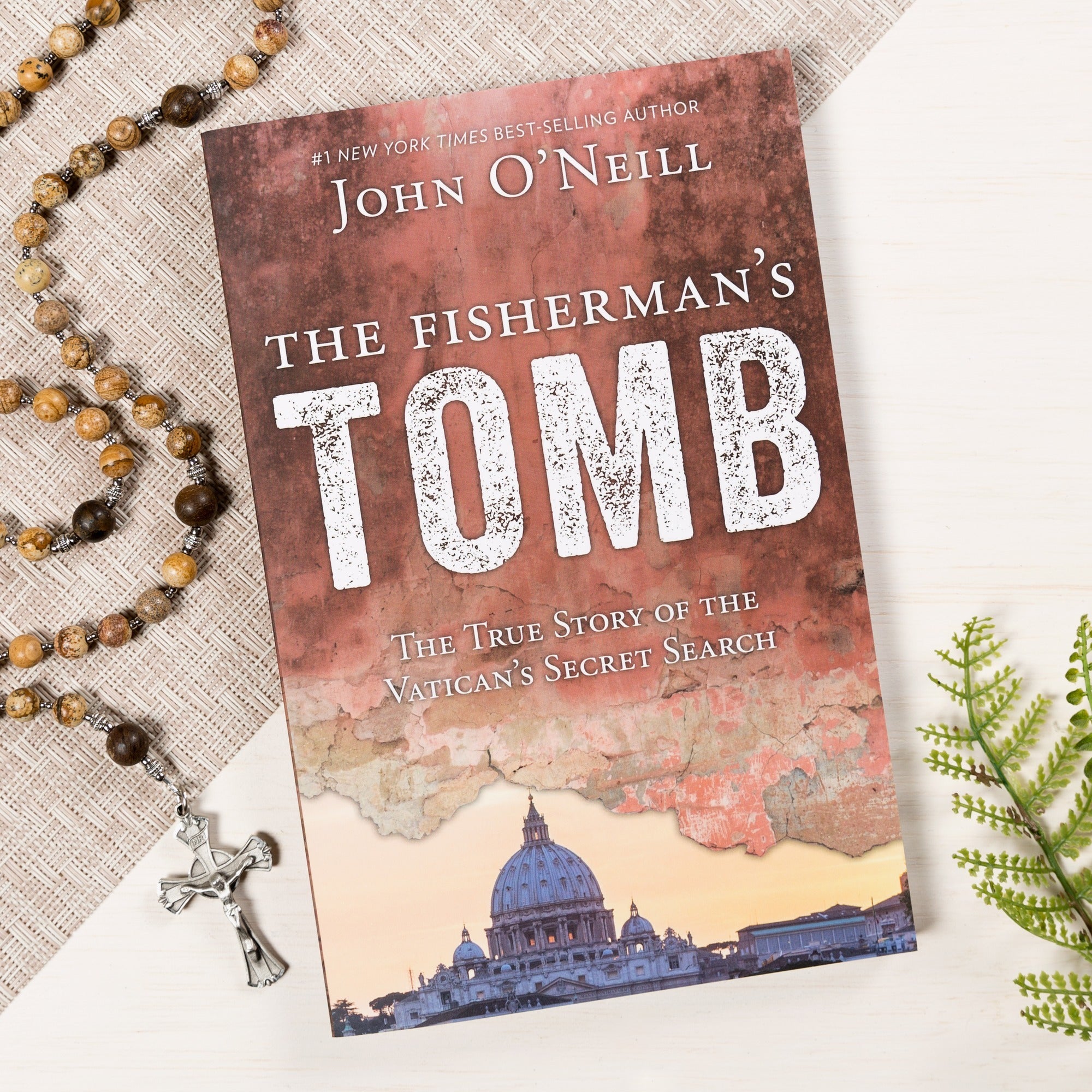
In the twentieth century, archaeologists dug beneath St. Peter's Basilica in Rome, another place where Christian tradition had preserved the memory of a burial for centuries. Beneath the church, they discovered an ancient Roman necropolis and evidence surrounding the traditional burial place of St. Peter.
Then there is St. Paul.
At the Basilica of St. Paul Outside the Walls, also in Rome, archaeologists uncovered a large marble sarcophagus beneath the papal altar, in the place ancient Christian tradition had long identified as the Apostle's tomb. When tiny fragments of bone from inside the sarcophagus were carbon-dated, they were found to belong to someone who lived in the first or second century A.D.
Pope Benedict XVI announced the results in 2009, saying that they “would seem to confirm the unanimous and undisputed tradition” that these were the mortal remains of St. Paul.
And now we have another remarkable archaeological chapter beneath the Church of the Holy Sepulchre.
For centuries, Christians have called this place holy because they believed that here Christ was crucified, laid in the tomb, and rose again. As researchers uncover the ancient landscape beneath the church, what they are finding continues to fit the place the Gospels describe.
In the end, the name says it best. This truly is holy ground. Not because of what archaeologists have found beneath it, but because of what Christians have believed happened here nearly 2,000 years ago:
Christ was laid in a tomb. And on the third day, He left it empty.
The Fisherman's Tomb: The True Story of the Vatican's Secret Search tells the extraordinary story of the secret excavations beneath St. Peter's Basilica and the search for the Apostle's remains. Discover more about this amazing story in your own copy from The Catholic Company today!