Many Catholics know that Scripture is read at Mass.
What some may not realize is just how much of the Mass comes directly from the Bible.
The most obvious examples are the readings themselves. Every Mass includes readings from Sacred Scripture, and on Sundays we also hear a Psalm sung or recited between the readings. Over the course of a few years, Catholics who attend Mass regularly hear a remarkable portion of the Bible proclaimed from the ambo.
But Scripture is also woven into the prayers, responses, and acclamations that Catholics pray throughout the liturgy.
In fact, many of the prayers and responses that Catholics know by heart come directly from the Bible. After years of attending Mass, it is easy to say these words almost automatically. Yet when we slow down and listen carefully, we discover that the liturgy is saturated with Sacred Scripture.

Consider the words we pray just before receiving Holy Communion:
"Lord, I am not worthy that you should enter under my roof, but only say the word and my soul shall be healed."
These words come from the centurion who asked Jesus to heal his servant. Christ was so impressed by the man's faith that He declared, "In no one in Israel have I found such faith" (Matthew 8:8-10).
Or think about the "Holy, Holy, Holy" that we sing or recite at every Mass. Those words echo both the prophet Isaiah's vision of heaven and the worship described in the Book of Revelation:
"Holy, holy, holy is the Lord of hosts" (Isaiah 6:3)
and
"Holy, holy, holy, is the Lord God Almighty" (Revelation 4:8).
Then there is the Agnus Dei:
"Lamb of God, you take away the sins of the world."
These words come directly from St. John the Baptist, who pointed to Jesus and proclaimed:
"Behold, the Lamb of God, who takes away the sin of the world" (John 1:29).
Even the prayer at the heart of Christian life, the Our Father, comes directly from Jesus Himself. When the disciples asked Him how they should pray, He gave them the very words Catholics continue to pray at every Mass (Matthew 6:9-13).
We see the same pattern throughout the liturgy.
When we respond, "Thanks be to God," we are echoing biblical language. When the priest says, "The peace of the Lord be with you always," he is drawing from Christ's own words to His disciples. Even the dialogue that begins the Eucharistic Prayer, "Lift up your hearts," reflects ancient biblical language of worship.
This is one reason Catholics have long referred to the Mass as the Church's greatest prayer. The Word of God is not only proclaimed during the readings and the Psalm, it is heard throughout the entire liturgy. From beginning to end, the Mass immerses us in Sacred Scripture.
The next time you attend Mass, listen carefully to the words you pray. The familiar responses may sound different when you realize that you are joining your voice to the prophets, the apostles, the saints, and even to Christ Himself.
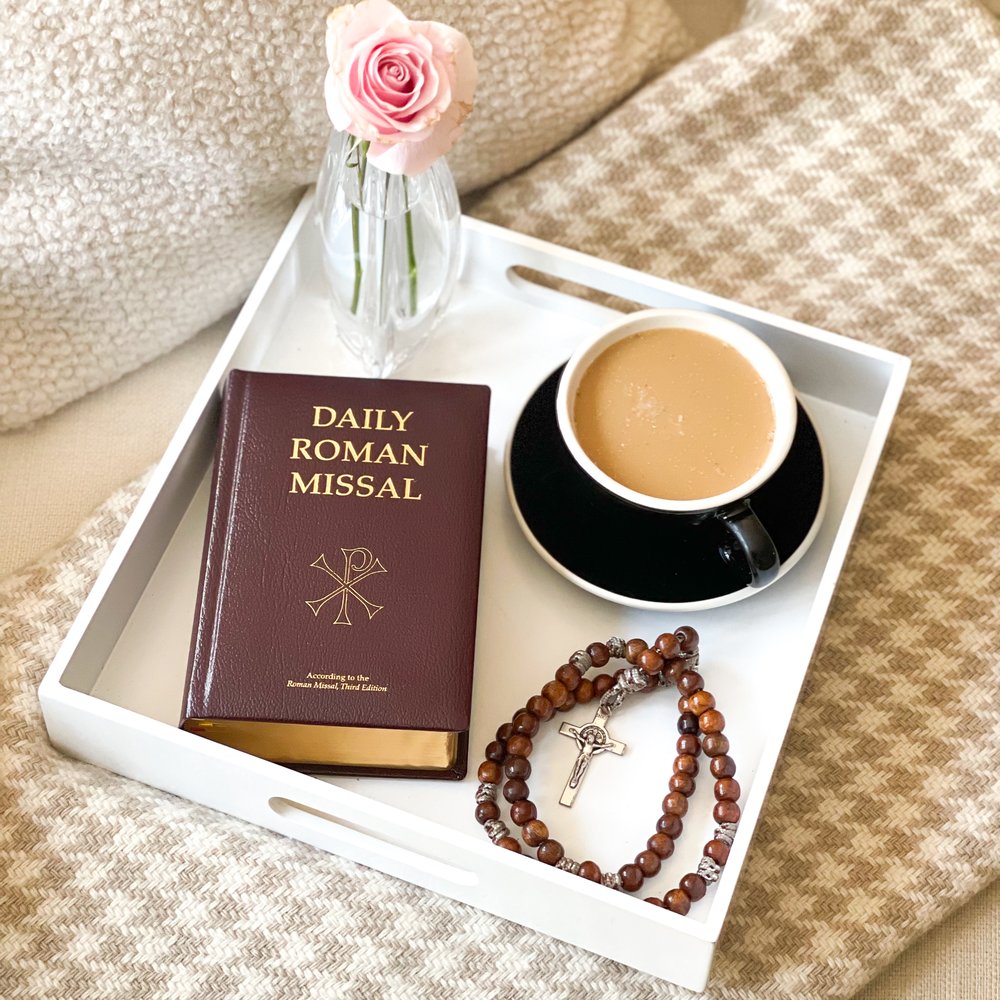
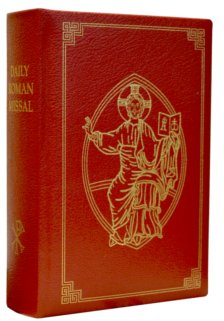
The Daily Roman Missal, Third Edition, is a wonderful companion for anyone who wants to participate more fully in the Mass and discover the rich biblical foundations of Catholic worship. The Daily Roman Missal, Third Edition, presents the liturgical year's worth of Sacred Scripture, allowing the faithful to follow and delve further into the Church's holy celebration including those for the Sunday liturgies.