






It was late at night when a group of teenage boys decided to steal pears from a neighbor's tree.
They weren't hungry, and the pears weren't even particularly good.
One of the boys later admitted that he had better pears at home. They stole them anyway.
Most of the fruit ended up being thrown to pigs.
It sounds like fairly ordinary teenage mischief, except that one of those boys grew up to become St. Augustine, one of the greatest theologians in the history of the Church. And years later, he devoted several pages of his famous Confessions to figuring out why on earth he had stolen those pears.
Augustine was about sixteen at the time. Looking back on the incident as an adult, he realized something that troubled him: he hadn't really wanted the pears.

As he wrote:
"I did not desire to enjoy what I stole, but only the theft and the sin itself."
—St. Augustine, Confessions, Book II
An insignificant teenage prank became important to Augustine.
Why do we sometimes choose something we know is wrong even when we don't particularly want the thing we're choosing?
The other thing that Augustine admitted was that he probably wouldn't have done it alone. Part of the attraction was doing it with his friends.
More than thirty years later, now a bishop, Augustine was still thinking about those pears.
He came to see that little episode as a window into the human heart. We don't always sin because we need something. Sometimes we want our own way simply because it is our way. We can be drawn by the approval of others. And sometimes we choose what is lesser while something much better is already ours.
Those stolen pears became part of Augustine's much larger exploration in the Confessions of sin, freedom, desire, and ultimately our restless search for God.
And perhaps there's a lesson for us in Augustine's willingness to look so closely at what might have seemed like a very small sin. He didn't dismiss it because it happened when he was young or because "everyone else was doing it." He asked what it revealed about his heart.
That is a good question for us, too.
Not simply, "What did I do?"
But "Why did I want to do it?"
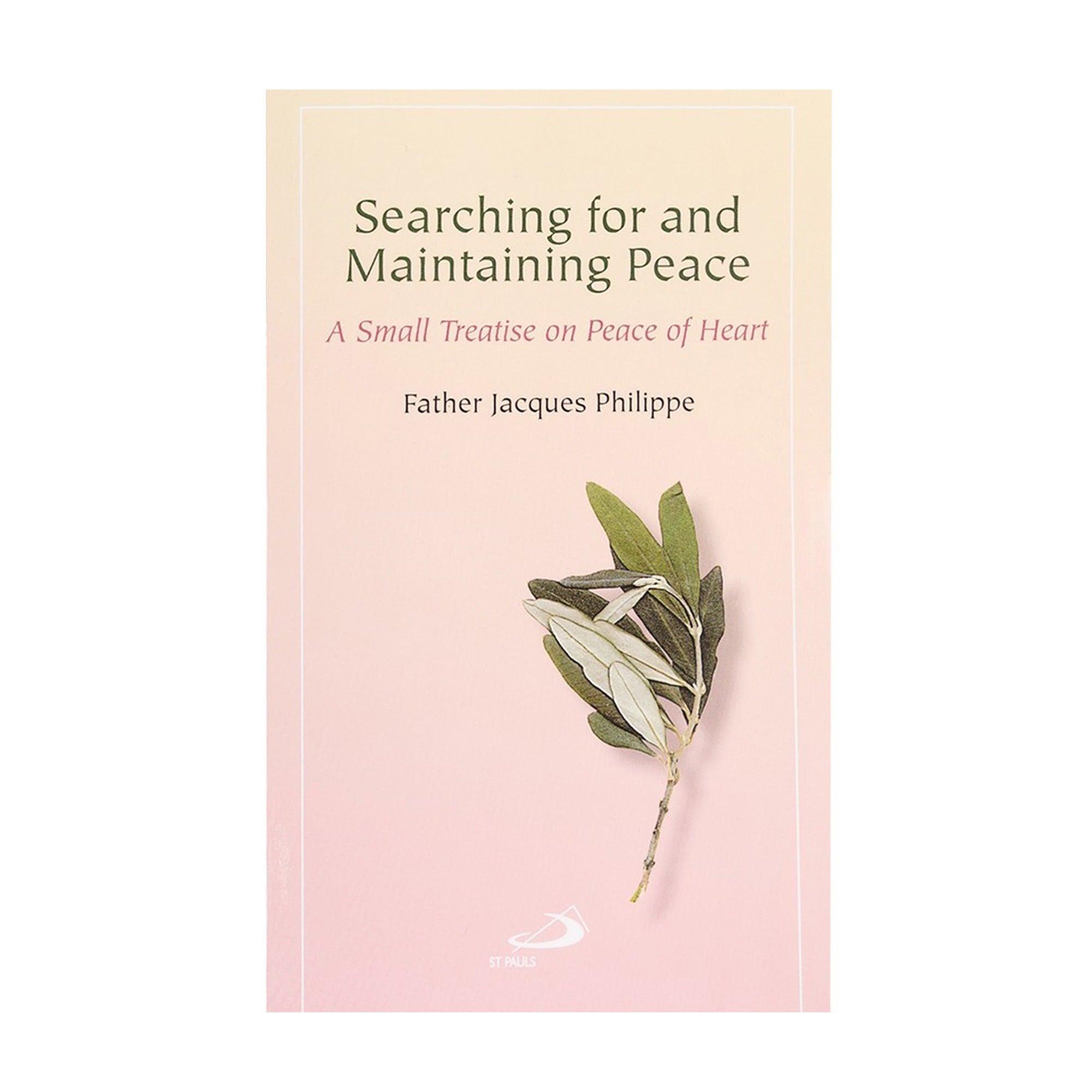
Sometimes the smaller sins can tell us quite a lot. And that anxious heart that Augustine so profoundly described hasn't changed in the years since he was alive. "Searching for and Maintaining Peace" by Father Jacques Philippe addresses the modern world's pervasive anxiety and spiritual unrest. This concise treatise guides modern readers to find peace of heart through trust in God, offering practical Gospel-based solutions for daily challenges. Find yours today at The Catholic Company!