St. Benedict is one of the most beloved saints in the Church. He is known as the father of Western monasticism, the author of the Rule of St. Benedict, and the saint whose medal is associated with protection against evil.
What many Catholics do not realize is that, according to the traditional accounts of his life, Benedict survived not one but two attempts to poison him.
Both incidents occurred because of the very thing that made him a saint: his holiness.
The stories come from The Dialogues of Pope St. Gregory the Great, written less than a century after Benedict's death.

The first attempt took place after Benedict had gained a reputation for wisdom and holiness while living as a hermit. A nearby monastery whose abbot had died asked Benedict to become their superior. He agreed, but the arrangement quickly became difficult.
The monks had grown accustomed to a much easier way of life. Benedict expected discipline, prayer, and fidelity to the monastic rule. Before long, some of the monks decided they no longer wanted him as their abbot.
Rather than ask him to leave, they chose a more sinister solution.
They poisoned his wine.
When the cup was presented to Benedict, he made the Sign of the Cross over it as was his custom before meals. According to St. Gregory, the cup immediately shattered, revealing the danger that had been hidden within it.
Realizing what had happened, Benedict did not seek revenge. Instead, he quietly left the monastery and returned to his life of prayer.
Most people would think surviving one poisoning attempt would be enough.
It was not.
Later, Benedict attracted many followers and established a growing monastic community. His holiness inspired many people, but it also stirred jealousy in others. One local priest, envious of Benedict's influence, allegedly attempted to poison him a second time.
This time the poison was hidden in a loaf of bread.
Before Benedict could eat it, he recognized the danger. According to the account, he instructed a raven that regularly visited him to carry the loaf away where no one could be harmed by it.
The raven obeyed.
Whether one focuses on the miraculous details or the larger lesson, both stories reveal something important about Benedict.
Trust in God. And that trust became one of the hallmarks of Benedictine spirituality. Stability, prayer, obedience, humility, and confidence in God's providence have shaped Christian life for more than fifteen centuries through the influence of St. Benedict and his followers.
It is also one reason why the St. Benedict Medal became associated with spiritual protection. The prayers and symbols on the medal reflect Benedict's unwavering confidence in Christ's power over evil.
The saint who survived poison twice reminds us that holiness does not make life easier. In many cases, it invites opposition. Yet Benedict's life also reminds us that God remains present in every trial and that no earthly threat is greater than His protection.
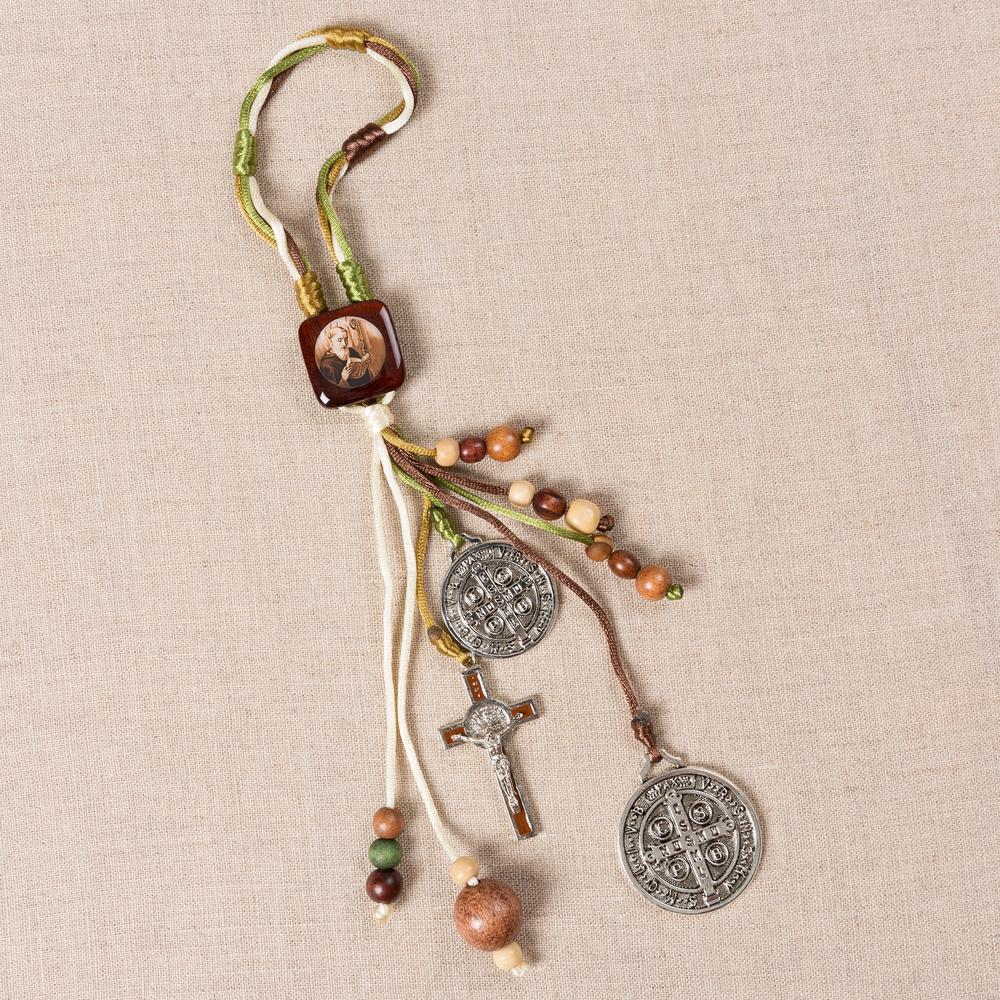
A beautiful way to honor this great saint is with a St. Benedict home blessing. Featuring the powerful symbols associated with his protection and intercession, when blessed, it serves as a reminder that every Christian home should be a place of prayer, peace, and trust in God's providence. Find yours today at The Catholic Company!