No one wants to be called a "Doubting Thomas." For centuries, his name has become shorthand for skepticism and unbelief. Yet when we look more closely at the Gospel, Thomas probably deserves some sympathy.
After all, Thomas wasn't the only Apostle struggling after the Crucifixion. Peter had denied Jesus. The other Apostles had fled. The disciples on the road to Emmaus were confused and discouraged.
Thomas was simply the voice of what many of the others were probably thinking.
Another detail often goes unnoticed: When Jesus first appeared to the Apostles on Easter Sunday, Thomas wasn't there.
Where was he?
Scripture doesn't tell us, but it does tell us something about the other Apostles. They were gathered behind locked doors "for fear of the Jews" (John 20:19). Thomas, on the other hand, had left the safety of the Upper Room.
Perhaps he had gone to find food or was running an errand for the group. There are many possibilities. Whatever the reason, he had ventured outside while the others remained hidden.
 That doesn't sound much like a coward. When Thomas returned, the other Apostles excitedly announced, "We have seen the Lord!" But Thomas struggled to believe them.
His response is familiar:
"Unless I see in his hands the print of the nails... I will not believe." (John 20:25)
Many of us know what it is like to wrestle with questions. Why does God allow suffering?Why didn't He answer this prayer? Why can't I understand what He is asking of me?
The important thing is not whether we have questions. It is what we do with them.
Thomas did not walk away from the Apostles. Eight days later, he was back with them when Jesus appeared again. And something wonderful happened.
Jesus invited Thomas to do exactly what he had asked.
"Put your finger here... Do not be faithless, but believing" (John 20:27).
Scripture says that Thomas falls to his knees and makes one of the greatest professions of faith in all of Scripture:
"My Lord and my God!" (John 20:28)
Pope St. Gregory the Great saw God's providence at work in the entire episode:
"It was not an accident; God arranged that it should happen... through the doubting disciple touching the wounds in his Master's body, our own wounds of incredulity might be healed."
— Homily 26 on the Gospels
Thomas did not remain the man who demanded proof. After encountering the risen Christ, he made one of the clearest professions of faith in all of Scripture: "My Lord and my God." The Apostle remembered for his doubts became one of the Church's greatest witnesses.
Honest questions are not the same as turning away from Christ. Thomas brought his doubts to the One who could answer them. And in doing so, he found not only the proof he sought, but the Lord he loved. And he became an example for us all.
In her wisdom, the Church remembers St. Thomas, not only as the apostle who doubted, but as the one who proclaimed with complete conviction:
"My Lord and my God."
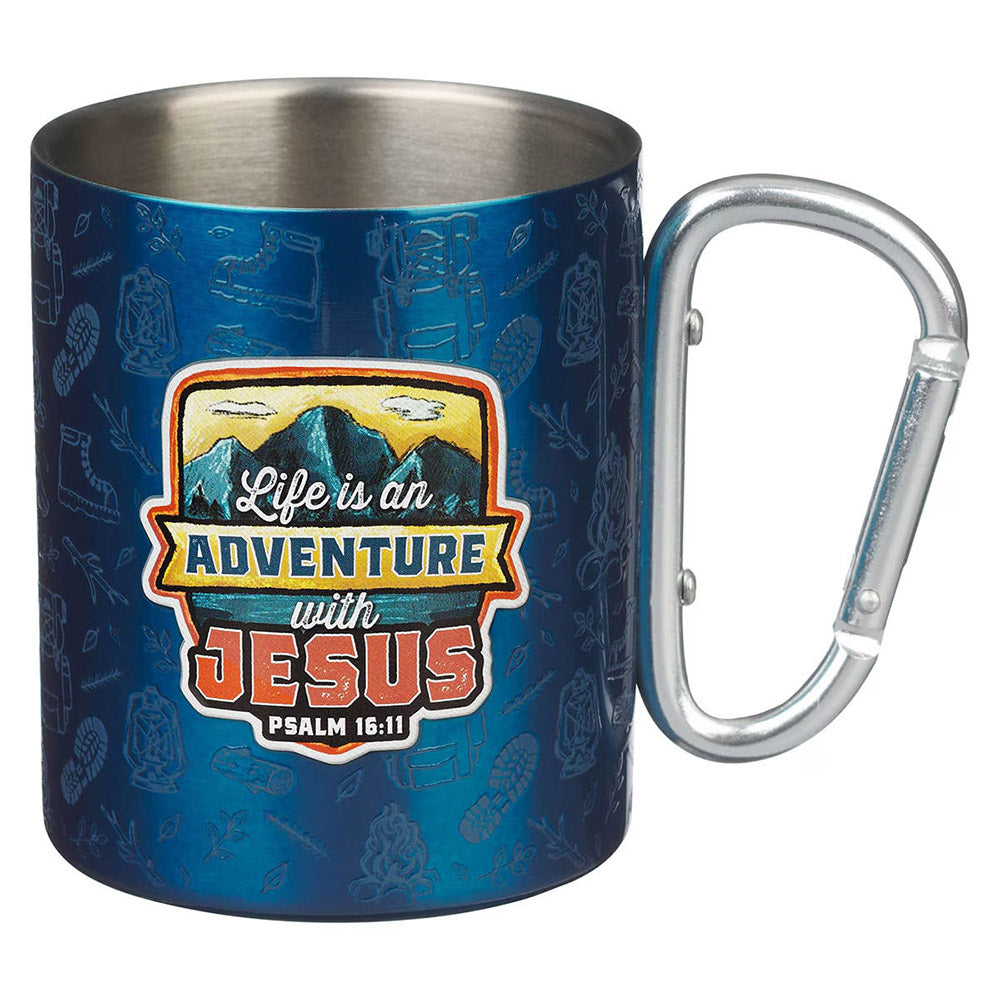
Discover our rugged Adventures with Jesus camp-style mug designed to reflect a life of faith and adventure. It makes a great gift or buy for yourself for summer fun. Discover it today at The Catholic Company!