
Ever since the apostles, the Church has been under attack from those who misunderstand, distort, or reject her teachings. Some of the accusations are new, but many are very old and return in different forms. One of the most common is the claim that Catholicism borrowed from paganism.
Someone learns that certain Catholic practices use candles, incense, holy days, images, or devotional customs, and suddenly the accusation appears: “Isn’t all of this just paganism with Christian language added on?” At first, the claim can sound unsettling, especially if a Catholic does not know how to answer it. But the argument usually depends on a misunderstanding of both history and the Catholic faith.
The Church has never taught that every custom, symbol, or date must be rejected simply because something similar existed in a pagan culture. Wherever the Gospel took root, the Church rejected what was incompatible with the faith while allowing what was good or neutral to be purified, given new meaning, and directed toward Christ.
 Candles, feasts, sacred art, processions, and beautiful churches are not “pagan” because pagans also used material things in worship. They become Christian when they are purified, ordered toward Christ, and used to proclaim the truth of the Gospel.
This is one reason it is important to know Catholic history. When we do not know the real story, old myths can sound convincing.
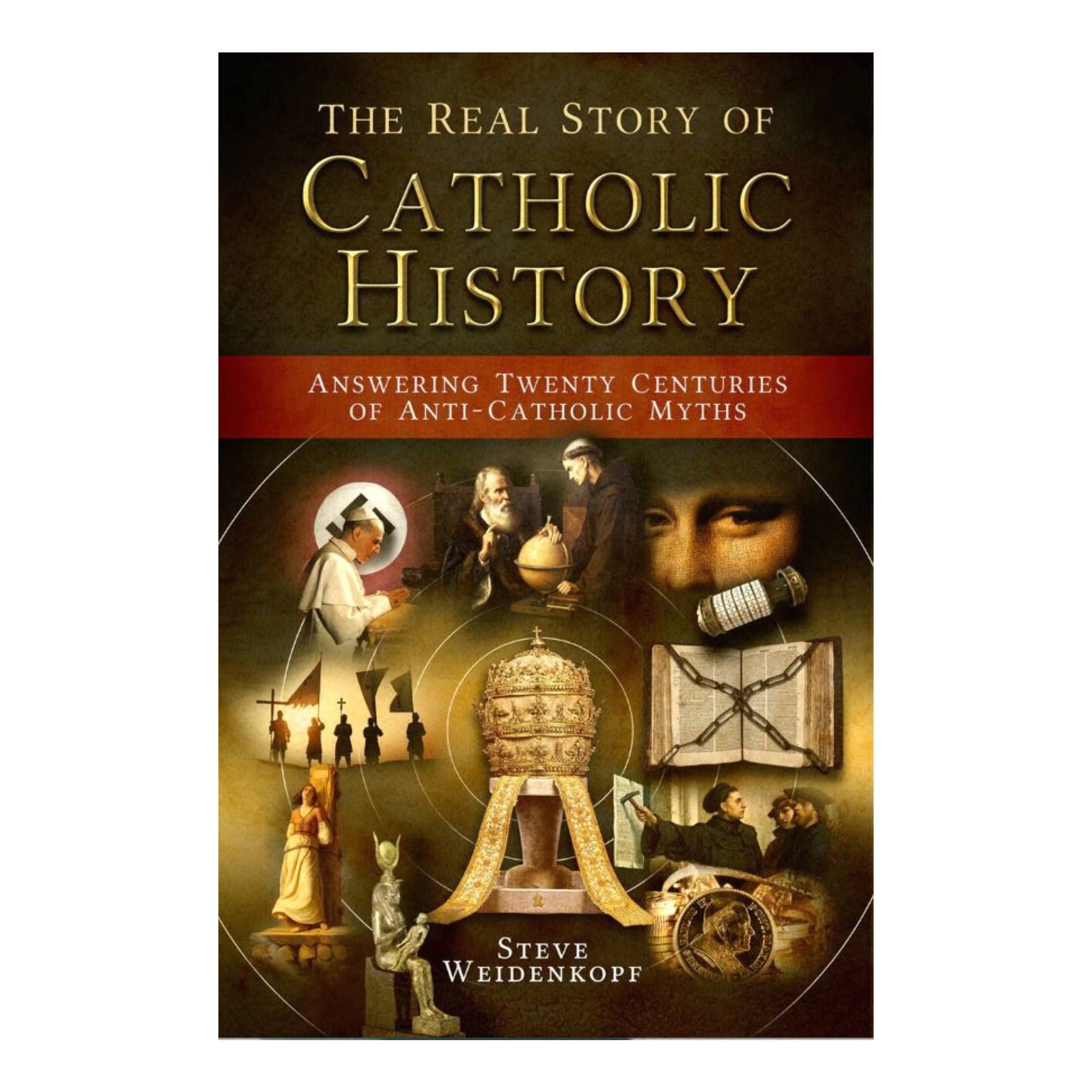
In The Real Story of Catholic History, Steve Weidenkopf takes on more than fifty common anti-Catholic myths, including claims about Catholicism’s supposedly pagan origins, Galileo, the Inquisition, and other historical accusations that are often repeated but rarely examined honestly.
It is not enough for Catholics to know that these claims are false. We also need to know how to answer them with clarity and charity. Discover your copy of The Real Story of Catholic History at The Catholic Company to help you do just that!