
Most saints are remembered on the day of their death, the day they entered eternal life. But St. John the Baptist is different. The Church celebrates both his martyrdom and his birth.
On June 24, Catholics throughout the world celebrate the Nativity of St. John the Baptist, a feast that falls exactly six months before Christmas. This is no coincidence. Scripture tells us that Elizabeth was six months pregnant with John when the Angel Gabriel announced to Mary that she would become the Mother of God.
John's entire life pointed toward Jesus.
Even before he was born, he recognized the presence of Christ. When Mary visited Elizabeth, carrying the Savior in her womb, the infant John leapt for joy.
Years later, John would become the great prophet who prepared the way of the Lord. Clothed in camel's hair and living in the wilderness, he called people to repentance and baptized them in the Jordan River.
When Jesus came to him for baptism, John recognized that his own mission was coming to completion. His famous words summarize not only his ministry, but his entire life:
"He must increase, but I must decrease." (John 3:30)
That message is reflected in the timing of his feast.
The Nativity of St. John the Baptist occurs just after the summer solstice, when the days are longest. From that point forward, the daylight gradually decreases. Six months later comes Christmas, shortly after the winter solstice, when the daylight begins to increase again.
For centuries, Christians have seen this as a beautiful reflection of John's words. As the light of the sun begins to diminish, John decreases. As the days begin to grow longer after Christ's birth, the Light of the World increases.

This connection may also explain one of the most beloved customs associated with the feast: the St. John's Eve bonfire.
Across Europe, particularly in Spain and other Catholic countries, families and communities traditionally gathered on the evening of June 23 (or on June 24) around large bonfires to celebrate the feast. They prayed together, shared food, sang songs, and asked for St. John's intercession for their homes, families, crops, and communities.
The tradition continues today and may be one of the simplest ways to celebrate the feast. And who doesn't love a campfire?
A backyard bonfire, campfire, or even a gathering around an outdoor fire pit provides an opportunity to slow down, spend time with family and friends, and reflect on the example of the saint who prepared the way for Christ.
And it is fitting to honor St. John the Baptist beside a fire. He was the "voice crying out in the wilderness." He lived simply, spoke boldly, and directed attention away from himself and toward Jesus. In a culture that often encourages self-promotion, St. John offers a very different example. His greatness came from his willingness to step aside so that Christ could be seen more clearly.
We are called to do the same...not to draw attention to ourselves. But to point others toward Christ.
St. John the Baptist spent his life preparing people to receive Christ. Yet his message pointed beyond repentance alone. Referring to Jesus, he proclaimed, "I have baptized you with water; he will baptize you with the Holy Spirit" (Mark 1:8). John's mission was to prepare hearts for the coming of the Savior and the outpouring of the Holy Spirit.
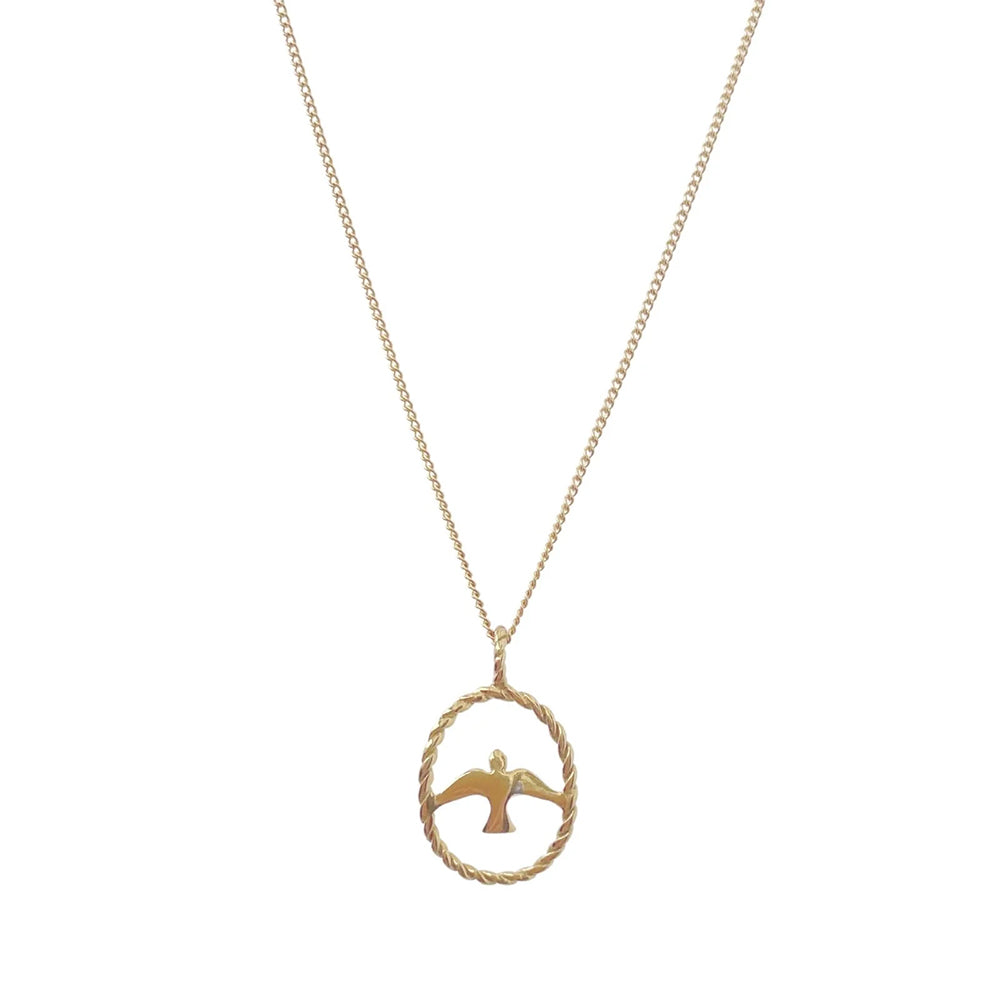
Our Delicate Holy Spirit Cutout Necklace is a beautiful reminder of that promise. Featuring the dove, the traditional symbol of the Holy Spirit, it serves as a daily reminder to remain open to God's grace and to the work of the Holy Spirit in our lives—just as St. John prepared the way for others to receive Him. Find yours today at The Catholic Company!