




When Pope Leo XIV announced that his first encyclical would focus on artificial intelligence, many people were surprised.
At first glance, AI can seem like a topic better suited for Silicon Valley than the Vatican. Yet the more one reflects on it, the more obvious it becomes why the Church is paying close attention.
Artificial intelligence is no longer some distant or futuristic concept. It is already shaping the way we communicate, work, learn, search for information, and even think. Many people now interact with AI every day without fully realizing it. And while the technology itself is advancing rapidly, Pope Leo’s new encyclical, Magnifica Humanitas (“Magnificent Humanity”), asks a deeper question beneath all the excitement:
What does it mean to remain truly human in a technological age?
That question runs through the entire document.
The pope does not approach technology with fear or rejection. In fact, the encyclical acknowledges the remarkable achievements of science and technological development. The Church has always valued human creativity and innovation. But Pope Leo also warns that technology cannot become detached from moral truth or from an authentic understanding of the human person.

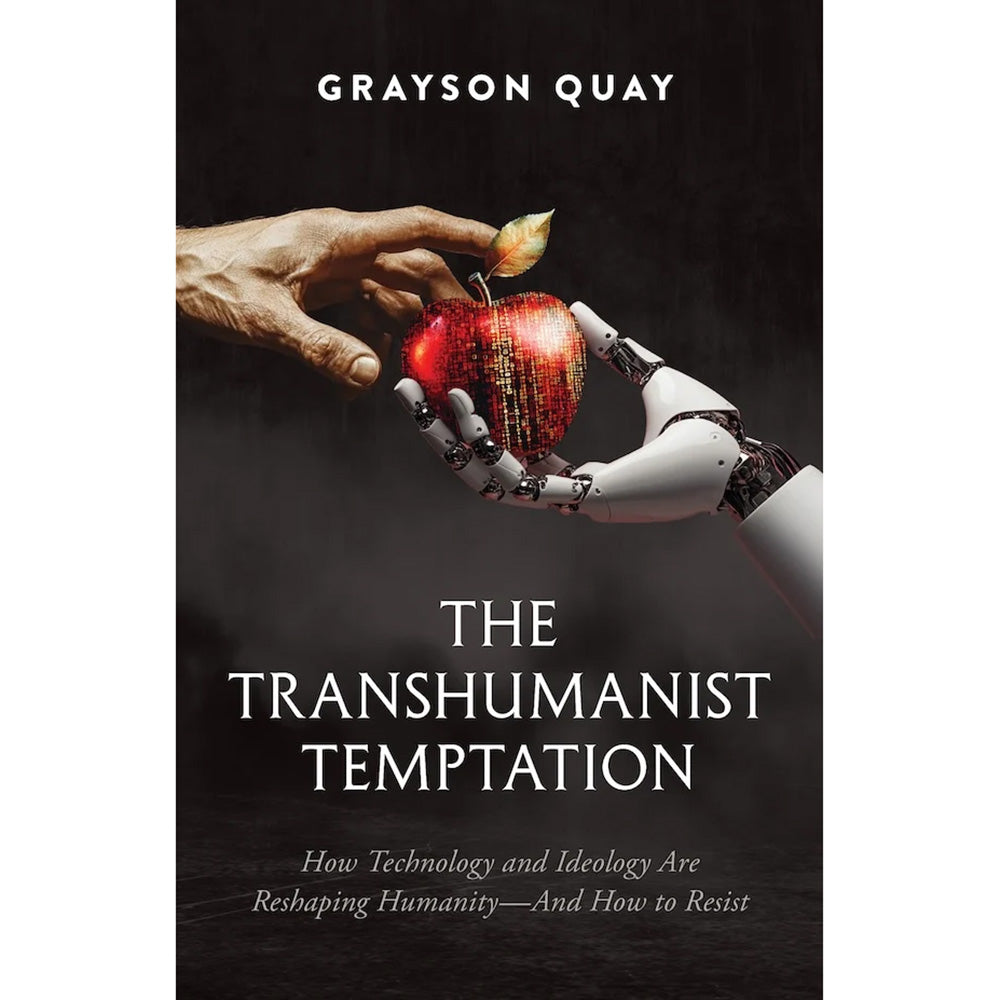
One of the most powerful sections of the encyclical addresses transhumanism and the growing idea that humanity itself should be “enhanced” or eventually surpassed through technology. The pope notes that some modern visions of progress no longer see human limitations as part of our humanity, but merely as flaws to eliminate.
Line 118 of the encyclical states:
“Our relationship with life seems to be in crisis today. Everything that appears as a ‘limit’ — incapacity, illness, old age, suffering, vulnerability — tends to be seen primarily as a defect to be corrected, rather than as a reality through which our humanity matures and opens itself to relationship.”
...Humanity flourishes not despite limitations, but often through them,” Pope Leo XIV writes.
Modern technology constantly promises optimization, efficiency, enhancement, and speed, yet the encyclical repeatedly returns to the distinction between information and wisdom.
Artificial intelligence can gather enormous amounts of information. It can synthesize data faster than any human being. But it cannot love. It cannot pray. It cannot suffer. It cannot enter into relationship. And because of that, it cannot fully understand the meaning of human life.
Pope Leo writes that a society obsessed only with optimization risks losing sight of the dignity of the vulnerable, the elderly, the weak, and even the unborn. If humanity begins to see itself merely as something to improve or redesign, then some lives inevitably begin to appear less valuable than others.
We are not machines to be perfected. We are souls created in the image and likeness of God.
Perhaps the most hopeful part of the encyclical is that it does not present the answer as technological retreat or panic. Instead, Pope Leo XIV calls for a deeper Christian humanism rooted in relationship, truth, moral responsibility, and openness to God’s grace. He reminds readers that the true “more than human” is not found in merging with machines, but in becoming more fully alive through communion with God.
Artificial intelligence is forcing humanity to ask questions that are not merely technological, but spiritual. Questions about consciousness, dignity, freedom, truth, work, suffering, and what it means to be human.
And those are precisely the kinds of questions the Church has always been called to address.
Magnifica Humanitas arrives the day after the Church celebrates the feast of Pentecost. At a moment when the world is increasingly fascinated by artificial intelligence, Pope Leo’s first encyclical reminds us of something far more important: humanity does not need a new machine spirit. It needs the Holy Spirit.
Artificial intelligence may continue to advance rapidly, but no technology can replace grace, conscience, love, sacrifice, prayer, or the transforming work of the Holy Spirit within the human soul.
Perhaps that is why Pentecost is such a fitting backdrop for this encyclical. The answer to the confusion of every age has never been found merely in greater power or greater efficiency, but in openness to the Spirit of God, who renews hearts and leads us into truth.
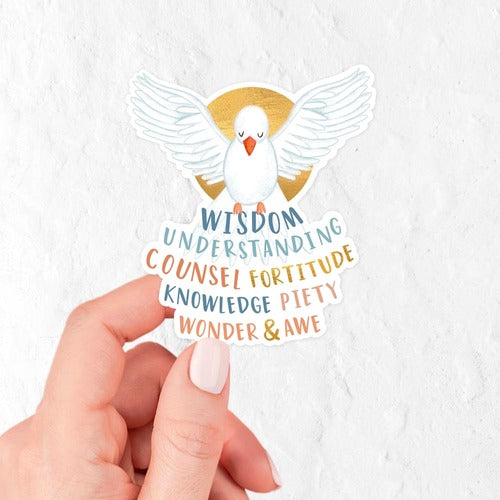
Find this Teach Me Holy Spirit sticker and share your faith with others, confident that the Holy Spirit continues to guide us in our world and in each person. Teach Me Holy Spirit Confirmation Vinyl Sticker.
Discover yours today at The Catholic Company!