

Silence does not come naturally to me. My brain is frequently spinning plates. I am inclined to "talk to think." Retreating interiorly in silence and prayer takes focus and discipline for us extroverts.
My husband has been a great (and sometimes maddening) inspiration. An introvert through and through, he slips into prayer or quiet anywhere, anytime, and with astonishing speed. He closes his eyes and it seems he's already there. During the Mass, when our children were young, they could be crawling under the pew chasing toys, Cheerios, or adventures, and if his eyes were closed in silent meditation, he rarely noticed.
There he knelt, peaceful and serene, while I tugged little limbs out from under the pew in front of us, hushed a flailing toddler, or broke up "she's in my space" arguments as quickly and quietly as possible. One Sunday, I decided to worry less about what the kids were doing, and seize my quiet time as my husband did. After all, why should he have all the fun?
[[52009, 7712]]
Moments later, I noticed the youngest, busiest, and most unruly of our children as his head popped up two rows in front of us. Having somehow scooted beneath the pews undetected, he was now sitting with an unknown family!
I did not think I had much time for sacred silence back then, but I didn't consistently make time either. It doesn't happen automatically for most of us. It's up to us to seize and make use of silent time with and for God. Why do it, and how do we begin?
Here are 5 reasons to seek and seize silence in the spiritual life, and some tips on how to begin:

1. As St. John of the Cross said, "Silence is God's first language."
In order to hear and understand God, we must learn the language of silence, and practice it often, even if only for short intervals throughout our days. We do not need to enter a monastery like John or live an heremetical life. But we need to stop moving (and talking), step out of the everyday noise, and be still in order to learn God's "first language."
When we quiet ourselves, we open our hearts to a peace and freedom that allows God to speak, act, and work in us. Where and when do we expect Him to speak - and how will we hear Him - if we fill our entire day with the clamor and commotion of the world?
[[in-christ-white-hand-warmer-mug, our-lady-of-mount-carmel-salted-caramel-coffee]]
Each Lent and Advent, I try to fast from unnecessary "noise." That includes talking, listening to recorded media, calling friends and loved ones just to chat. I check email only once a day and never on weekends. While these things can be edifying and even important depending on the situation, they are still noises that inhibit silence and can stunt development of the interior life.
I work and have a family, so discretionary time is a premium. When I don't expend it on those distractions, there is much more of it for sitting with Him. It is easier to be still. I notice during these fasting seasons that I am more at peace and I have more time to devote to prayer.
[[5118, aqua-rose-bead-rosary]]
Even in our prayer lives, we can forget that prayer is a dialogue. Our own list of needs can mute His voice if we do not leave space for Him. When we keep sacred silence, we can practice mental prayer that invites God to enter into the quiet spaces and speak to us.

2. God asked us to do it, & modeled it for us.
Throughout Sacred Scripture, we read how keeping silence is an ancient and important aspect of living in relationship with God. From Creation to Revelation, He has spoken to His children in silence. He has met and directed them there, encouraged silent moments, and withdrawn in order to seek silence and prayer for Himself.
Then why is daily silence so challenging or uncomfortable for some of us?
So many distractions infiltrate our modern lives. It has become harder to quiet ourselves. With just one small instrument - a cell phone - we can go anywhere and do many things, at any hour of the day or night.
As we flood our minds with ceaseless stimuli, God awaits, and our days are filled with missed opportunities to know Him, know ourselves better, and learn to see Him working in our lives and our world.
[[sleeping-madonna-and-child-statue, fiat-scented-candle]]
Discomfort can also originate from within. When we finally silence ourselves, we hear the echoes of our hurts and fears. They whisper or shout at us when we are no longer distracted.
Unresolved wounds can prevent us from quieting ourselves and drawing near to Him. For reasons we may not even understand, we don't want to be "alone with ourselves." But when we are silent, we can more easily identify and acknowledge whatever is stealing our peace, in order to pursue healing.
Maybe we see silence as a luxury, and ourselves as too busy to deserve it. It may be stressful to step away, because we worry we will not finish all we need to do. We forget that He is the Lord of Time. He will stretch it for us if we ask Him, make the effort, and consecrate our time to Him.
[[be-healed-a-guide-to-encountering-the-powerful-love-of-jesus-in-your-life, rhythms-for-life-planner-and-journal-90-days-to-peace-and-purpose]]

3. It grounds us in what is important & eternal.
In silence, we step away from our external lives - the noise and demands of the temporal world. When we quiet that world in favor of the eternal one, we can let go of cares in the here and now, offer that up to the Lord, and rest in His presence. It's not instantaneous. It takes practice and persistence.
When we sit with Him as we are in the moment, we root ourselves in what is true and everlasting. Many aspects of daily life require our "peak performance." In silence, we can simply be, with the One Whom we know loves us, and made us for Himself.
Imagine His joy when He can renew and reinvigorate us in the space we have made for Him. There we receive and feel His love. What could be more restorative to the soul?
[[the-holy-family-at-rest-framed-print-13-25-x-15-5, surrender-novena-and-sacred-heart-chaplet-set]]
4. It's the path to solitude.
Silence and solitude are not the same, but silence promotes solitude and helps us achieve it, especially when we first begin to seek God in prayer. Solitude is an inward attentiveness - more a state of heart and mind than a physical state of quiet.
It's an intentional detachment from people and external stimuli. In solitude we come to know God intimately and feel His unique love for us.
Spiritually mature souls and those who are more naturally inclined can find solitude anywhere. They are able to shut out exterior stimuli and retreat interiorly. But most people can't enter into solitude on a crowded subway.
For the spiritually mature, solitude of heart is a sustainable state. It should be something we aspire to on our path to knowing and loving God. Intentional silence helps us disengage from things that fragment our attention and prevent our entering into solitude, where we commune with Him.
[[13857, olive-wood-relic-cross]]

5. It connects us & brings graces to our world.
Practicing silence nourishes love of neighbor. As sure as there is good in our world today, there is depravity and woundedness on a grand scale. We see an ever-growing distrust and animosity building among us, and driving a wedge between us.
St. Teresa of Avila was a mystic whose feet were as firmly planted on the ground as any saint in our history. She wrote to her Carmelite nuns, "This is the reason for prayer, my daughters, the purpose of this spiritual marriage: the birth always of good works, good works."
Remaining with and in God, in sacred silence, fortifies us and feeds love of neighbor. As we continually enter into God within ourselves, we cannot help but love what He loves, and to want His will.
[[st-teresa-of-avila-parchment-print-8x10, do-small-things-mother-teresa-t-shirt]]
That mutual abiding - We in God and God in us - creates the desire and the means to bear fruit in the form of love (and works) for the kingdom. Is it so far-fetched to think that by finding time for silence to be with the Lord we can bring healing graces upon our broken world?
Not at all. We are all connected by His designs, so together we can build His kingdom. As we seek God, and He speaks to us, our love and awareness of Him grows. So does our desire to please Him. We become conformed to Him.
A heart conformed to God, or at least aspiring to that end - seeks peace and love with others, not discord. That is an important lesson in our times.

How & Where to Begin
Silence and its companion Solitude are disciplines. They take effort, and for some of us, hard work. Easier said than done, right?
Time for union with God in silence does not look the same for everyone. But it starts the same way for all of us: we have to make room for it.
- Start with small moments of pause in your day, invoking God and telling Him you are doing this for Him. Keep it doable so you stick with it.
- Try scheduling silent time so it becomes habit. Get up a few minutes earlier in the morning and start your day in sacred silence. Pull away at lunchtime or any time during your day where you can create a natural pause.
- Find a quiet and comfortable place to rest in Him. It does not have to happen in a church. It can happen on a walk, on a park bench, on the beach, or in your favorite chair. As long as you can be fully present to Him, it's the perfect spot.
- Begin with five minutes and work your way up. You can begin by asking Him to stretch your time that day so that you can spend this time with Him unhurried and truly present.
Through silence, we return to our heavenly origin, where there is nothing but calm, peace, repose, silent contemplation, and adoration of the radiant face of God.
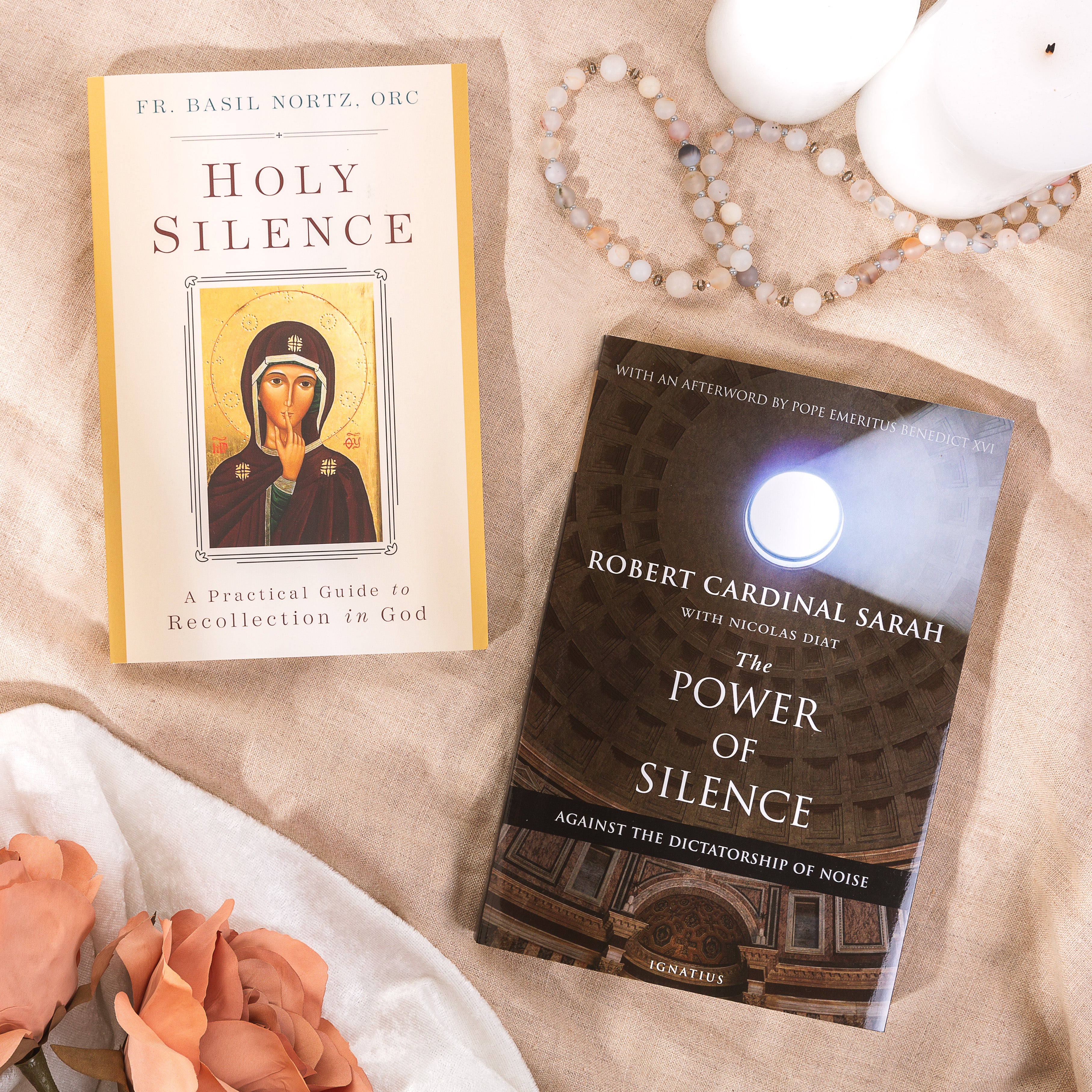
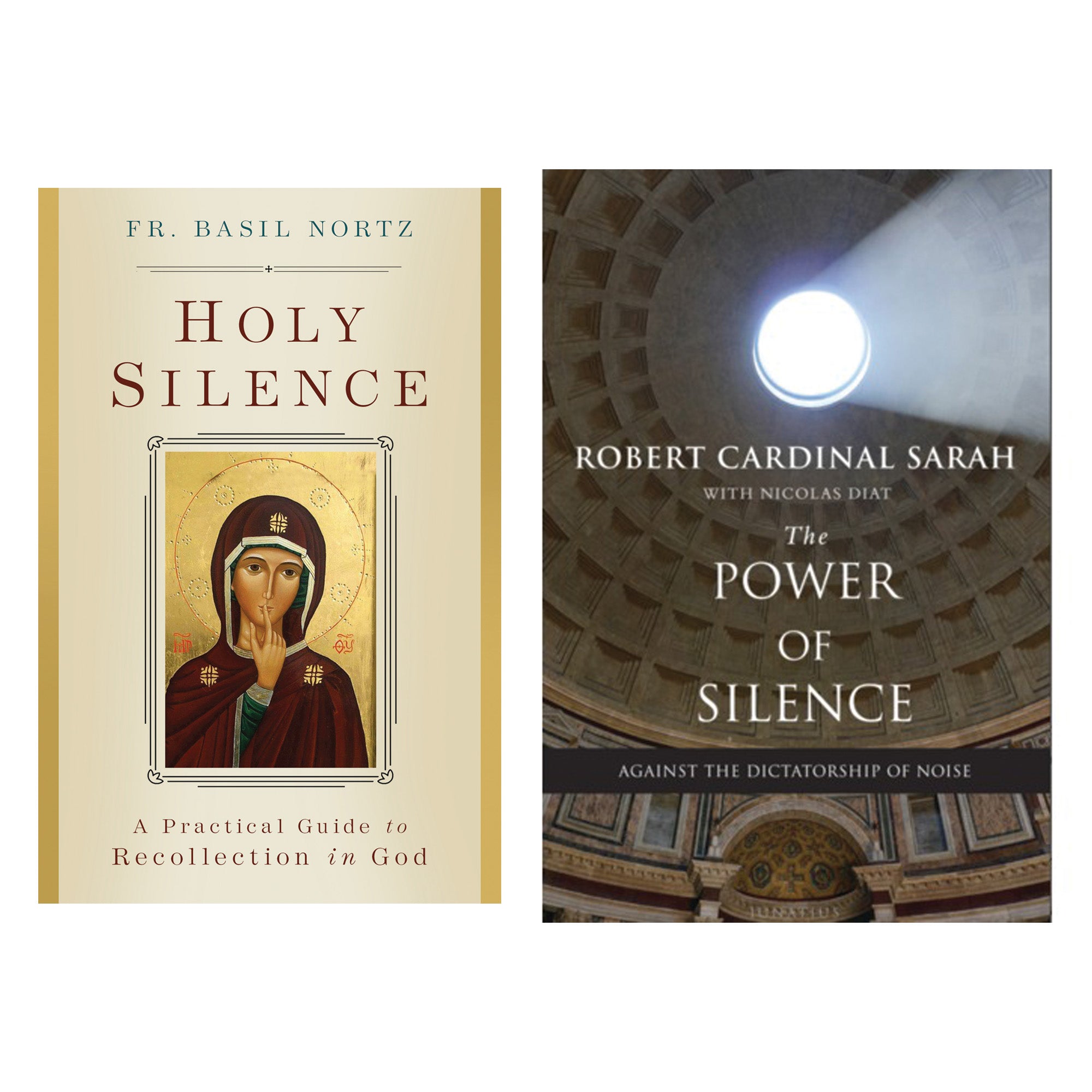
- Cardinal Robert Sarah in The Power of Silence Against the Dictatorship of Noise
[[52-weeks-of-gratitude-journal-a-one-year-journal-to-reflect-pray-and-record-thankfulness, st-therese-of-lisieux-meditations-with-the-little-flower]]
- Take in your surroundings. Do you hear the birds? See flowers blooming? Are you safe and comfortable in your home? Are you waiting for a loved one in a hospital waiting room? What are you thankful for there? Tell Him. Then simply sit with Him.
- You can read a bible verse, meditating on its meaning and how it applies to you. You can listen to the Mass readings and a reflection for the day. There are many guided journals and prayer apps to help you. You can pray the rosary then sit silently afterward. To keep it simple, you can just sit quietly, breathing in God and resting in His love for you.
- Whether it's reflection, meditation, prayer, journaling, reading, or self-examination, do what resonates for you in the moment. But make it a priority every day, and don't let anything interrupt it. Think of it as choosing Him over everything else (that He has given you) and the noises of the world, for those few minutes of sacred silence.
[[50808, 53013, the-holy-eucharist-candle-tin]]
The Fruits of Sacred Silence
Keeping sacred silence may not feel natural at first, and it may not be easy to recollect yourself every day. The goal is to form a habit over time, entering naturally into silence and prayer, achieving solitude of heart and greater union with God as you begin enjoying your time together in longer intervals.
Sacred silence will draw you closer to God and strengthen your ability to hear Him and see Him acting in your life and in the world. It is a precious source of new insights about God, yourself, others, and the world around you. It is refreshment and rest in Him that helps us physically, mentally, and spiritually.
Practicing silence will help you discern important choices more carefully, grow in self-control and discipline, and orient your behaviors toward the will of God and whatever promotes that in our world. It will also bring you peace.
Vital to the health of the soul, silence rejuvenates and strengthens us. It creates the space for us to be fully present to God, to ourselves, and to others, by training us gently to incline our hearts in these directions. It is a wellspring in the spiritual life that allows us to discover - or rediscover - the depths of our own souls and the depths of God's love.
[[14567, sleeping-st-joseph-statue-8-25]]