There are some prayers we whisper almost reluctantly. They are usually the ones we have been praying the longest. Situations that seem too tangled to heal, relationships too fractured to repair, or grief that feels too heavy to continue carrying.
At some point, many people quietly stop expecting anything to change. It’s not that they stop believing in God, but that “unanswered prayers” slowly wear them down.
That is why the life and patronage of St. Rita of Cascia, patron saint of the impossible, continues to resonate with faithful Catholics throughout the centuries. Not because her life was easy, but because almost nothing about it was.
A Saint for the Situations That Hurt the Most
St. Rita of Cascia is known as the Patron Saint of Impossible Causes, but her life was not marked by dramatic earthly victories or an easy path to holiness.
As a young woman in 14th-century Italy, Rita desired religious life from an early age. She longed to enter a convent, but in obedience to her parents, she instead entered an arranged marriage.
Her husband was difficult, angry, and abusive. Their home was marked by tension and conflict rather than peace. Yet Rita responded with extraordinary patience, prayer, and gentleness, slowly softening her husband’s heart over time.
Many of us know what it feels like to live with suffering we did not choose — difficult marriages, broken families, addictions, illnesses, financial strains, or plans that never unfolded the way we imagined.
St. Rita’s holiness grew not from ideal circumstances, but in the middle of ordinary and painful sufferings that persisted throughout her life.
Over time, her husband experienced a conversion. But just as peace seemed possible, he was murdered in a long-standing family feud.
Then came another heartbreak. Rita’s two sons became consumed with anger and thoughts of revenge. Rita prayed fervently for God’s mercy over them, that they not lose their souls to violence. Both sons later died from illness before carrying out retaliation.
It is hard to imagine that level of tragedy. Wife. Widow. Bereaved mother. A woman suffering one loss after another while still remaining faithful to God.
The Impossible Is Not Always What We Think
When people hear “Patron Saint of Impossible Causes,” they often imagine sudden miracles or dramatic solutions.
Sometimes God does work that way, but St. Rita’s life points to something deeper than quick answers. The true miracle in her story is the transformation of the human heart.
Her husband’s conversion. Her refusal to become bitter. Her perseverance through grief. Her willingness to forgive in a culture built on revenge. Those are miracles too.
After the deaths of her husband and sons, Rita finally sought entrance into the Augustinian convent she had once hoped to join as a young woman. According to tradition, she was initially refused because of the violence connected to her family. Yet through persistence, prayer, and remarkable humility, the doors eventually opened.
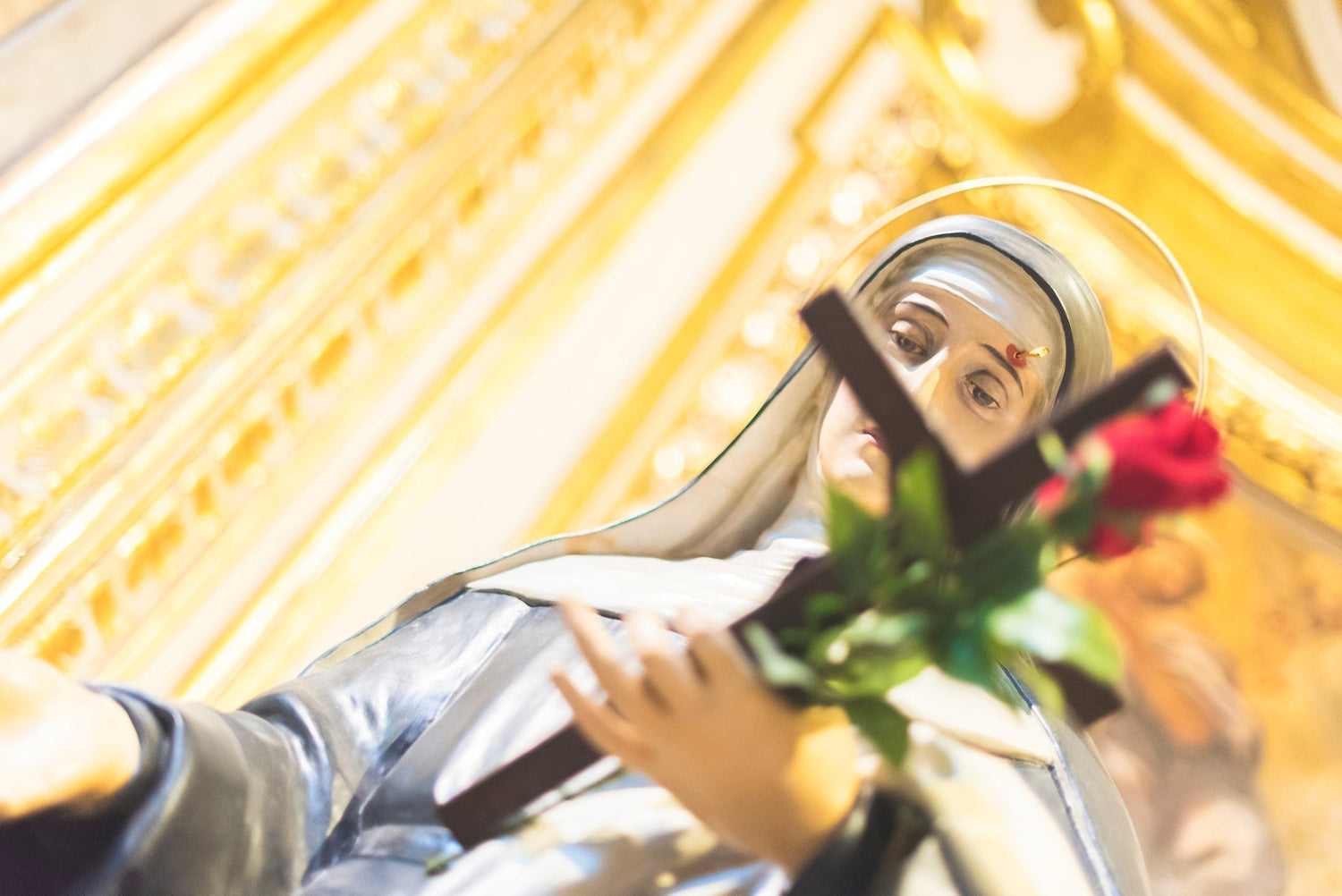
Even then, suffering remained part of her life. While praying before a crucifix in the convent, she asked to share in Christ’s painful sufferings out of love and union with Him. She received a mystical wound associated with Christ’s crown of thorns.
St. Rita did not become holy because her life became easier. She became holy because she allowed God to remain present in every circumstance.
It’s easy to trust God when prayers are answered quickly. Trusting Him when life remains uncertain requires a much deeper faith. St. John Vianney understood this well — read about what St. John Vianney taught about the value of suffering.
St. Rita reminds us that “the impossible” is not an obstacle to God.
Sometimes the impossible thing is forgiveness. Sometimes it is learning to hope again after years of hurt. Sometimes it is simply persevering in prayer when nothing seems to change.
[[st-rita-impossible-causes-decade-rosary, st-rita-impossible-causes-prayer-card]]
Why So Many People Turn to St. Rita Today
It is not difficult to understand why devotion to St. Rita has endured for centuries.
Modern life has not made suffering disappear. In many ways, it has made people feel even more isolated within it. That is where St. Rita meets a soul longing for a miracle.
She does not offer shallow optimism or easy answers, but the quiet and miraculous witness of someone who suffered deeply and remained close to Christ through it all.
She knew disappointment. She knew unanswered questions. She knew what it meant to watch loved ones make destructive choices. She knew the ache of losing people she loved and the pain of waiting on God’s timing.
There is comfort in knowing that holiness does not require a perfect life story. It requires only God’s grace and our openness. Another powerful intercessor for impossible causes is St. Jude Thaddeus, patron saint of the impossible — together, these two saints form a powerful team of heavenly advocates for the most desperate situations.

Hope Is Not Naive
Christian hope is often misunderstood. It is not pretending everything will work out exactly as we want. It is not denying pain or ignoring reality. It is not passive wishful thinking.
Hope is the decision to believe that God is still working, even when we cannot yet see how.
St. Rita’s life teaches this beautifully. Again and again, she encountered doors that seemed permanently closed. All the while, God continued writing a hidden story larger than the suffering directly in front of her.
One of the most beloved accounts associated with St. Rita comes from the final days of her life. While bedridden, she asked for a rose from the garden of her childhood home in the middle of winter. Against all odds, a blooming rose was found.
For many Catholics, the rose has become a symbol of God bringing beauty and life from situations that appear barren or hopeless. Sometimes grace appears where we least expect it. St. Bernadette of Lourdes knew this too — read about St. Bernadette of Lourdes and her lessons on suffering.
That is the kind of hope St. Rita invites us to demonstrate and strengthens us to practice. It is not optimism rooted in our circumstances, but confidence rooted in God’s faithfulness and sovereignty.
The Saints Remind Us Not to Give Up
There is something profoundly moving about the fact that so many people still light candles before St. Rita’s images, pray her novenas, and petition her for help in times of great need.
Somewhere deep down, they need to believe that God has not abandoned them. That realization is sometimes their miracle, and even more fruitful and meaningful than their answered prayer.
Perhaps that is one of the greatest gifts of the saints. They remind us that God’s grace is still at work even in situations that appear hopeless.
St. Rita does not promise an easy life. Her story would never support that illusion. She offers something far more enduring: the reminder that no suffering is wasted when entrusted to Christ, and no situation is beyond the reach of our Almighty God and His merciful love.
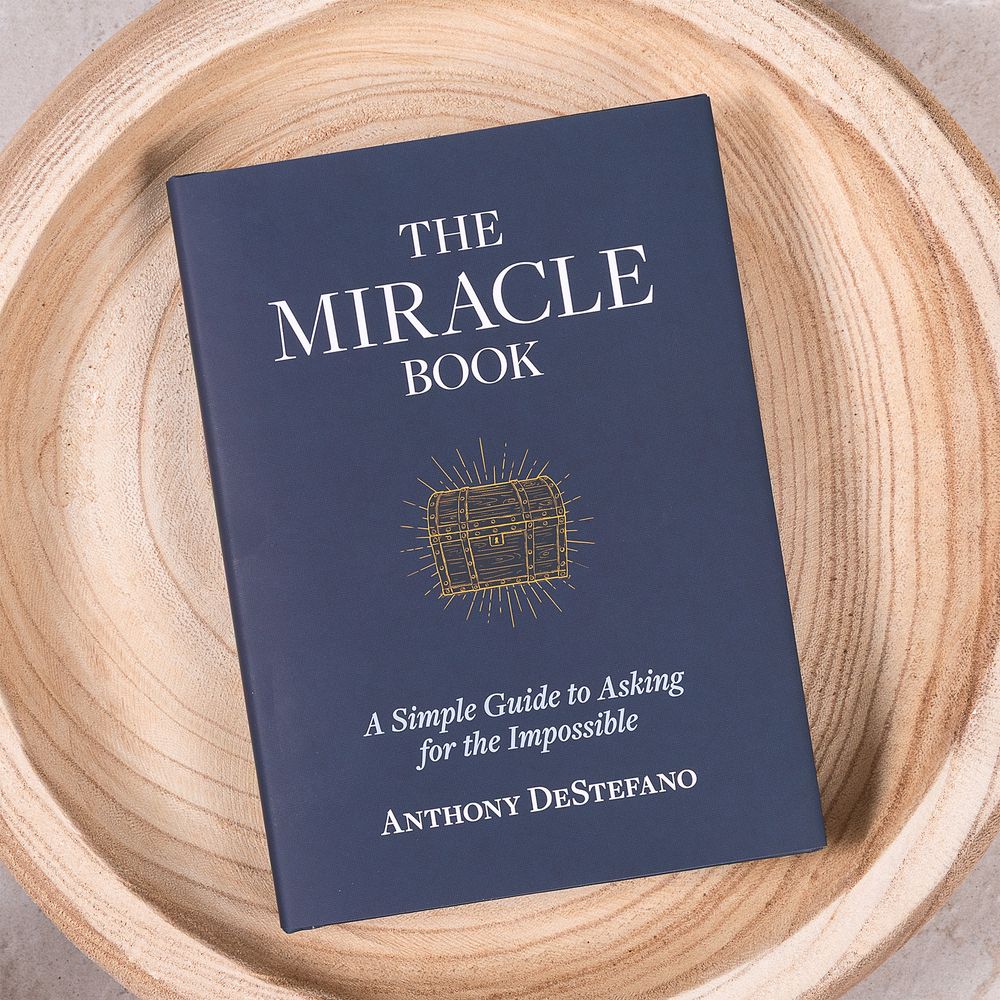
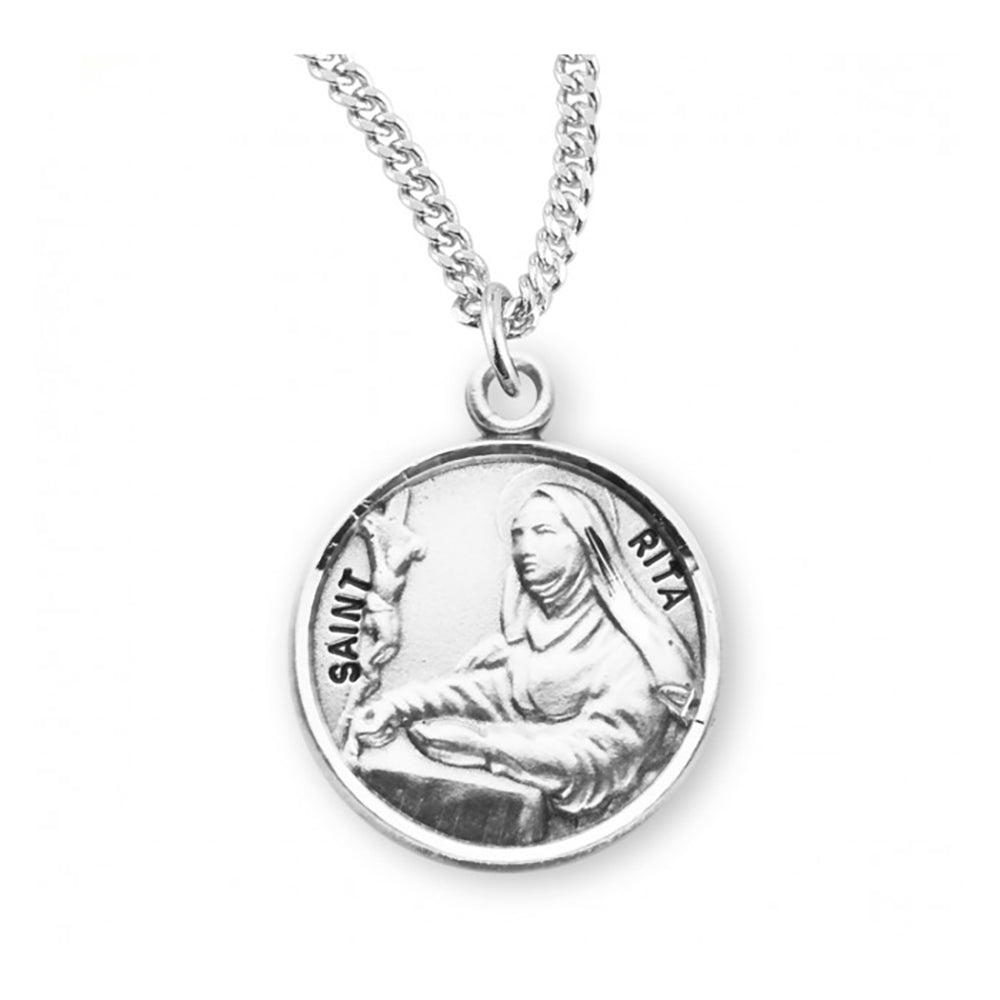
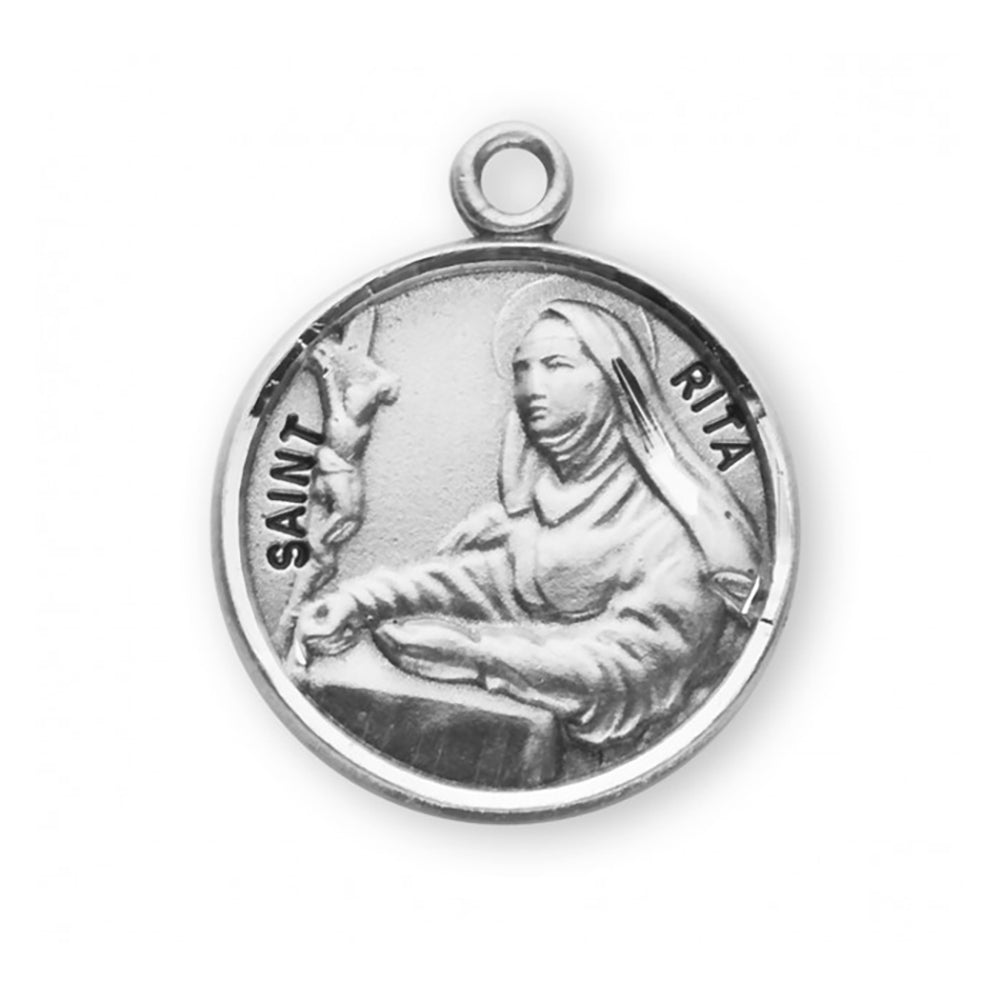
Keep St. Rita’s intercession close with a Petite Sterling Round St. Rita Medal Necklace, or find encouragement in The Miracle Book: A Simple Guide to Asking for the Impossible — a beautiful companion for anyone bringing their most impossible prayers before God.