




Guadalupe: A Message That Still Speaks Almost 500 Years Later
Each year, the Church honors St. Juan Diego Cuauhtlatoatzin, the quiet visionary of Guadalupe. It was to this humble indigenous convert that Our Lady appeared in 1531, and it is his tilma, the same tilma on which her image miraculously appeared, that still hangs untouched by time in her basilica in Mexico City.
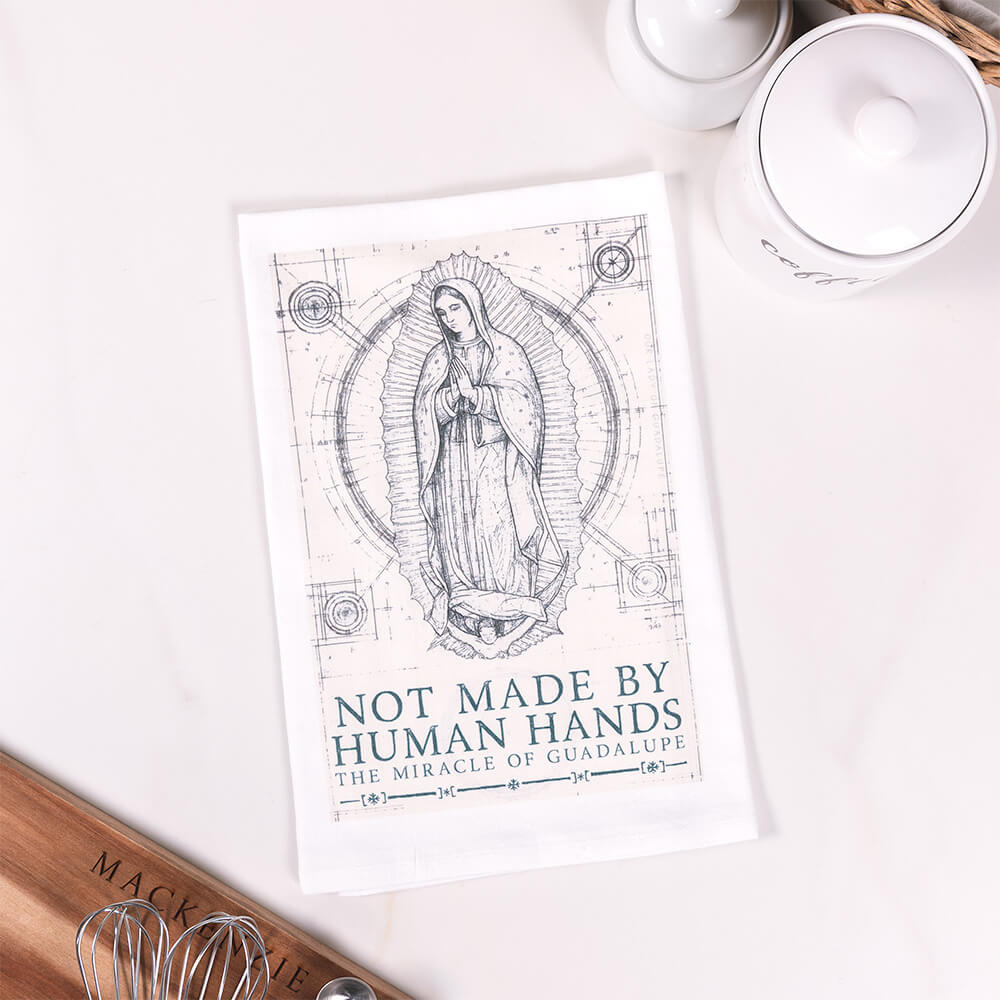
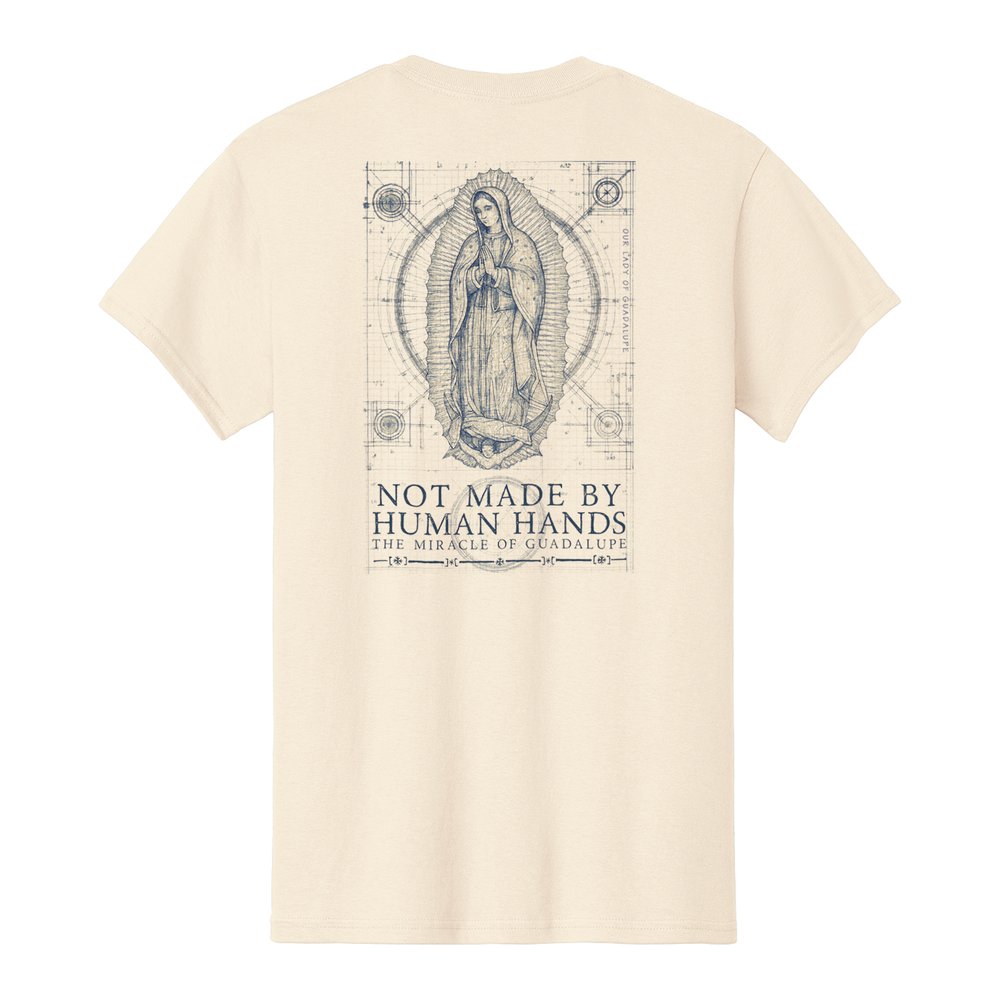
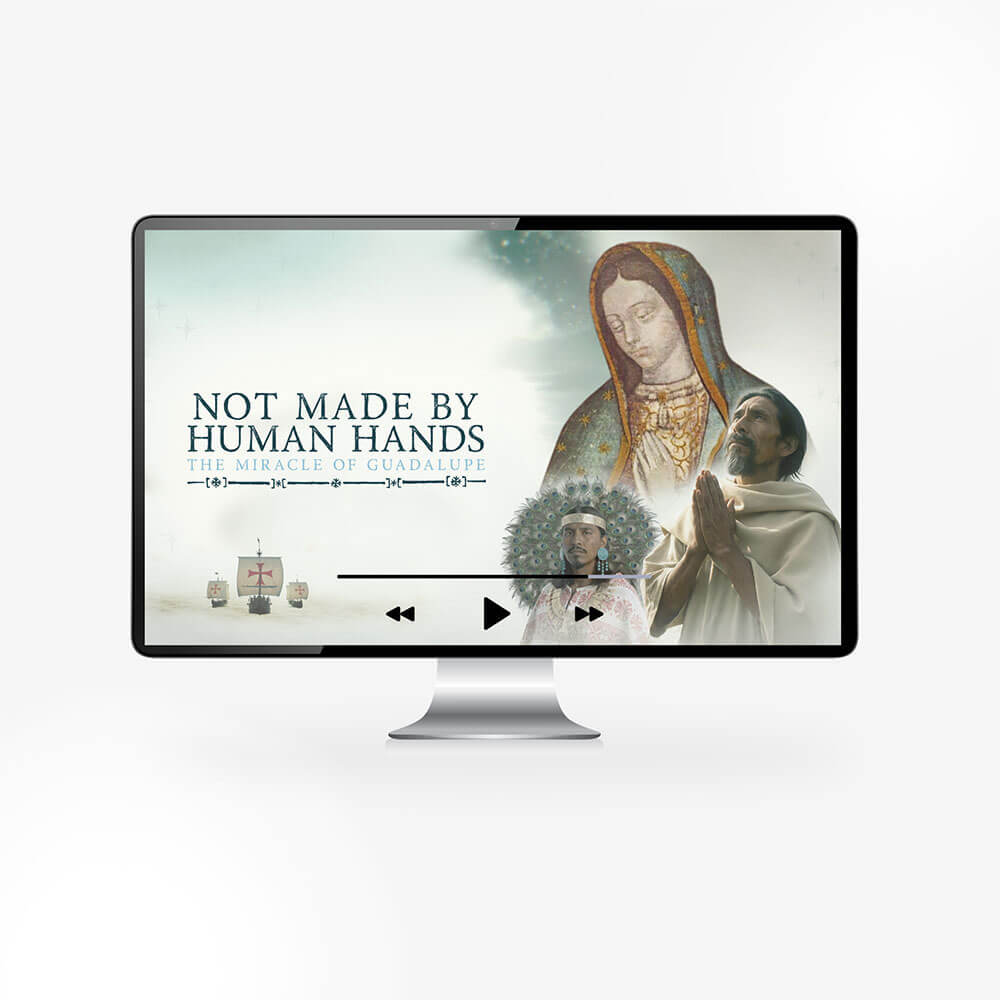
We know the story or we think we do. But the events that unfolded on Tepeyac Hill are more than pious legend. They are rooted in a deeply complex history and a profoundly miraculous reality that we are still unpacking nearly five centuries later. Explore all of this in our newest docuseries, Not Made By Human Hands: The Miracle of Guadalupe.
A World Ruled by Fear
To understand the power of Our Lady’s message at Guadalupe, we have to understand the culture into which she stepped.
Juan Diego was not Aztec by blood he belonged to the Chichimeca people but he lived under Aztec rule. The Aztecs (or Mexica), along with other Nahua tribes, shared a common language and worldview. And that worldview was dark.
Their religion was centered on appeasing violent and terrifying gods. The sun god, the god of night, and the earth goddess were all part of an endless cycle of struggle, bloodshed, and destruction. Human sacrifice wasn’t an occasional offering—it was a ritual necessity. Children, prisoners, even one’s own family could be offered on the altar to satisfy the gods and stave off disaster.
In this context, Our Lady’s appearance was a theological earthquake. She came not as a goddess demanding blood, but as a Mother full of compassion. Not as a symbol of power, but of mercy. And the place she chose, Tepeyac Hill, was no accident. It was the site of a former temple to the Aztec earth goddess, a being so grotesque in depiction that even her face was missing. Mercy, in their world, had no face.
But Our Lady had a face. She looked with love. She spoke with tenderness. She called Juan Diego “Juanito,” Little Juan.
And she gave him a mission.

The Image That Preaches
When Bishop Zumárraga requested a sign, Our Lady responded with a miracle. Roses bloomed on the barren hill in December, Castilian roses, from the bishop’s own homeland. But the greater miracle came when Juan Diego unfurled his tilma before the bishop.
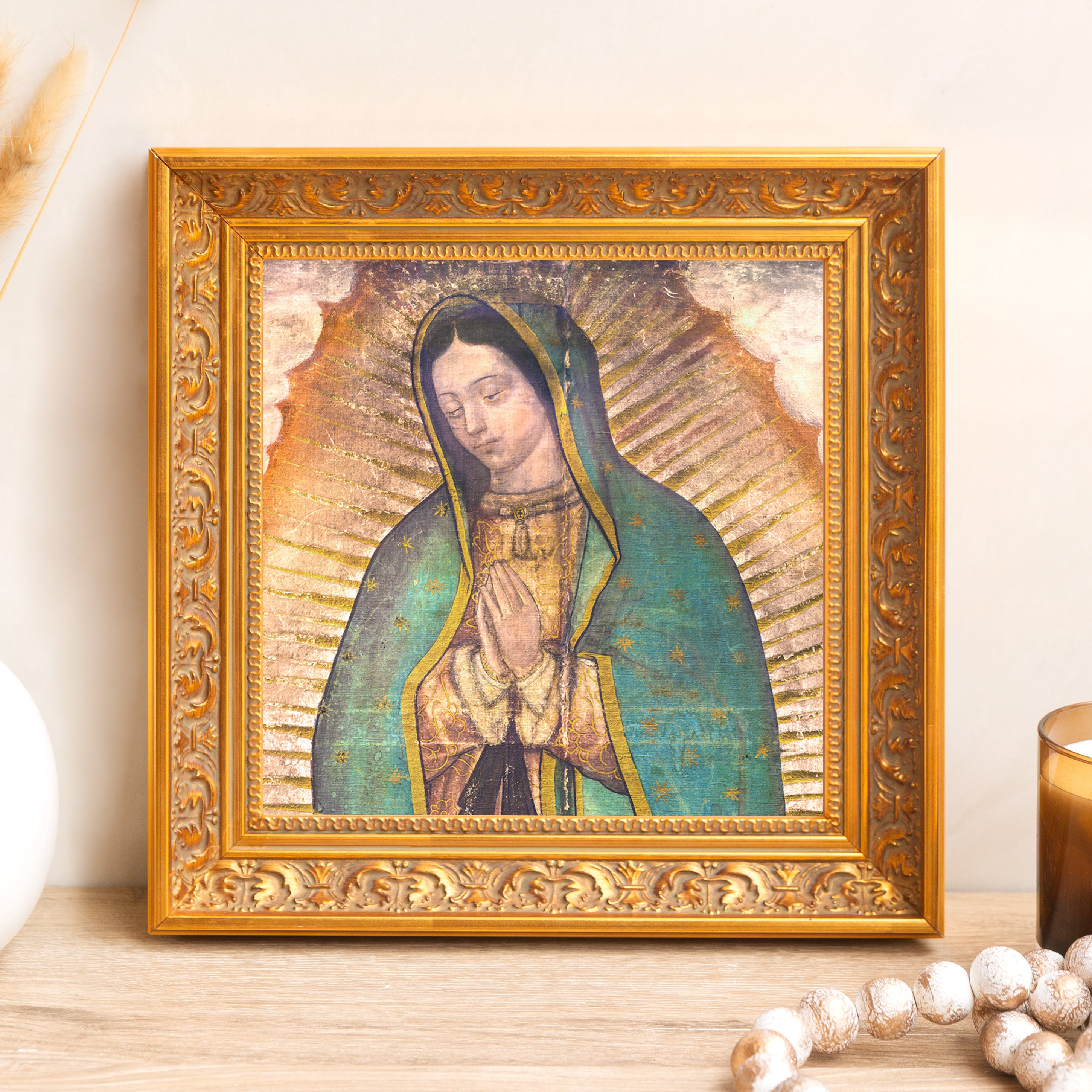
There, on his cloak, appeared the image of the Lady herself.
That image would soon become one of the most studied artifacts in history. But to the Nahua people of the 16th century, it needed no translation. Every color, every symbol, every gesture spoke directly to their hearts and culture. Her green mantle marked her as royalty. Her bowed head and praying hands revealed humility; she was not a god, but someone in service to a greater One. The four-petaled jasmine flower over her womb identified the child she carried as the divine center of the universe. The stars on her cloak were not random; they mirrored the constellations in the December sky of 1531. And she stood upon the crescent moon, eclipsing the gods of night and chaos.
She was the Mother of the true God. And she had come for them.
A Miracle That Endures
We often treat the tilma as something from the past, a beautiful artifact housed in a shrine for pilgrims. But it has not stopped speaking.
In fact, modern science has only increased the sense of awe.
Microscopic analysis has revealed that the image contains no brushstrokes, no undersketches. It is not painted. It simply... is. "Science is unearthing the amazing facts of the miraculous tilma," Fr. Robert Spitzer explained in our brand new docuseries, Not Made By Human Hands: The Miracle of Guadalupe. The tilma itself, made of agave fiber, should have disintegrated within 20 years. Nearly five centuries later, it remains intact.
Perhaps most remarkable of all are the eyes.
In 1979, ophthalmologist Dr. José Aste Tonsmann used infrared scanning to study the image. In Our Lady’s right eye, he found a detailed reflection of a group of people, including a small figure wearing indigenous clothing, consistent with Juan Diego himself. This reflection aligns with the moment Juan unfurled the tilma before the bishop. The curvature of the image even matches what would appear in a real human cornea.
There is no scientific explanation for how that detail exists on a fabric image. But there it is.
Five Hundred Years Later
All of this...the culture, the miracle, the image, and the ongoing mystery...points to something larger than history. It points to the Providence of God. It reveals a God who doesn’t abandon His people, even in their darkest moments. God is always preparing the soil, even in cultures that seem closed to truth.
In 1531, Bishop Zumárraga feared the collapse of the missionary efforts. It was difficult to bring the Indigenous people to conversion. While they were relieved to be rid of human sacrifice after the conquest of Mexico by Hernán Cortés, people were confused. What did not help was that some of the Spanish authorities were abusing their power. Instead of helping to convert the people by their behavior, some of the Spanish who were now placed in positions of leadership in Mexico, such as Nuño Beltrán de Guzmán, were not exactly models of Christianity.
This did not help Bishop Zumarraga and his fellow missionaries, who were trying to bring people to the true Church. He was starting to feel hopeless. He wrote to Charles V, to ask for assistance (the letter had to be hidden in a barrel of lard so as not to be intercepted), and he begged the Blessed Mother for help.
And she came.
She Is Still Here Almost 500 Years Later
Today, we too are living in a time of confusion, fear, and spiritual violence. Many have turned from God, or never known Him at all. Others carry heavy sorrow or feel abandoned in their suffering.
And yet the tilma still hangs. It still speaks. Her gaze is upon us still.
We are now just six years away from the 500th anniversary of Our Lady of Guadalupe’s appearance. What will we do with this time?
Let us not become desensitized to the miraculous. Not just the extraordinary kind, like a cloak that never fades, but also the daily kind. The small ones that occur in our lives, but we often neglect to notice. Or if we do notice, we are slow to thank God.
It is easy for us as human beings to be restless. To lack patience. And to take our faith and all of its wonders for granted. But when we ask God for help, we can have confidence that He will respond.
Our Lady met Juan Diego precisely where he was, on the hillside. Like Juan Diego, there is a certain ascent we must make ourselves; a personal hill we must climb. Perhaps there is only one true requirement: that we do our best to be humble and to listen.
This humility is the very posture Our Lady invites us to embrace. The world of 1531 was marked by its own wounds and uncertainties, but the need for God’s nearness has not changed. The words of Our Lady to Juan Diego truly penetrate the heart: "Am I not here? I who am your mother? Are you not in the crossing of my arms? Is there anything you need?" She speaks to us with compassion and with tenderness and with love.
In the beautiful unfolding of this story, we glimpse something enduring about the human condition; the way hope and the search for God continue to shape every generation, including our own.
As we move toward this historic anniversary, become acquainted with the Guadalupan event. Learn more about the miraculous image and what it means for us today in our new docuseries, Not Made By Human Hands: The Miracle of Guadalupe.
The first episode will be released on the feast day of Our Lady of Guadalupe, December 12th. The rest of the episodes will drop every few weeks thereafter. Don't miss it!
Purchase the bundle for $20, which includes a beautiful downloadable PDF Companion Guide.
Our Lady of Guadalupe, pray for us!