
Have you marveled at accounts of the saints who received spiritual consolations and supernatural experiences, then wondered how they achieved that "special something" beyond the rest of us? We often refer to these individuals as "mystics." While that term is also associated with incredible phenomena, that's not all that makes a mystic. What is mysticism, and what can we learn from it as we aspire to grow in holiness?
Mysticism Defined
When trying to understand a complex concept of our Faith like mysticism, The Catechism is always a great place to start:
Spiritual progress tends toward ever more intimate union with Christ. This union is called ‘mystical’ because it participates in the mystery of Christ through the sacraments — ‘the holy mysteries’ — and, in him, in the mystery of the Holy Trinity. God calls us all to this intimate union with him, even if the special graces or extraordinary signs of this mystical life are granted only to some for the sake of manifesting the gratuitous gift given to all (CCC #2014).
God does not intend mysticism to be a gift for the select few, at the exclusion of the rest of us. The intimate union with God that lies at the heart of mysticism is a gift available to us all.
[[50352, the-life-of-st-joseph-as-seen-by-the-mystics]]
He has placed within each soul a deep desire to know Him and to be united to Him. Though that impulse is present in every soul, it can be obscured by many things, especially in our modern times.
The noise and distractions of the world, distorted values, the depravity of evil, our own sinful natures and behaviors, our wounds and faults, and other factors can block the graces needed for us to experience union with God here on earth, where He waits for us within.
For most of us, this union takes place in the Beatific Vision, after we depart this life and enter eternity, but some experience it here, during their lifetimes. When a soul experiences this divine union while still in the world, they are said to be a mystic.
[[the-world-of-marian-apparitions-marys-appearances-and-messages-from-fatima-to-today, sterling-silver-miraculous-medal-on-24-inch-chain-1]]
There are many belief systems that use the term "mysticism." New age mysticism is spiritually dangerous. Be wary of any other instruction on mysticism, and guard against anything that could endanger your soul. The Church possesses the fullness of the truth, and only through Her wisdom and guidance can we safely seek and respond to that truth.
[[manual-for-eucharistic-adoration, john-paul-ii-brave-beads-tenner-rosary]]
Prayer is the Key
There are many other aspects to mysticism, and saints like Teresa of Avila and John of the Cross have written and taught extensively on these. Prayer stands out above the rest. It is within prayer that we commune with God, seeking union, as we pursue holiness. Prayer is our response to the innate impulse to unite with God. It is our acceptance to His invitation.
We pray to be close to Him, and uniting in prayer brings us together. In the beginning, we do the work, so to speak. Discursive prayers like the rosary, time in meditation, and other means of prayer open our hearts to Him. Eventually God begins to do the work. He draws us to Himself by capturing - and captivating - our wills, our imaginations, and our intellects.
In this way, He produces a form of union and prayer known as "infused contemplation" in the soul. The important aspect to infused contemplation is that it is not something we do, but something God does within us. We cannot make it happen; only He can.
[[31283, st-catherine-of-siena-framed-print]]
As the soul progresses, it grows in virtue, experiencing and sharing the fruits of this ever-growing intimacy with God, its main concern becomes union with Him. Profound love grows, and so does holiness, as God infuses the soul with knowledge and gifts that are meant to be shared for the good of His kingdom.
Contemplative Prayer
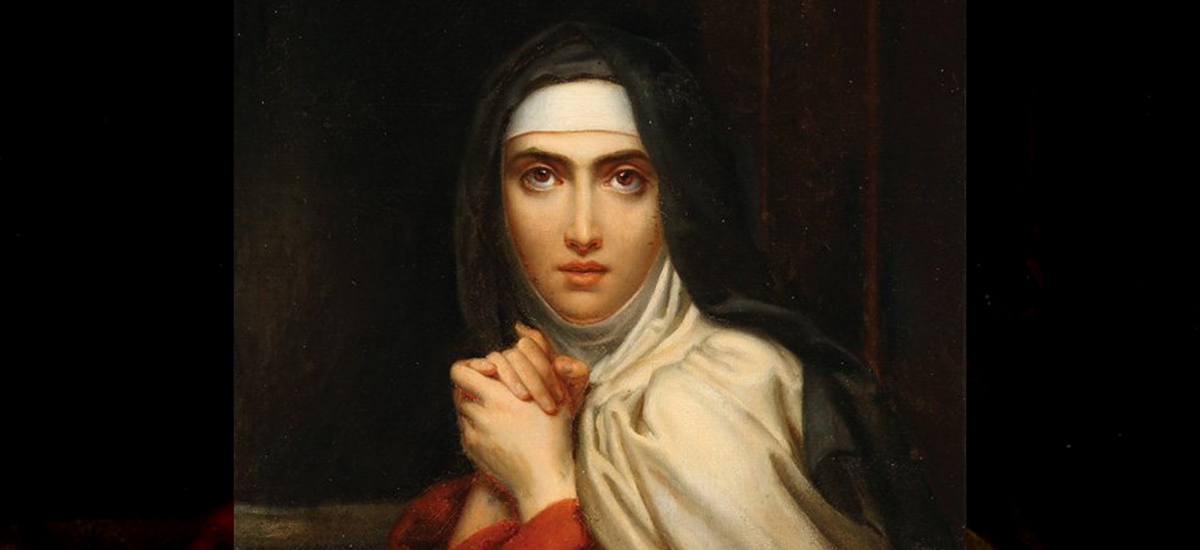
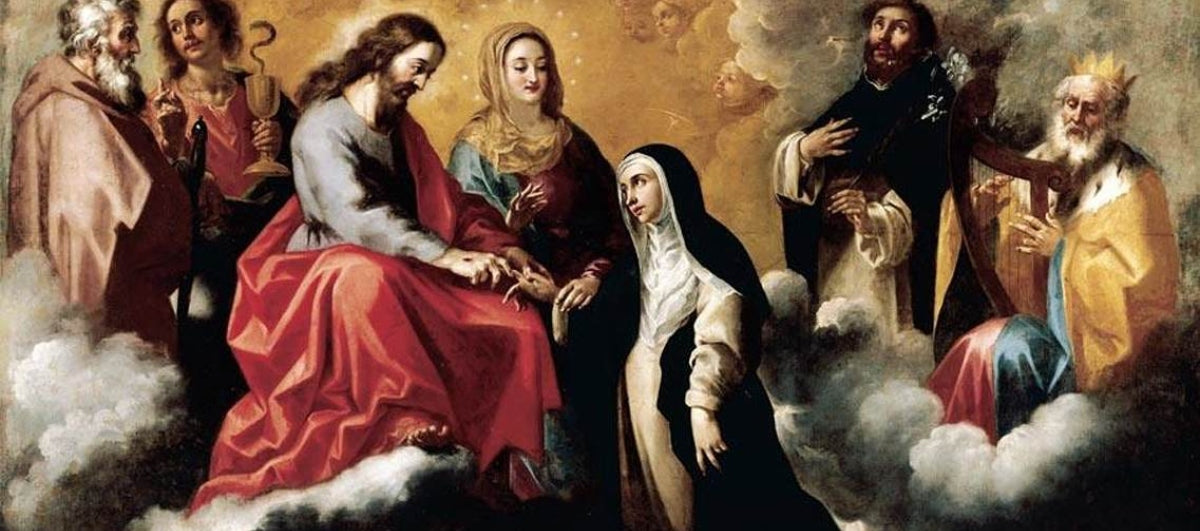
Mystics are gifted contemplatives who experience infused contemplation. The most authoritative description of this is given to us by St. Teresa of Avila, Foundress of the Discalced Carmelite Order, Doctor of the Church, and beloved 16th C. nun and Catholic mystic.
[[the-interior-castle, st-teresa-of-avila-parchment-print-8x10]]
Her writings constitute part of the most trusted instruction on mystical experiences in the spiritual life. In her book The Interior Castle, Teresa discusses infused contemplation in what she calls the fourth to seventh mansions.
She imagines the soul as a luminous castle of crystal, like a brilliant diamond. The soul's interior castle is of incomparable worth and beauty. There, in the center of the soul's castle, our God and King awaits union with the soul He created in love.
[[12940, fire-within]]
We go in search of Him, passing through these mansions - special rooms that will lead us to the Lord. The soul's mansions represent levels and stages of spiritual development, and various circumstances and challenges the soul encounters as it aspires to Christian perfection.
It is through devotion to prayer and aspiring to holiness that we can open ourselves to the greatest graces and ready ourselves to receive these gifts, but it is also true that God can confer them upon whomever He pleases, whenever He pleases.
[[12179, padre-pio-stories-and-memories-of-my-mentor-and-friend]]
Extraordinary Phenomena
Mystics may manifest charismatic or supernatural phenomena. These are given by God for the good of others and His kingdom, not merely for the gratification or "reward" of the mystic. While they are extraordinary gifts, they are apostolic in nature.
Examples of these are miracles, visions, locutions, the stigmata, levitation, bilocation, prophecy or reading of souls, speaking in tongues, and others.
We see these in the lives of some of beloved saints like St. Paul, St. Faustina, St. Francis, St. Catherine of Siena, St. Teresa of Avila, St. John of the Cross, St. Margaret Mary Alocoque, St. Padre Pio, and many others.
[[the-life-of-st-gemma-galgani, 14kt-gold-filled-st-gemma-galgani-petite-pendant]]
Careful consideration is necessary where these events are concerned. God is supernatural, but so is the evil one, who can counterfeit the light of God. Sts. Teresa of Avila and John of the Cross warn about placing emphasis on these extraordinary events.
Their writings teach approaching them in a spirit of discernment, first ignoring them altogether. Receiving charisms like these does not mean a person is of exceptional holiness, though that may very well be true. That will generally reveal itself in time, along with the validity of the extraordinary charisms, as the soul makes spiritual progress.
Just for Monasteries?
No, mysticism is not just for monks, nuns, or hermits, although their environments remove many distractions of the world, and may promote the silence, prayer, and pursuit of holiness that could dispose a soul to greater openness.
[[23107, jesus-speaks-to-faustina-and-you-divine-mercy-decade-rosary-chaplet-gift-set]]
St. Teresa of Avila founded her own reformed Carmelite Order and established seventeen monasteries throughout Spain. She also wrote the most prominent books on mysticism and the spiritual life, many at the direction of Christ.
She simultaneously courted patrons for her foundations, instructed her nuns, and began the reform of the Carmelite friars with St. John of the Cross before she died in one of her own monasteries.
Beyond all of the active, apostolic accomplishments of her busy life, she achieved mystical union with God. And all of this while in poor health for most of her life, riding a mule back and forth to each of her foundations all over Spain!
She said the purpose of her prayer was works - acts of love - apostolic fruit for God's kingdom. An active life is not an impediment for a mystic, as long as priorities are rightly ordered and they are devoted to God, most especially in prayer.
The companion to prayer in the life of the mystic is learning about - and opening oneself to - God's grace in the life of the soul, so that obstacles to His actions can be removed and overcome.
[[lessons-in-hope-my-unexpected-life-with-st-john-paul-ii, 4190]]
In this way, the fertile ground of the soul is prepared to receive God's treasures. He can freely communicate His life to the soul in this world, not only in eternity.
How Does It Work?
The word mystic implies a great and powerful mystery in many ways beyond our limited, human understanding. God works as He wills, but in general, there's a well-ordered process through which we enter into the life of God in an ever-deepening way.
The farther we go in prayer, the more we conform ourselves to Him. As we are remade, conformed more closely to Christ, we begin a transformation that results in a more intimate union with God.
[[stages-in-prayer, manual-for-eucharistic-adoration]]
As we continue conforming ourselves to Him more radically, we become more intimately connected to the Holy Trinity, the Indwelling within our souls. We enter deeper and more fully into the very life of the Blessed Trinity, the Divine Family to which we already belong. There, we are mystically united to God in a much more intimate way than ever before.
It's not a linear journey, and a soul may meander for years, moving back and forth through the mansions St. Teresa teaches about in The Interior Castle. Some souls will reach their destination of union with God while they are still here on earth. These are the souls we think of as Catholic mystics in the traditional sense.
[[22047, chartres-cathedral-stained-glass-windows-candle]]
Living a Mystical Life in Christ
St. Teresa of Avila insists this is a gift available to everyone through grace, love, and imitation of Christ, all of which begin with a life of prayer.
Stories from the lives of mystical saints are not just astounding tales of encounters with God. Their inspirational lives illustrate what God can do in the souls of all whose greatest desire is to be transformed in love by dying to self and conforming their hearts to His.
When we do this, we see things with a different perspective - an eternal one. We love each other more, and better, because we understand our unity as the mystical Body of Christ. We embrace the sacraments with deep gratitude.
We cultivate a rich, interior life of prayer, where our gaze is fixed on Him alone. With humility and renunciation, against the backdrop of the Beatitudes, we entrust everything to God in complete abandonment.
As we unite ourselves to Him, the life of the Holy Trinity consumes us, and radiates from within us into the souls of others. We begin to live the Beatific Vision here on earth as we grow in intimate union with the God Whom We Know Loves Us. Those are gifts meant for us all.
[[the-life-of-st-margaret-mary-alacoque, 15911]]