Every August 15, Catholics throughout the world celebrate the Solemnity of the Assumption of the Blessed Virgin Mary, one of the Church's most beautiful Holy Days of Obligation (see holiday days gift guide). Despite its importance, it remains one of the least understood Marian feasts.
What is the Assumption of Mary? Is it found in the Bible? Did Mary die before she was assumed into Heaven? Why does the Church consider this belief so important that it is proclaimed as dogma?
These common questions matter because the Assumption is about much more than the final moments of Our Lady's earthly life.
The Assumption of Mary is a celebration of God's saving plan, the dignity of the human person, and the hope of the resurrection promised to every faithful Christian. In the Assumption, we are given a glimpse of our own future. Mary's glorious entrance into Heaven is not simply a unique privilege granted to the Mother of God; it is also, as the Church beautifully proclaims in the Mass for this feast,
"a sign of sure hope and comfort to your pilgrim people." (from the Preface of the Mass for the Solemnity of the Assumption)
As we celebrate this joyful solemnity, let's explore what the Church teaches about the Assumption, why Catholics have believed it since the earliest centuries of Christianity, and why this beautiful mystery continues to fill us with hope today.
What Is the Assumption of Mary?
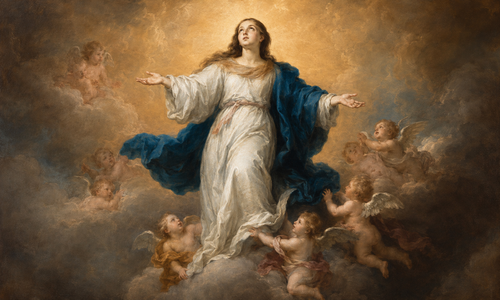
The Church teaches that at the end of her earthly life, the Blessed Virgin Mary (see the Virgin Mary Gifts) was assumed body and soul into heavenly glory. In other words, she did not experience the separation of body and soul that the rest of humanity will experience at death. By God's power, she was taken into Heaven in the fullness of her person where she now reigns with her Son as Queen of Heaven.
This extraordinary privilege is closely connected to another singular grace God bestowed upon Mary. From the first moment of her Immaculate Conception in the womb of St. Anne, God preserved Mary from the stain of original sin in view of the saving merits of Jesus Christ. Immaculate and "full of grace" (Luke 1:28), she was uniquely prepared to become the Mother of God, carrying the Son of God within her own body.
Because of this unique role in salvation history, it is fitting that the body which became the first earthly dwelling place of the Incarnate Word would not be abandoned to corruption.
The Church therefore proclaims the Immaculate Conception and the Assumption as two Marian dogmas that beautifully complement one another, revealing both Mary's singular role in God's plan of salvation and the extraordinary graces He bestowed upon her.
These are not merely beautiful ideas or optional devotions. They are dogmas - truths revealed by God and definitively taught by the Church.
As remarkable as these privileges are, they are not the ultimate reason the Church celebrates this feast, because the Assumption is not only about Mary's glory, but about ours. By assuming His Mother body and soul into Heaven, God gives the Church a foretaste of the resurrection He promises to all who remain faithful to Christ.
Mary's Assumption reminds us that death does not have the final word. Because Christ has conquered sin and death, our destiny is not the grave, but eternal life with Him - when our own glorified bodies will be reunited with our souls in the resurrection.
That is why the Assumption is ultimately a feast of hope.
Did Mary Die Before the Assumption?
One of the most common questions Catholics ask is whether the Blessed Virgin Mary actually died before being assumed into Heaven.
The answer is beautifully nuanced. The Church has definitively taught that at the end of her earthly life, Mary was assumed body and soul into heavenly glory. What the Church has not definitively answered is whether that Assumption took place before or after her death.
When Pope Pius XII solemnly defined the dogma of the Assumption in 1950 through Munificentissimus Deus, he carefully chose his words. Rather than declaring that Mary died, he taught that
"the Immaculate Mother of God, the ever Virgin Mary, having completed the course of her earthly life, was assumed body and soul into heavenly glory."
That deliberate wording leaves room for theological reflection while preserving the essential truth of the dogma. Even so, the overwhelming tradition of the Church has long held that Mary did indeed experience death.
For centuries, the Eastern Churches have celebrated the Dormition of the Theotokos, or the "Falling Asleep of the Mother of God." It is one of the most beloved themes in Eastern Iconography . According to this ancient tradition, Mary peacefully completed her earthly life and was then taken body and soul into Heaven through God's power.
While many details belong to pious tradition rather than defined doctrine, the celebration reflects the longstanding belief that Mary's earthly life came to a natural conclusion before her Assumption. Many saints and theologians in the Western Church have embraced this understanding as well.
Many Catholics wonder, if Mary was preserved from original sin, why she would experience death at all? The answer lies in her profound union with her Son. Although she was free from sin, Mary willingly embraced the human condition in complete conformity to Christ.
Just as Jesus freely accepted suffering and death, not because He deserved them, but because He chose to enter fully into our humanity - many theologians believe it was fitting that His Mother would also experience death before sharing completely in His Resurrection. Seen in this light, Mary's death was not a punishment but the final act of her loving union with Christ.
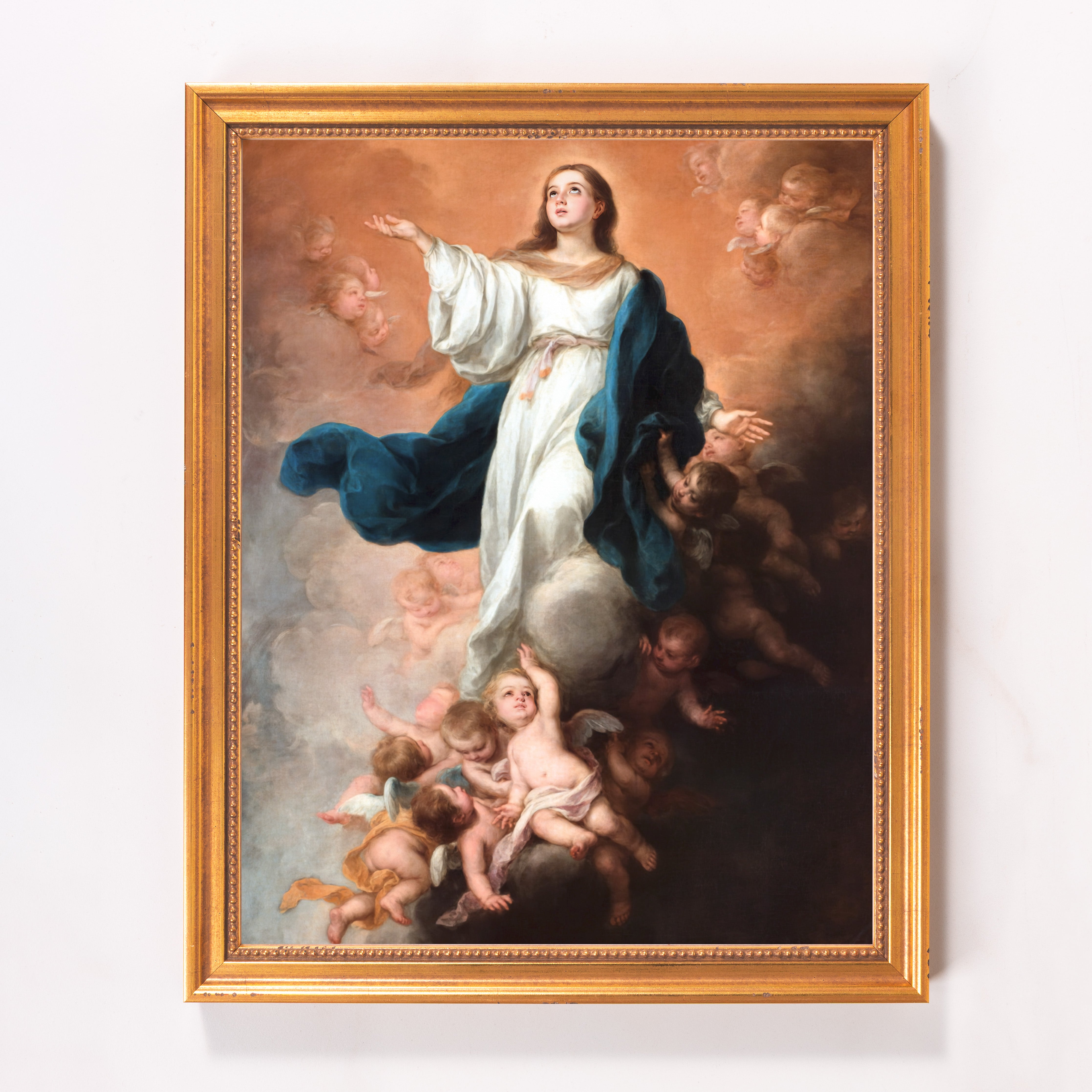
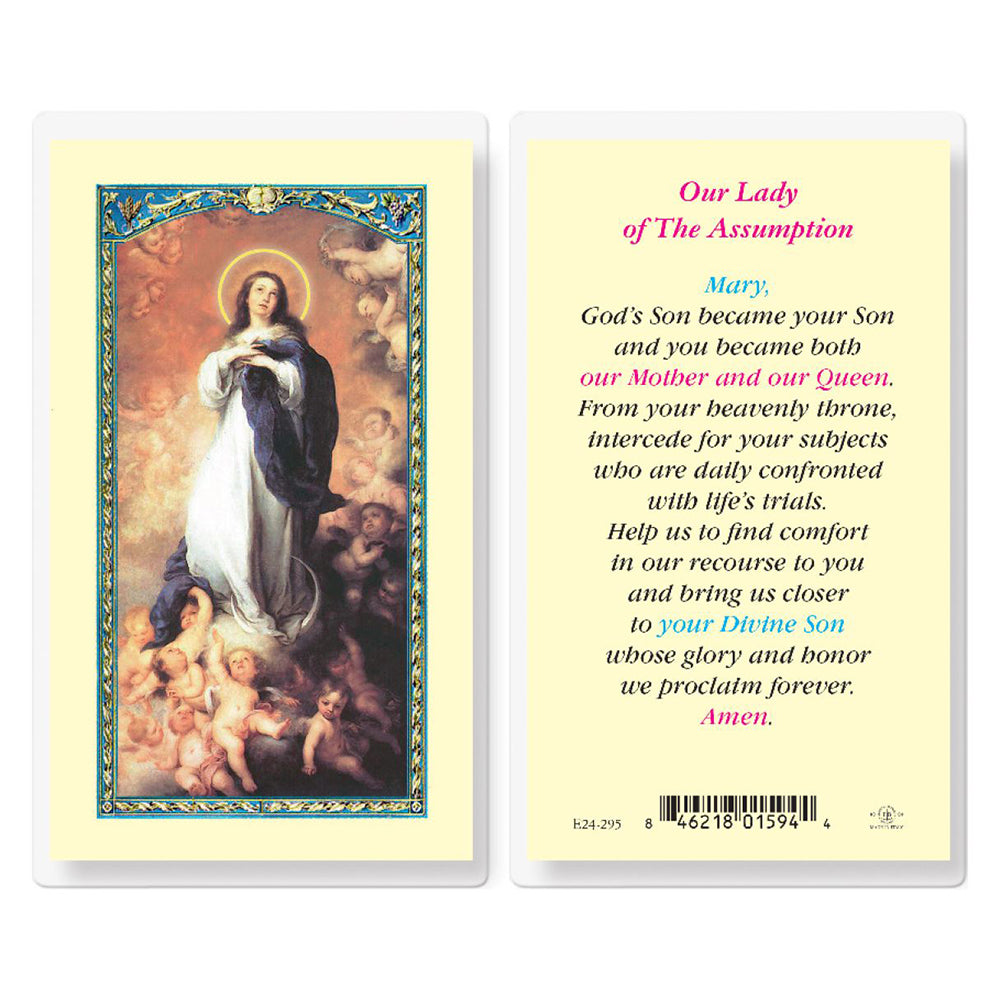
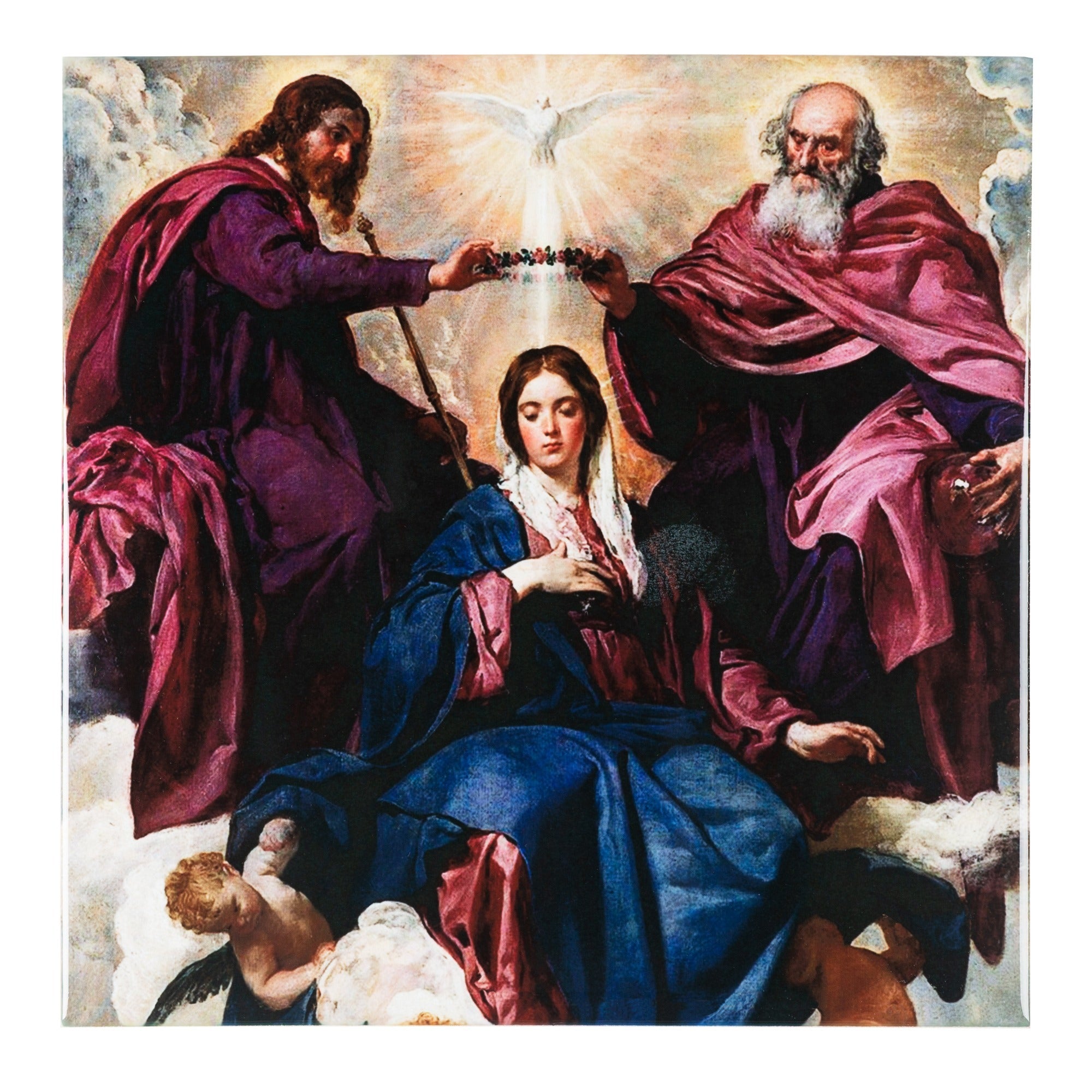
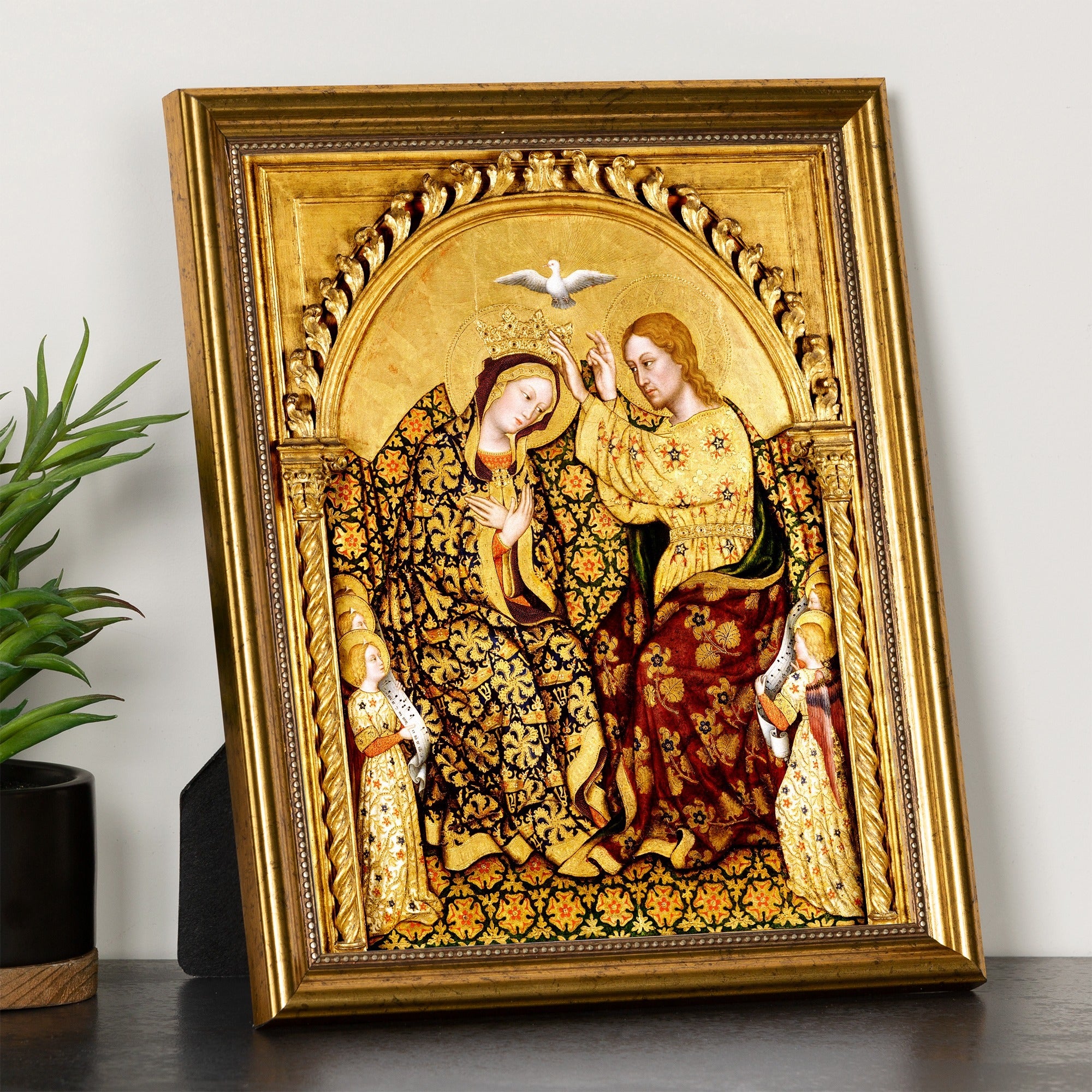
Whether Mary died before being assumed or whether God brought her directly into heavenly glory without passing through death, the heart of the Church's teaching remains the same: by God's grace, the Mother of Jesus now shares fully in the resurrected life of her Son, body and soul. This joy is depicted often in sacred art throughout the history of our Faith.
Her Assumption reminds us that Christ's victory over sin and death is not His alone to enjoy. One day, our own bodies will also be raised in glory in the final resurrection, so Mary's Assumption points us toward the destiny God desires for all who persevere in faith.
[[the-assumption-of-the-virgin-framed-canvas-sacred-mini-collection,hail-holy-queen-the-mother-of-god-in-the-word-of-god]]
Is the Assumption of Mary Found in the Bible?
One of the first questions many people ask is, "Where is the Assumption in the Bible?"
Scripture does not describe the Assumption of Mary as a historical event in the way it describes Christ's Ascension or many other events in salvation history. There is no passage that states, "Mary was assumed into Heaven."
So why does the Church believe it?
The answer begins with understanding how God has revealed His truth. Catholics believe that Divine Revelation comes to us through both Sacred Scripture and Sacred Tradition, which together form the one deposit of faith entrusted to the Apostles and faithfully handed down through the centuries.
Not every truth Christians believe is recorded word for word in the Bible. The canon of Scripture itself, the celebration of Sunday as the Lord's Day, and many other ancient Christian practices were preserved through the living Tradition of the Church. The Assumption belongs within that same apostolic tradition.
Although Scripture does not directly narrate Mary's Assumption, it contains beautiful images that illuminate this mystery:
The Book of Revelation describes "a woman clothed with the sun, with the moon under her feet, and on her head a crown of twelve stars" (Revelation 12:1). While this woman represents several realities - including Israel and the Church - the Church has also long recognized in her the radiant image of the Blessed Virgin Mary reigning in heavenly glory.
The Old Testament offers another striking image in the Ark of the Covenant. The Ark carried the stone tablets of the Law, the manna from Heaven, and Aaron's priestly staff, making it the sacred dwelling place of God's presence among His people.
St. Luke's Gospel intentionally echoes this imagery when he describes Mary. She carries within her not the written Law but Jesus Christ, the living Word of God; not the manna from the desert but the true Bread of Life; not the symbol of the high priesthood but the Eternal High Priest Himself.
For this reason, the Church has long called Mary the New Ark of the Covenant. If the Ark that carried God's presence was treated with such reverence, how much more fitting that the woman who bore the Son of God in her own womb should be glorified by Him in Heaven?
Like so many of the Church's great mysteries, the Assumption is not built upon a single biblical verse. Rather, it unfolds from the harmony of Sacred Scripture, Sacred Tradition, and the Church's faithful reflection under the guidance of the Holy Spirit.
Why Do Catholics Believe in the Assumption?
If Scripture does not explicitly record Mary's Assumption, how did the Church come to believe it with such certainty?
The answer lies in the way the Christian faith has always been handed on. From the very beginning, the Apostles preached far more than they wrote down. Under the guidance of the Holy Spirit, the Church faithfully preserved both the written Word of God in Sacred Scripture and the apostolic teaching handed down through Sacred Tradition. The belief in Mary's Assumption belongs to that living tradition.
Long before it was formally defined as dogma, Christians celebrated Mary's entrance into heavenly glory in both the Eastern and Western Churches. By the sixth century, the Feast of the Dormition of the Blessed Virgin Mary was already widely celebrated in the East, commemorating the completion of her earthly life before her being taken into Heaven.
Over time, this feast spread throughout the universal Church, reflecting a belief that had become deeply rooted in Christian worship and devotion.
The writings of the early Church Fathers testify to this tradition. While they do not describe the Assumption in the detailed way modern readers sometimes expect, they consistently affirm Mary's unique holiness, her singular role in salvation history, and the fittingness of her sharing fully in her Son's victory over death.
Another fascinating piece of evidence comes from what history does not tell us. The early Christians carefully preserved the relics of the saints, building churches over their tombs and making pilgrimages to venerate their sacred remains.
Although devotion to the Blessed Virgin Mary flourished from the earliest centuries of Christianity, there has never been an accepted tradition claiming possession of her bodily relics.
While this silence does not prove the Assumption, it harmonizes beautifully with the Church's longstanding belief that Mary's body was taken into heavenly glory.
Before solemnly defining the Assumption, Pope Pius XII consulted the bishops worldwide, to determine whether this belief had truly been handed down and lived by the Universal Church in every corner of the world.
Their overwhelming response affirmed that the Assumption had long been embraced by the faithful of the Eastern and Western Churches, celebrated in their liturgies, and consistently taught by their predecessors. This worldwide witness confirmed that the doctrine was not a recent development, but part of the Church's living Tradition.
After centuries of consistent belief, prayer, and reflection, Pope Pius XII solemnly defined the Assumption as a dogma of the Catholic Church on November 1, 1950, in the apostolic constitution Munificentissimus Deus. He declared:
"The Immaculate Mother of God, the ever Virgin Mary, having completed the course of her earthly life, was assumed body and soul into heavenly glory."
In defining the Assumption, Pope Pius XII was not introducing a new teaching but solemnly confirming what Christians had believed and celebrated for centuries.
Like many of the Church's great dogmas, the formal definition safeguarded a truth already handed down through the life of the Church. Catholic dogmas do not invent new truths; they clarify and faithfully preserve the truths God has revealed.
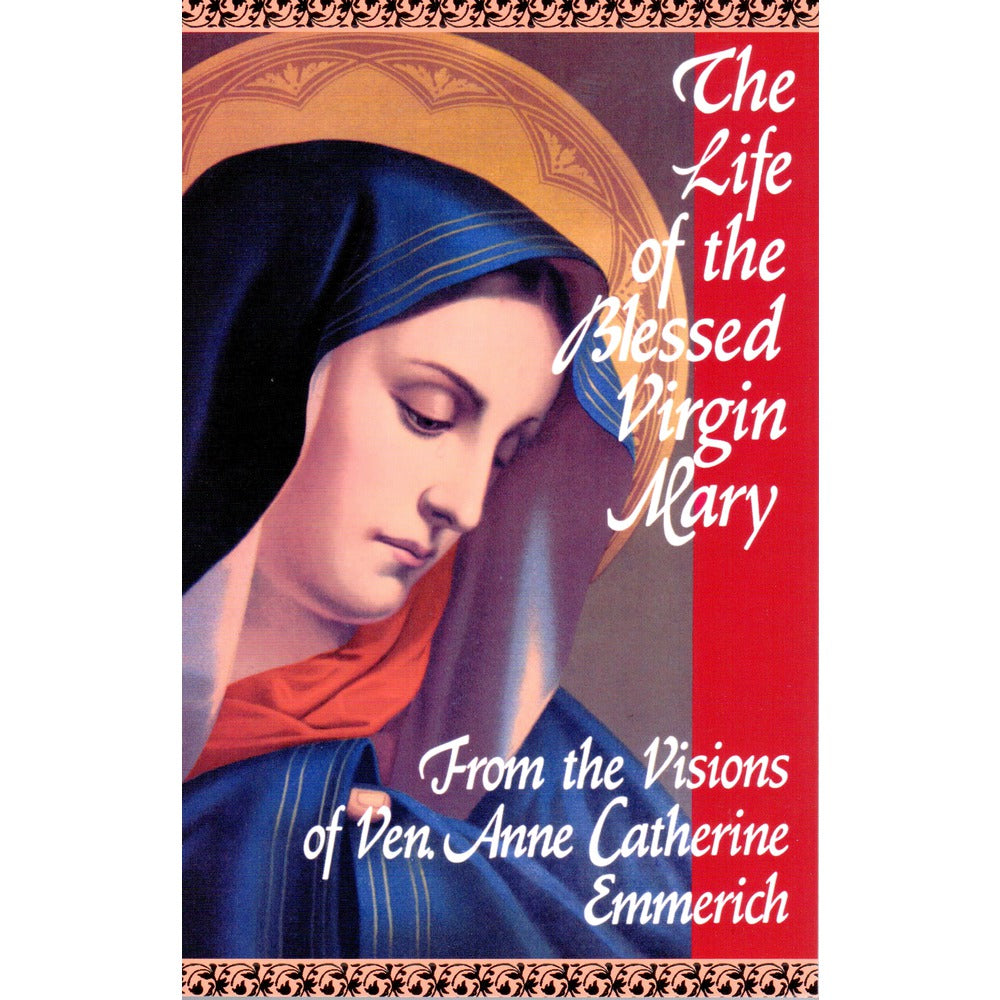
[[the-life-of-the-blessed-virgin-mary-from-the-visions-of-ven-anne-catherine-emmerich,a-year-with-mary-daily-meditations-on-the-mother-of-god]]
Why the Assumption Gives Us Hope
It is easy to think of the Assumption as a privilege that belongs to Mary alone. Certainly, it is one of the greatest honors God bestowed upon His Blessed Mother, but if we stop there, we miss one of the most beautiful truths this feast proclaims. The Assumption is not simply about Mary's destiny, but about ours.
Christianity proclaims not only the immortality of the soul but the resurrection of the body. Through His death and Resurrection, Christ conquered sin and death, opening the way to eternal life for all who believe in Him.
Mary's Assumption is the first and most perfect realization of that promise after Christ Himself. What God accomplished in His Mother reveals what He desires for all who belong to His Son.
That truth changes the way we face suffering, aging, and even death. Every one of us has mourned someone we love or wondered what awaits us at the end of our own earthly pilgrimage. The Assumption reminds us that the bodies God created and redeemed are not forgotten; they are destined to share in His glory.
Perhaps this is why the Church calls Mary's Assumption "a sign of sure hope and comfort to your pilgrim people." Like every pilgrim, we sometimes grow weary as we journey toward a destination we cannot yet see.
Mary has already reached that destination. From her place beside her Son, she intercedes for us and reminds us that Heaven is real, Christ is faithful to His promises, and holiness is possible through His grace.
That is why Catholics celebrate the Assumption with such joy. In glorifying the Mother of His Son, God has given the Church a glimpse of the inheritance He has prepared for all who love Him.
Mary's Assumption lifts our eyes beyond the trials of this life and reminds us that our true home is with Christ, who desires to raise us up to share forever in His resurrected glory.
If you'd like to deepen your understanding of Catholic doctrine and learn how to explain and defend the Church's teachings with confidence, our Good Catholic Digital Series We Believe offers a clear, engaging introduction to the foundations of the Catholic faith.
Read Next: The Assumption of Mary: 7 Simple Ways to Celebrate this Solemnity
Read Next: The Assumption of Mary: Your Questions Answered