You are likely familiar with the messages of Divine Mercy given by Our Lord to St. Faustina Kowalska. Perhaps you often pray the Divine Mercy Chaplet that He gave her as part of these revelations.

Jesus, I trust in You!
But do you know the story of how He taught it to her? And what He said about praying this Chaplet as a nine-day novena?
In 1935, St. Faustina received a vision of an angel sent to chastise a city. An interior voice inspired her to beseech the Father for mercy, using words very similar to those we now use for the Chaplet.
As Faustina prayed, the angel became powerless to carry out his task. The next day as she visited the chapel, again Our Lord spoke to her interiorly, telling her to recite the prayer He taught her the previous day every time she entered the chapel.
He said:
“This prayer will serve to appease My wrath. You will recite it for nine days, on the beads of the rosary…”
He then gave exact instructions on how to pray the Chaplet.
Our Lord further gave St. Faustina many promises for the recitation of the Chaplet, speaking to her of its efficacy for the conversion of sinners and for the dying. He specifically requested a novena of Chaplets leading up to the Feast of Mercy (the Sunday after Easter), saying:
“By this Novena, [of Chaplets] I will grant every possible grace to souls.”
The Novena begins on Good Friday, if you want to complete it on the feast day. However, this novena can be prayed at any time of the year! It is immensely pleasing to our merciful Lord and is a source of immeasurable grace for us and those we love.
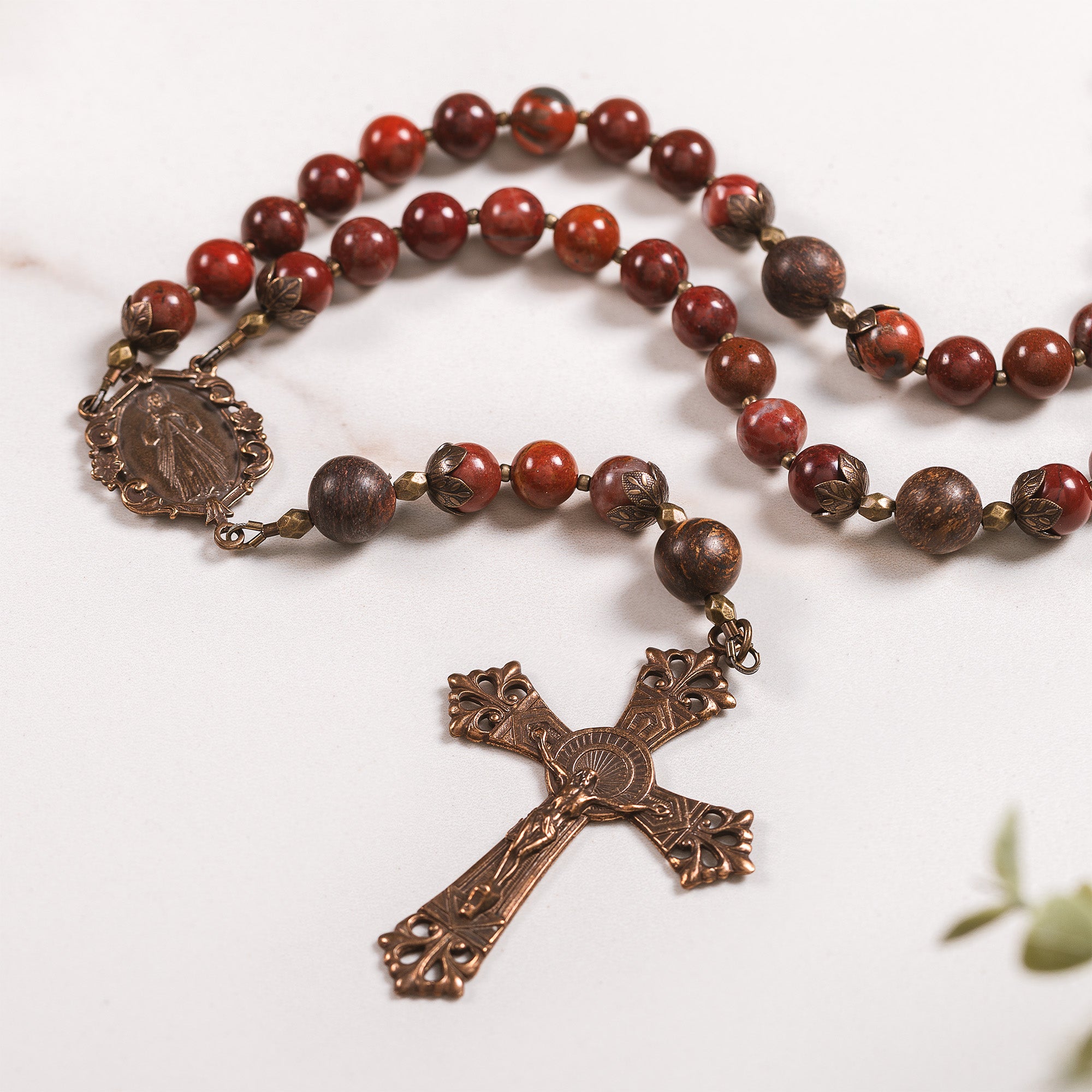
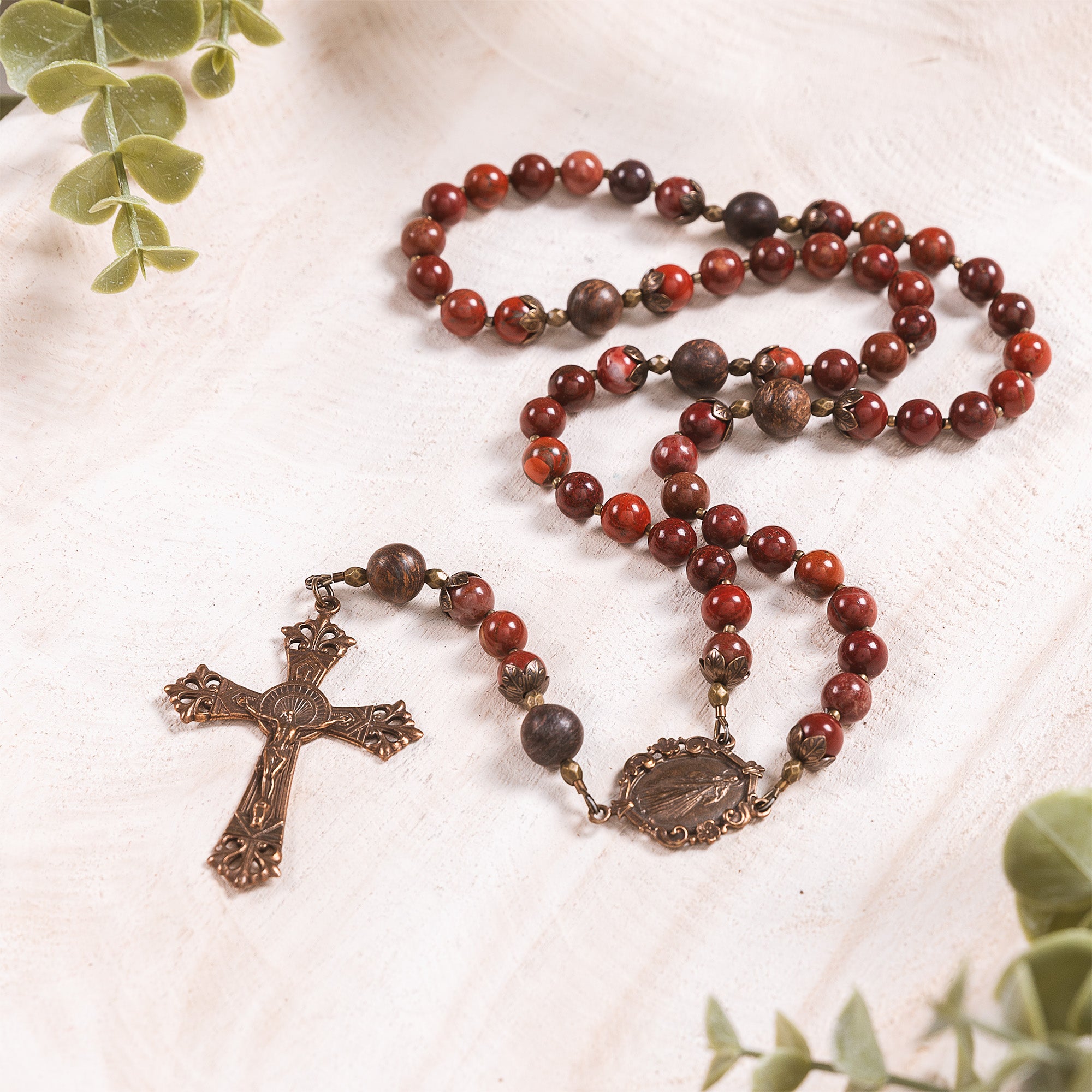
This beautiful Divine Mercy Chaplet Rosary has a colored Divine Mercy centerpiece and simple crucifix, its soft tones reflect the image's blue rays. Discover yours today at The Catholic Company!