Yes, in a real and mysterious sense, God did write the Bible, not by dictation as if the human authors were robots, but by inspiring them through the Holy Spirit so that what they wrote was truly their own words and style, and yet also truly the Word of God, free from error in what God intended to teach for our salvation.
Why did God give us the Sacred Scriptures in the first place?
The answer is connected with why God revealed Himself to man. Contrary to the Deist view of God—which holds that God created the world and then left it to its own devices—the true God is not an absentee Father. God created the world, man, and everything else to enter into a relationship of love.

But because we cannot love what we do not know, it was imperative for man to be able to truly know God. Unaided reason can examine creation and come to the conclusion that God exists but, as St. Thomas Aquinas reminds us, this knowledge of God’s existence “would only be known by a few, and that after a long time, and with the admixture of many errors.”
Mankind needed to know who God was—not just that He existed. So something more was needed. Our salvation depends upon this knowledge!
“Therefore,” Aquinas teaches in the Summa Theologiae,
...in order that the salvation of men might be brought about more fitly and more surely, it was necessary that they should be taught divine truths by divine revelation.
St. Thomas Aquinas
Yet, in communicating Himself, the infinite God had to do so in a way that could be understood by finite man. God did this through human language.
In order to reveal himself to men, in the condescension of his goodness, God speaks to them in human words: “Indeed the words of God, expressed in the words of men, are in every way like human language, just as the Word of the eternal Father, when he took on himself the flesh of human weakness, became like men.”
(Catechism of the Catholic Church §101)
What the Catechism expresses here is known as the “Christological Analogy of Scripture.” Just as Jesus Christ is both fully divine and fully human, yet without sin, so also Sacred Scripture is fully divine and fully human, but without error.
So the Bible is the word of God communicated in the words of men.
It is also God’s love letter to man. This means that the Bible is not a dead letter that speaks only to the past. Since it is the divine word of God inspired by the Holy Spirit, it is able to speak to us in our lives today. The events portrayed in the Bible will resonate with you in the twenty-first century—even though the Sacred Scriptures were completed over two thousand years ago!
In Sacred Scripture, the Church constantly finds her nourishment and her strength, for she welcomes it not as a human word, “but as what it really is, the word of God.” “In the sacred books, the Father who is in heaven comes lovingly to meet his children and talks with them.”
(Catechism of the Catholic Church §104)
The Bible is our master teacher because it is God Himself who teaches through Scripture. That is why St. Paul is able to say that Sacred Scripture is able to instruct you for salvation through faith in Christ Jesus. All scripture is inspired by God and profitable for teaching, for reproof, for correction, and for training in righteousness, that the man of God may be complete, equipped for every good work.
Much of the above answer to this important question comes from the Good Catholic series, How to Read the Bible.
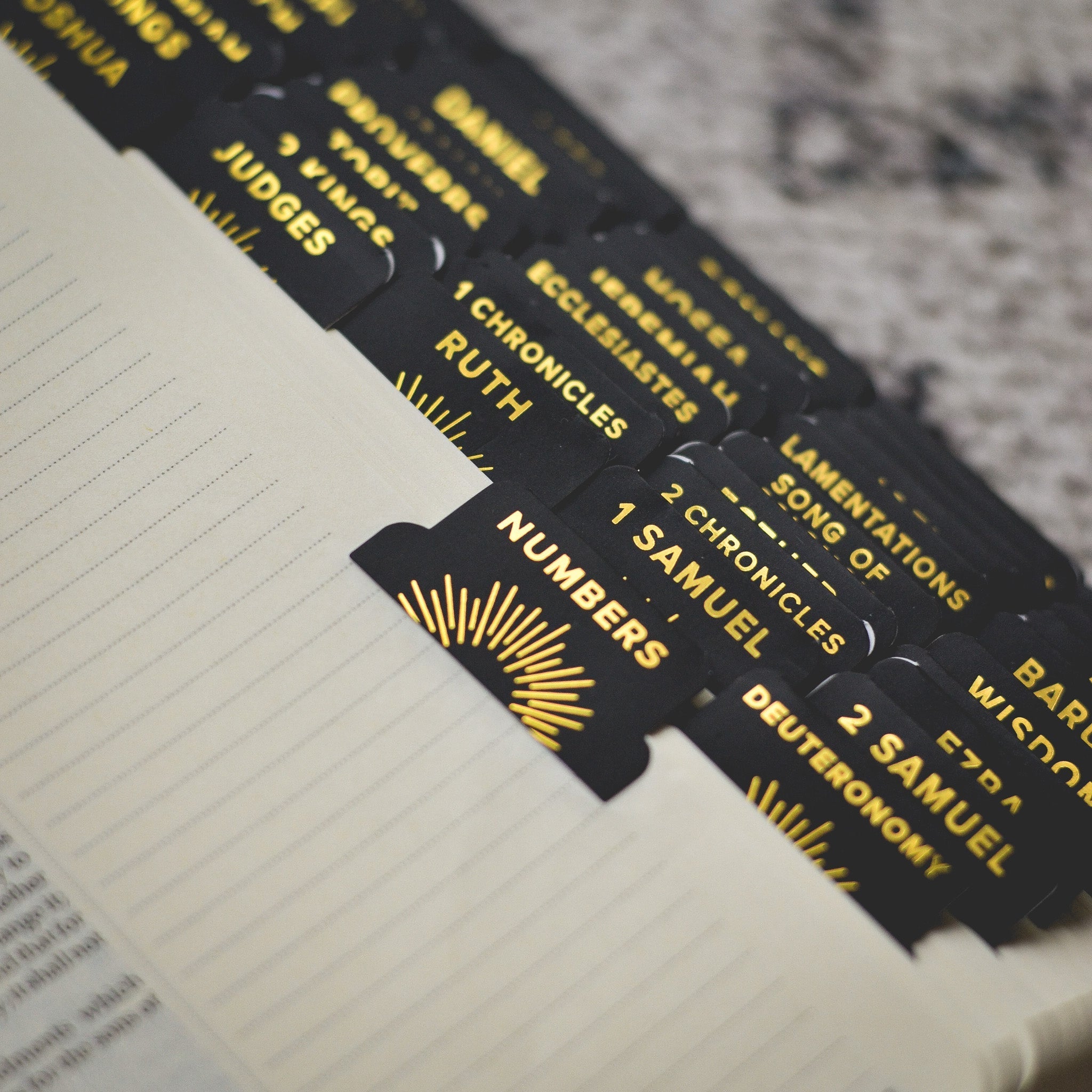
Reading, studying, and meditating on Scripture is important for us as Christians, but the Bible is a big book! One way to bring it to a more manageable size is to use tabs to easily show and mark the books of the Bible. Discover these easy-to-apply Light to My Path Catholic Bible tabs.