For centuries, Catholics have venerated the physical remains of saints. We call these relics, and they remind us of lives wholly lived for God. Among them are a number of relics that are described as incorruptible. But what does it mean when a body is called incorruptible, and why does the Church take notice?
In the Catholic tradition, the resurrection of the body is a core belief. At the end of time, Scripture teaches that the bodies of the faithful will share in Christ’s eternal life (Romans 8:11). The early Church honored martyrs and saints in part because their lives and deaths testified to Christ’s victory over sin and death. Sometimes, even before final resurrection, God allows a sign of that victory to be seen in a saint’s physical remains.
An incorruptible relic is a body or body part that, after death, has not undergone the normal process of decomposition expected in human remains, absent preservation methods. The Church does not take this as proof of sainthood on its own but as a possible sign of God’s grace at work in an individual whom the Church is already examining or honoring.
The phenomenon is not uniform. Some bodies remain supple, others desiccate in a way unlike typical decay. In each case, the Church investigates carefully. Her approach is neither credulous nor dismissive. She respects scientifically observable reality and simultaneously holds that God’s ways are not limited to natural explanation when He chooses to manifest grace.
One early example comes from the fourth century with Saint Cecilia, martyred under Roman persecution. When her tomb was opened centuries later, her body was found in a condition that astonished those present. For believers, her state testified to her fidelity to Christ even unto death.

In more recent history, saints such as Saint Bernadette Soubirous and Saint John Vianney exhibited similar signs when their remains were examined decades after death. In each case, the Church studied the condition of the body in light of historical testimony, virtuous life, and spiritual fruits associated with the person’s cause for canonization.
Why does this matter? For one thing, it points to the unity of body and soul in salvation. The Catechism of the Catholic Church teaches that the Christian hope of resurrection extends to the whole person. The body is not merely an object to be discarded; it is part of what God created good (CCC 364, 1004). When a body remains in a preserved state after death without artificial means, some see it as a sign — not a proof — of the body’s dignity and the soul’s holiness.
The witness of an incorruptible relic invites the faithful to reflect on holiness in embodied life. Saints like Cecilia, Bernadette, and John Vianney did not live apart from the world. They walked, breathed, suffered, and loved in the flesh (just like the rest of us). That their bodies show signs of preservation after death becomes, for many believers, a way of pointing beyond the natural toward the eternal.
The saints teach us that holiness is not abstract. It is lived in daily obedience to Christ’s command to love God and neighbor. The state of a relic is never an end in itself but a sign directing us back to a life of faith, hope, and charity.
A book to inspire your journey with the saints
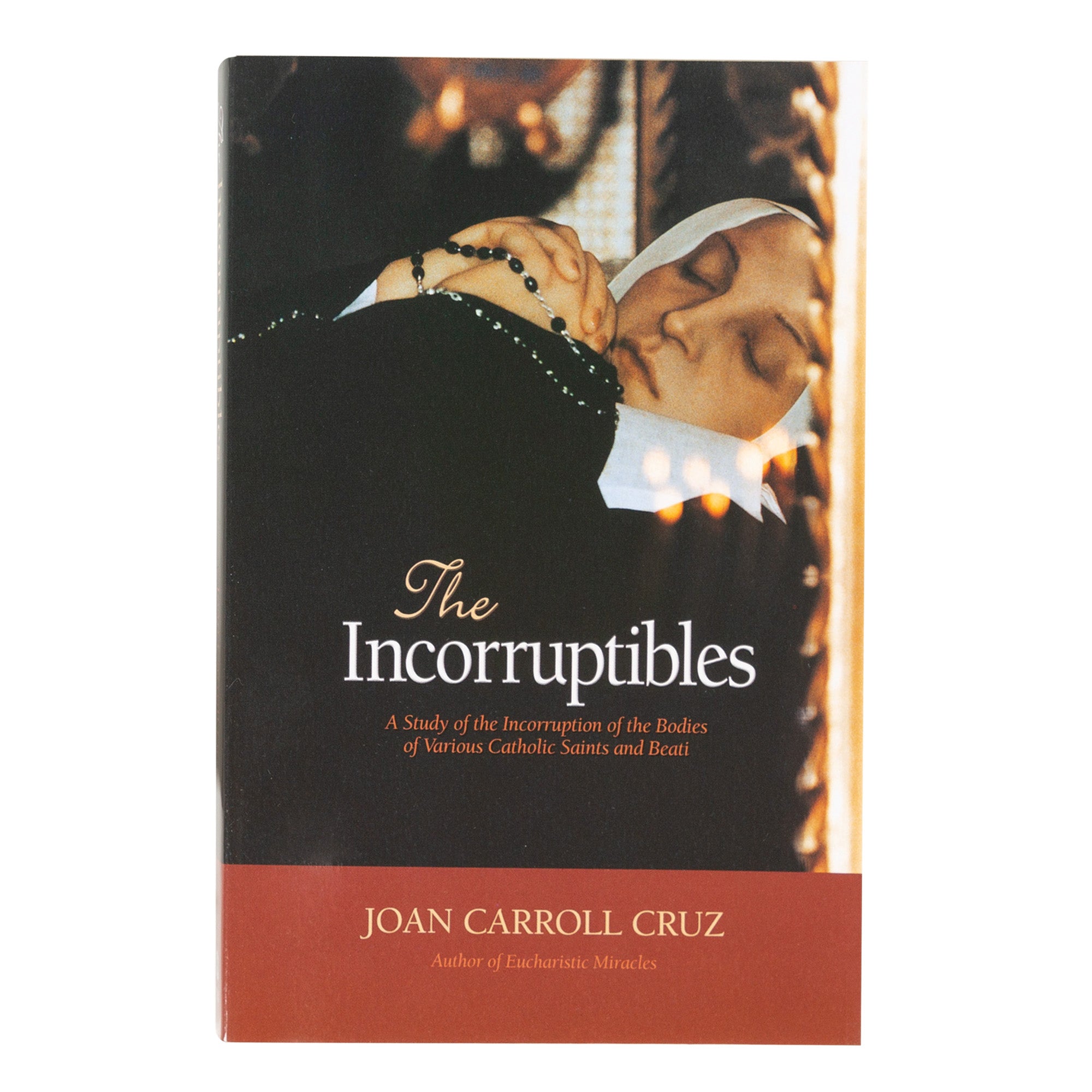
If the witness of incorruptible relics moves your heart and deepens your curiosity about how God’s grace worked in the lives of remarkable saints, The Incorruptibles offers a compelling collection of stories about these extraordinary remains. Each chapter invites you to encounter the saints not as distant figures, but as real men and women whose lives testify to Christ’s power over death and His invitation to holiness. Discover your copy today at The Catholic Company!