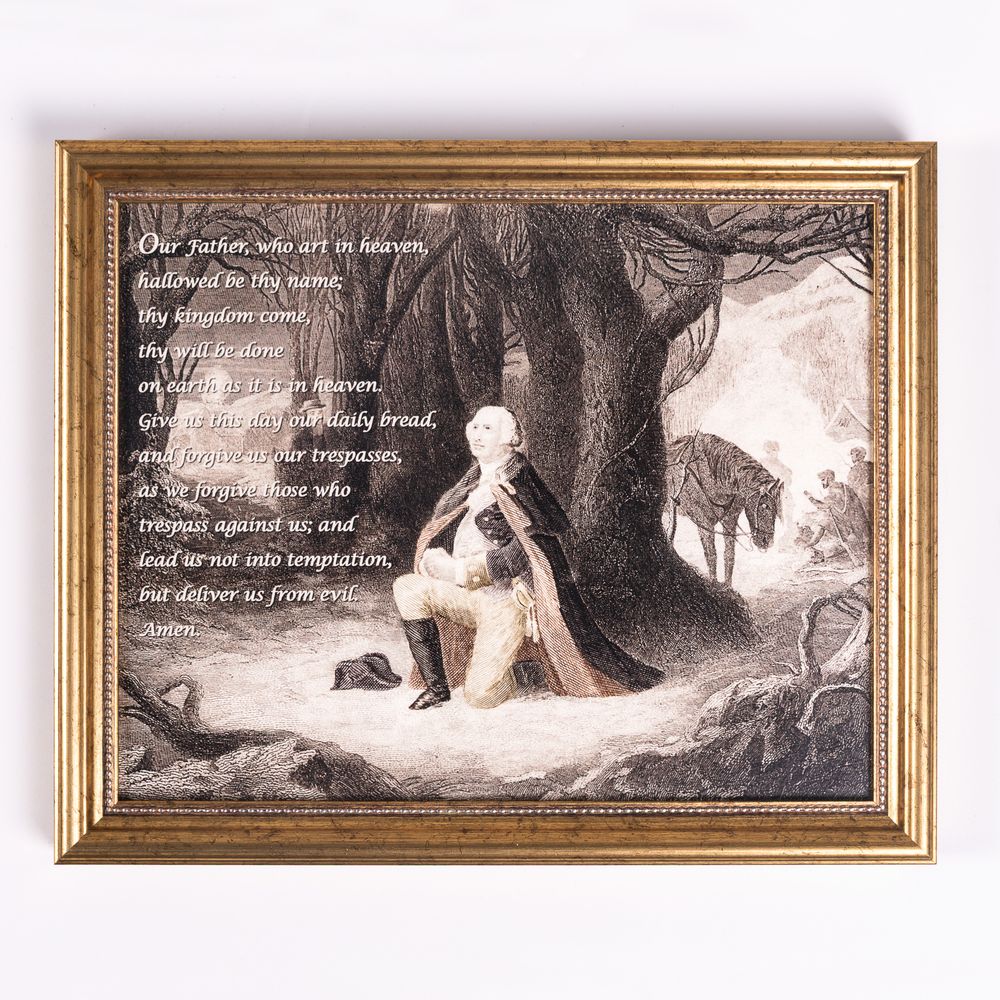
Few images are more recognizable in American art than George Washington kneeling in prayer at Valley Forge.
The scene has appeared in paintings, prints, stamps, books, and even congressional artwork. It depicts the commander of the Continental Army on his knees during one of the darkest moments of the American Revolution, seeking God's help as his soldiers endured the brutal winter of 1777-1778.
But did it actually happen?
The honest answer is that historians are not sure.
The famous story comes largely from Mason Locke Weems, an early biographer of Washington who also popularized the famous tale of the cherry tree. According to Weems, a local Quaker named Isaac Potts witnessed Washington praying alone in the woods and became convinced that a leader who prayed so fervently could not fail.
The account appeared years after the events at Valley Forge and shares some of the legendary qualities found in Weems's other stories about Washington. Yet that does not mean the image is entirely false.
George Washington was a religious man, even if he tended to keep his personal devotional life private. He regularly attended church, encouraged religious observance among his troops, called for days of prayer and thanksgiving, and frequently referred to Divine Providence in his writings.

In other words, historians may debate whether Washington knelt in that exact spot, at that exact moment, in that exact way, but few doubt that he believed the success of the American cause ultimately depended upon God's providence.
The painting is not meant as a historical photograph but as a visual reflection of a larger truth. Valley Forge was a moment of profound uncertainty. Soldiers lacked food, clothing, and supplies. Disease spread through the camp, and the future of the Revolution was far from certain.
Faced with circumstances beyond his control, Washington did what generations of leaders, soldiers, and ordinary people have done before and since: he turned to God.
As America approaches its 250th anniversary, the image remains a reminder that the nation's founding generation often spoke of Providence and understood that liberty carried both responsibilities and sacrifices. Christians everywhere can appreciate the humility reflected in a leader who recognized that human effort alone is not enough.
Perhaps that is why the image has endured. Not because it proves a particular historical event, but because it places Washington where every Christian eventually finds himself: in need of God's help. The challenges at Valley Forge were real, and so was the uncertainty surrounding the future of the nation.
Our Prayer at Valley Forge Framed Print beautifully depicts this iconic scene and includes the Our Father in elegant calligraphy. We selected this work to commemorate the 250th Anniversary of our nation. Originally painted by Henry Brueckner in the 1860s, it was later engraved by John C. McRae, in approximately 1870. It reflects a long-standing tradition in early American art, honoring both faith and perseverance through sacred and historical imagery. Find yours today at The Catholic Company!