

Imagine turning on your television at 8 p.m. on a Tuesday night in 1952. On NBC was Milton Berle, one of the biggest entertainers in America, known as "Mr. Television." On CBS, Frank Sinatra, the beloved musical star, hosted his own show. These men so dominated the entertainment scene that the third major network, ABC, completely vacated the 8 p.m. programming hour, leaving it to local stations.
Then there was the struggling DuMont Television Network, where a Catholic bishop named Fulton J. Sheen stood in front of a blackboard competing with two of television's biggest stars.
Bishop Sheen had no band, backup singers, dancers, celebrity guests, or elaborate set. His entire show consisted of the bishop in his cassock with a piece of chalk in his hand, guided by his brilliant mind, quick wit, and desire to save souls.
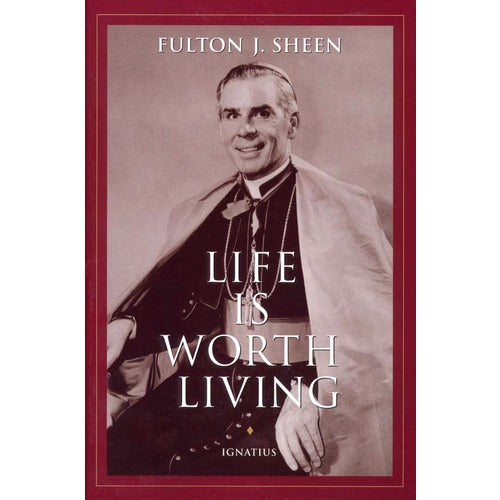
The entertainment world had little reason to believe Life Is Worth Living could compete. The Tuesday night time slot was so punishing that the industry called it an "obituary spot," and upon hearing DuMont's programming plan, a prominent Hollywood executive famously dismissed Sheen as "a dead duck."
Instead, Americans began watching—and continued tuning in by the millions.
Within a few years, Sheen had become one of the most unlikely television stars in American history, demonstrating the extraordinary power of meeting people where they already were without compromising the truths they needed to hear.
What Was Fulton Sheen's Life Is Worth Living?
By the time television entered its golden age, Fulton Sheen was hardly an unknown priest. He had already spent years teaching philosophy and theology at The Catholic University of America and had become a nationally recognized Catholic voice through The Catholic Hour radio program. Catholics across the knew his wit, wisdom, and evangelical mission.
Television, however, offered an entirely new opportunity. Life Is Worth Living debuted nationally on the DuMont Television Network in 1952. Its format resembled the classroom lectures Sheen had given for years: one man, one blackboard, and a half-hour devoted to religious, moral, philosophical, political, and cultural questions.
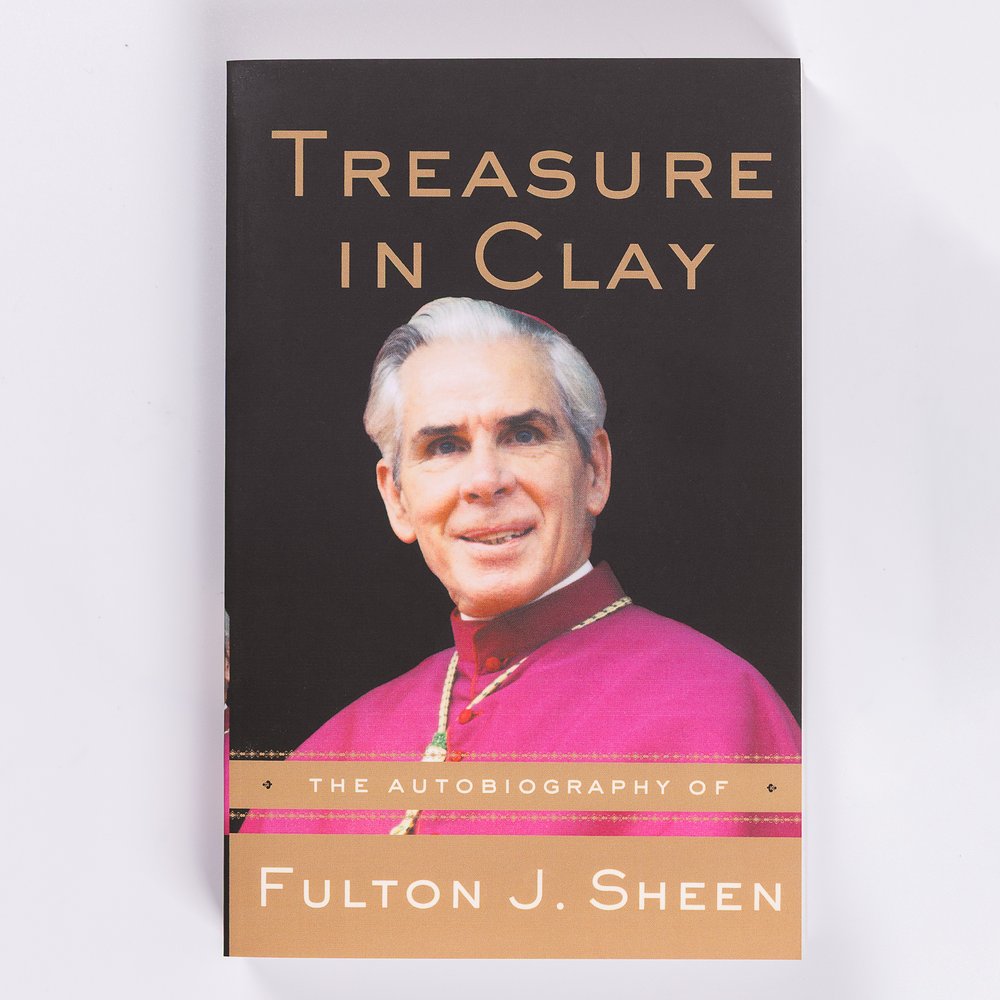
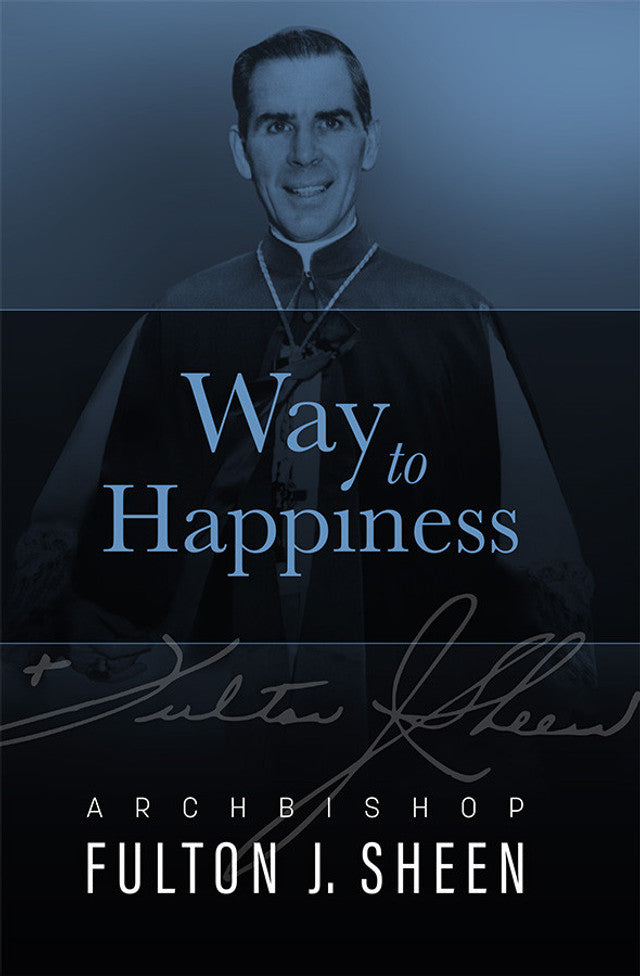
It sounds almost impossible, but to the amazement of the network and the delight of the Church, people watched—and kept watching. If you want to go deeper into his extraordinary life story, his memoir Treasure in Clay remains one of the most candid and inspiring Catholic autobiographies ever written.
A Catholic Bishop in Prime Time
Sheen's Tuesday evening time slot placed him in direct competition with two entertainment giants: Milton Berle and his enormously popular Texaco Star Theater, and Frank Sinatra in his own variety showshow.
Berle wasn't simply a television celebrity. Nicknamed "Uncle Miltie," because he was so widely watched on TV all over the country, he had become a symbol of the new medium itself, while Sinatra was already a movie star, singer, and household name.
Yet audiences discovered that listening to Sheen was compelling television. He could be funny and theatrical, intellectually challenging, and deeply serious, sometimes within the same half-hour. His years as a professor had taught him how to hold a room, while radio had taught him how to speak intimately to people he could not see. On television, he did both.
How Popular Was Fulton Sheen's Television Show?
The numbers reveal just how extraordinary the phenomenon became. At its height, Life Is Worth Living reached an estimated 30 million viewers in a single week, at a time when the entire U.S. population was only around 160 million.
That meant roughly one out of every five Americans was tuning in to watch a Catholic bishop lecture at a blackboard. Even more remarkable, Catholics were a minority of the American population, and estimates suggest that approximately 70% of Sheen's viewers were non-Catholic. Protestants, Jews, Catholics, and people with little religious affiliation all found reasons to listen.
Sheen was not simply speaking to Catholics who already agreed with him. He had entered the broader American conversation, addressing the cultural challenges and deepest human questions of his time with a message that resonated far beyond the Church and was relevant to everyone. His approach offers a timeless model for sharing the Catholic faith with others in any era.
[[gods-world-and-our-place-in-it,red-fulton-sheen-decade-auto-rosary]]
Fulton Sheen vs. Milton Berle
As Sheen's audience grew, Sinatra's show was canceled when ratings plummeted, and the bishop's competition with Milton Berle became part of the fun. The men developed a friendly and very public exchange of jokes that gave Sheen even greater visibility in pop culture.
Berle's program was sponsored by Texaco, whose premium gasoline was called "Sky Chief," prompting the two men to joke that they ultimately worked for the same "boss" above. Sheen also played along with Berle's famous "Uncle Miltie" persona, once greeting his own audience as "Uncle Fultie."
The humor worked because Sheen understood the human heart. He knew that communicating serious truths did not require him to be humorless. He entered American pop culture, shared the Faith with joy, and still remained unmistakably himself.
The Night Fulton Sheen Won an Emmy
Sheen did not disguise Catholicism as entertainment. He could be bold, witty, and joyful, but he took his evangelical mission seriously.
Rather than focusing primarily on doctrines meaningful only to practicing Catholics, he began with the questions people were already asking:
What makes a marriage last? Why do we suffer? What makes us genuinely happy? What is freedom? Why do we feel guilty? What is happening to our culture? Why do human beings struggle between good and evil? What is the purpose of this life?
These were not only Catholic questions. They were human questions, shared by Catholics, Protestants, Jews, people of other faiths, and those with no religion at all.
Sheen began with experiences almost anyone could recognize and gradually led his audience toward deeper philosophical and theological truths. Blending theology, philosophy, politics, morality, psychology, and everyday life, he understood what he believed and he also understood the people he was trying to reach.
He recognized their longing for something more, even when they could not fully articulate it, and showed them where the answers could ultimately be found. His reflections on prayer were especially powerful — Lord, Teach Us To Pray gathers some of his most beloved teachings on the subject into a single volume.
What Fulton Sheen Understood About Media Before Social Media
Seen from our own age of YouTube, podcasts, Instagram, TikTok, streaming television, and countless other digital platforms, Fulton Sheen's media ministry was also astonishingly modern.
He masterfully implemented a principle that remains essential to evangelization: Go where the people are and speak to their deepest needs and longings. If he were alive today, we cannot know which technologies he would embrace. But his life suggests that he would have been paying attention to wherever people were gathering, listening, questioning, and searching.
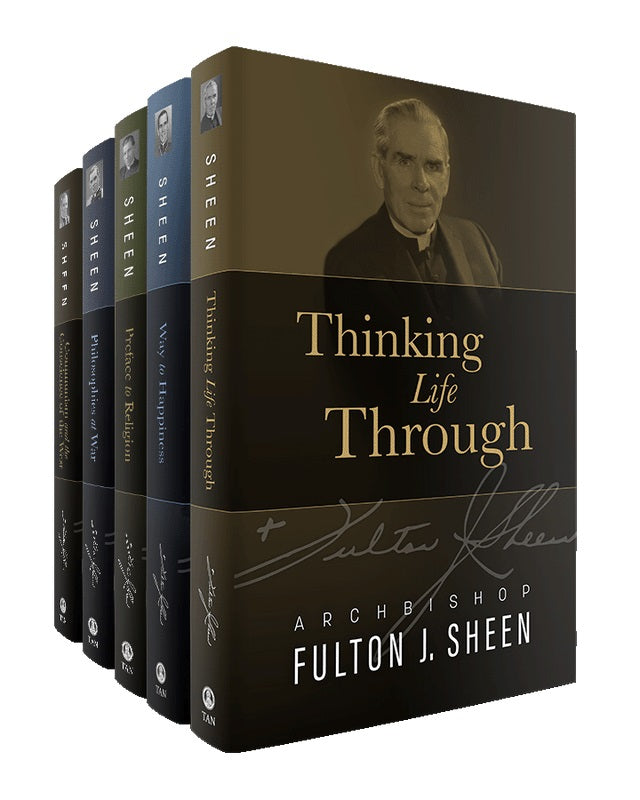
In that sense, Sheen belongs among the popular modern Catholics whose distinctive voices and faithful witness have found new ways to bring timeless Catholic truth into the culture of their own day. For those inspired by his legacy, the full Fulton Sheen collection features books, prayer cards, and devotional gifts that keep his teachings alive.
The Secret Behind Fulton Sheen's Public Success
There is an extraordinary contrast at the center of Fulton Sheen's television career. Millions saw the public man standing beneath studio lights, but few saw the priest kneeling before the Blessed Sacrament.
Sheen remained committed to making a daily Holy Hour in the presence of Christ in the Eucharist throughout his 60-year priesthood. To understand why the Eucharist was so central to his spiritual life — and why it remains the heart of Catholic faith — read our guide on the importance of the Holy Eucharist in Catholicism.
Bl. Fulton Sheen's hidden holy hour puts his television success into its proper perspective. Before he spoke about God to others, he spent time listening to God, and before millions listened to him, he united himself to Christ.
His influence was not simply the product of charisma, intellect, or mastery of a new technology. At the heart of his ministry was something much simpler: a priest and his Eucharistic Lord.
Read Next: The Beatification of Archbishop Fulton Sheen: Celebrating His Life, Mission & Legacy
[[the-worlds-first-love-mary-mother-of-god,fulton-sheen-any-sinner-is-capable-t-shirt]]