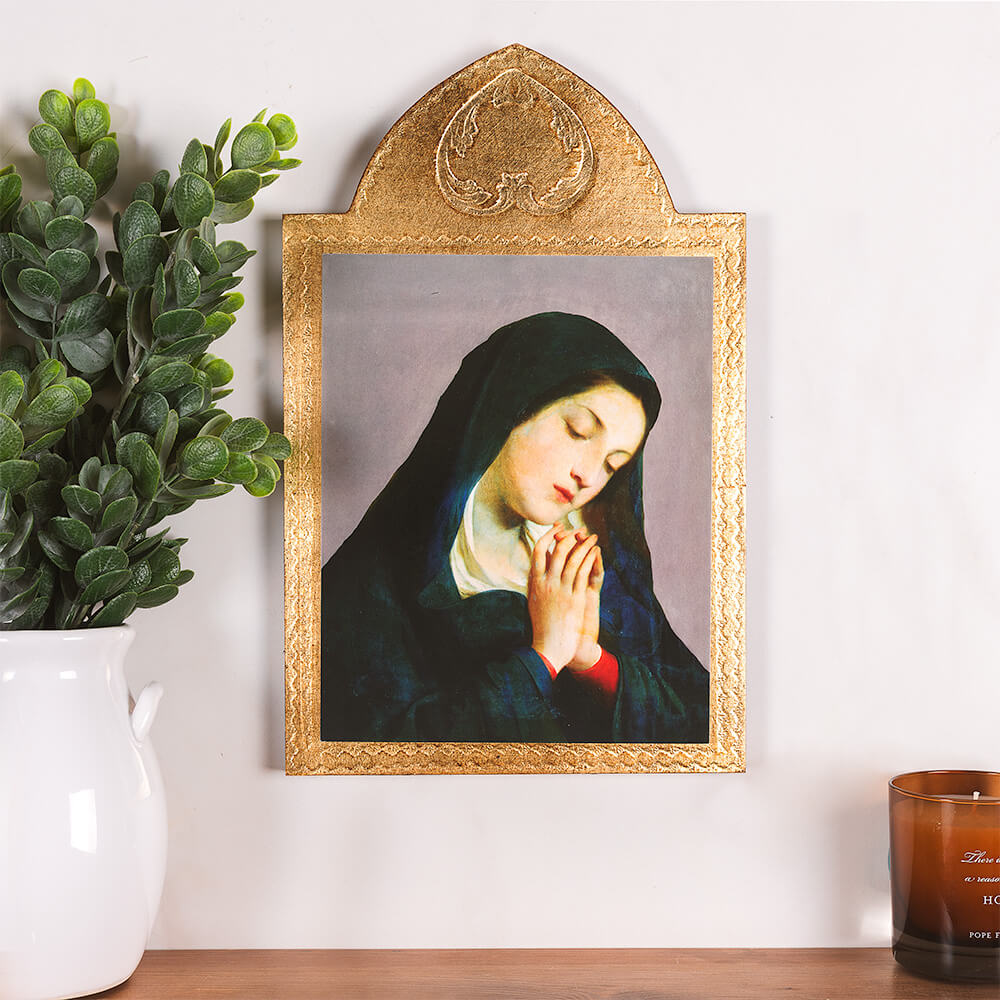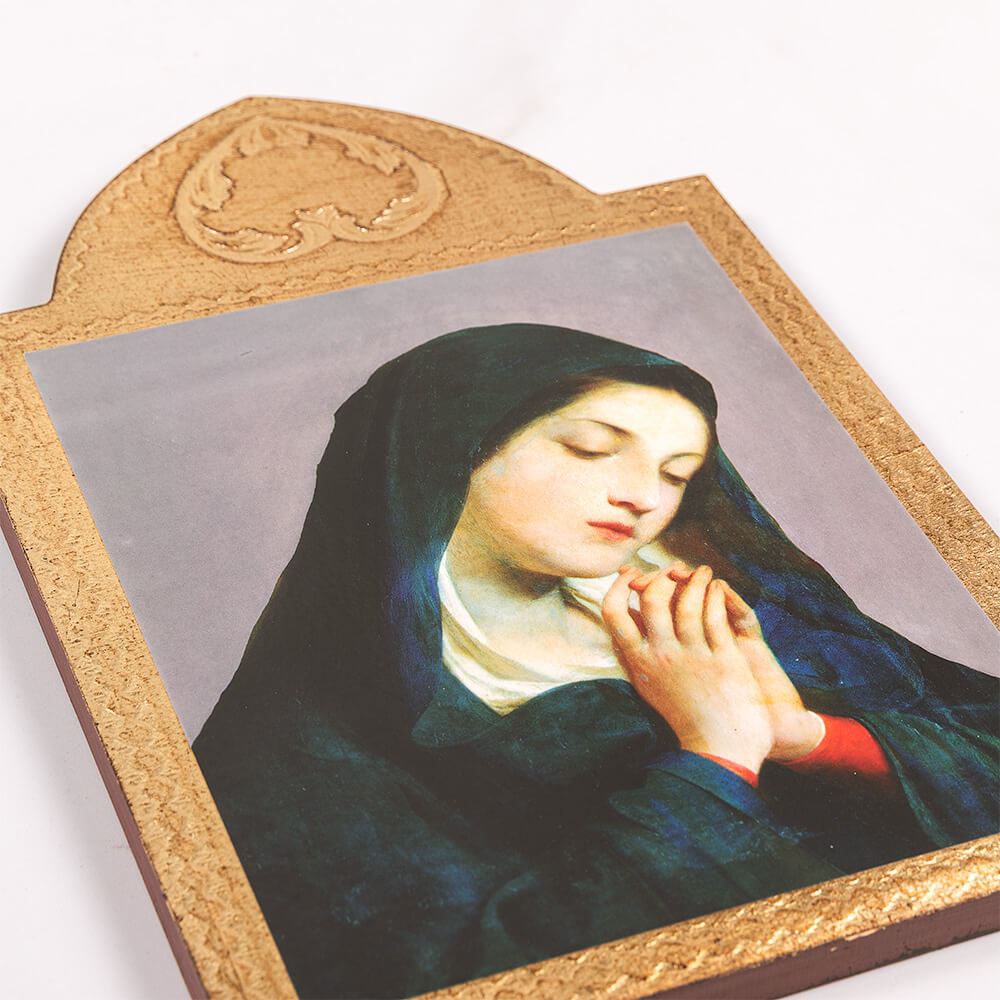





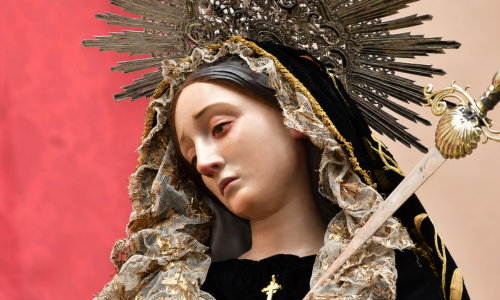
The Church gives the Blessed Virgin Mary many beautiful titles: Mother of God, Queen of Heaven, Our Lady of Grace, Star of the Sea. But one of her most tender and evocative human titles is Our Lady of Sorrows.
Under this title, we contemplate Mary not at the joyful Annunciation, or holding the Christ Child at Bethlehem, but walking beside her Son as the shadow of the Cross enters His life and hers.
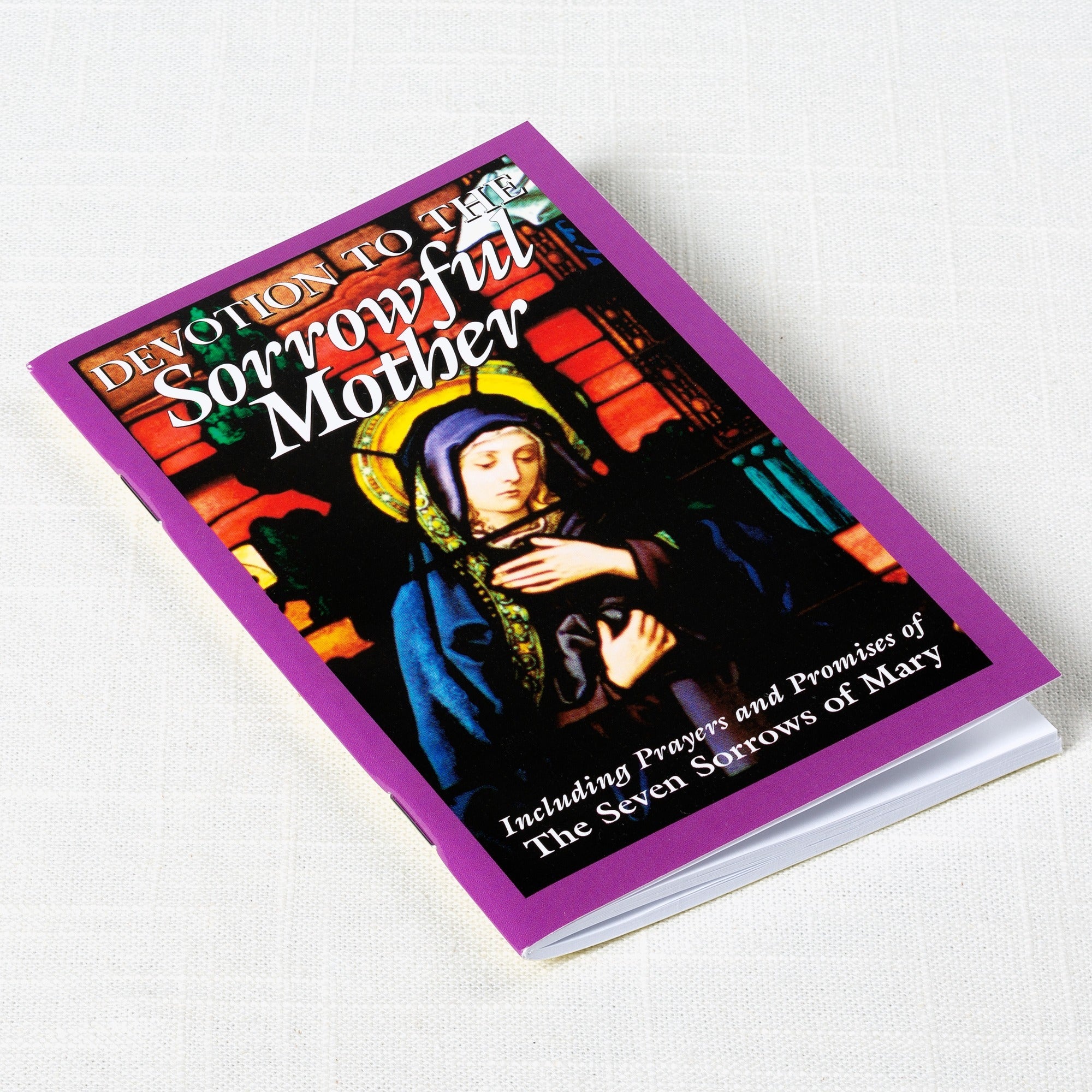
The devotion to the Seven Sorrows of Mary recalls seven moments of particular suffering in Mary's life, from Simeon's prophecy that a sword would pierce her heart to the burial of Jesus.
For Catholics who love Mary, Our Lady of Sorrows offers us something especially powerful. She teaches us not only how to suffer, but how to remain faithful in the midst of our suffering, and how to persevere in trust and abandonment.
Who Is Our Lady of Sorrows?
Our Lady of Sorrows is a title of the Blessed Virgin Mary honoring the profound suffering she endured in union with her Son throughout His earthly life and Passion. Unlike Marian titles associated with particular apparitions, Our Lady of Sorrows is Mary herself contemplated as the Sorrowful Mother, or in Latin, "Mater Dolorosa."
The biblical foundation for the devotion appears early in the life of Jesus. When Mary and Joseph presented the infant Christ in the Temple, Simeon recognized the Messiah and foretold both the opposition Jesus would face and the suffering of His Mother:
"Behold, this child is destined for the fall and rise of many in Israel, and to be a sign that will be contradicted—and you yourself a sword will pierce—so that the thoughts of many hearts may be revealed." — Luke 2:34-35
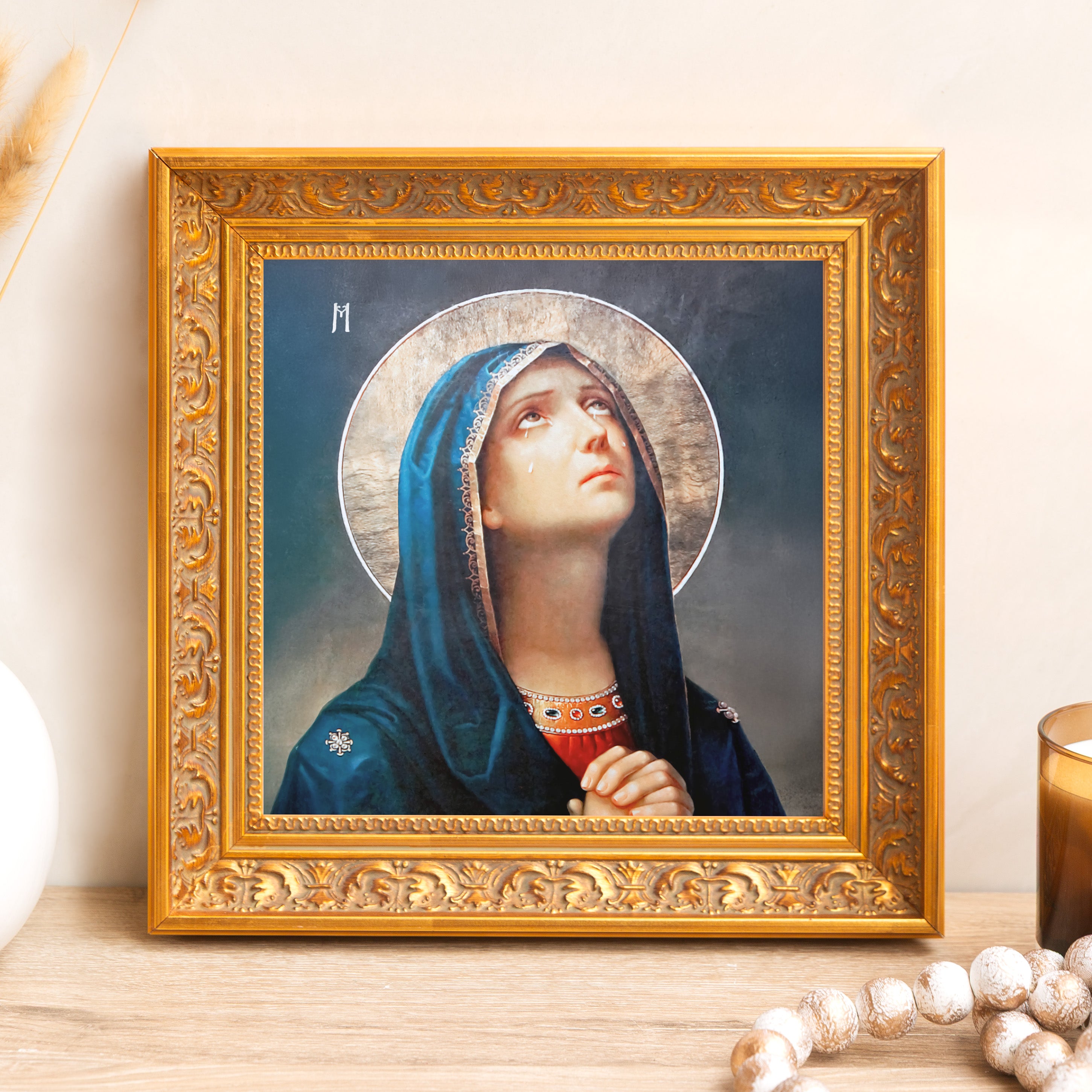
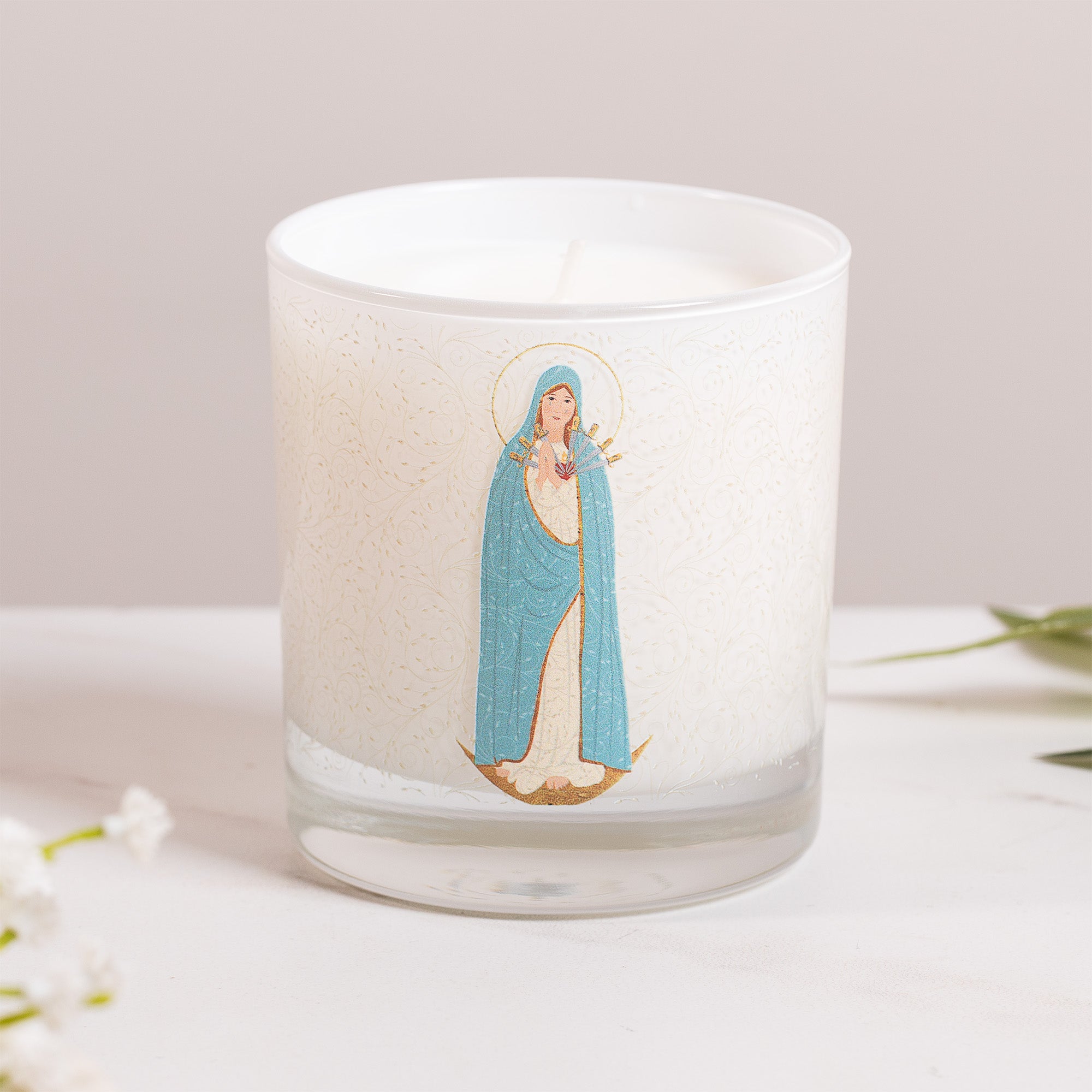
The sword foretold by Simeon became one of the most recognizable symbols of Our Lady of Sorrows. In sacred art, Mary is often depicted with a single sword piercing her heart in reference to Simeon's prophecy, or with seven swords representing the Seven Sorrows.
In contemplating Mary's sorrows, Catholics see a profound model of discipleship: what it means to love Christ completely, to remain faithful in suffering, and to trust God when His plan remains hidden.
When Is the Feast of Our Lady of Sorrows?
The Catholic Church celebrates the Memorial of Our Lady of Sorrows on September 15, immediately following the Feast of the Exaltation of the Holy Cross on September 14. The placement is beautifully fitting.
On September 14, the Church looks upon the Cross of Christ. On September 15, we contemplate the Mother who stood beneath it. The two celebrations belong together because Mary's suffering can never be separated from Christ's Passion. Devotion to Our Lady of Sorrows ultimately leads us beyond Mary to Jesus and the mystery of His saving Cross.
In our liturgical year, the month of September is also traditionally dedicated to the Seven Sorrows of the Blessed Virgin Mary, making it an especially fitting month to pray the Seven Sorrows Chaplet and meditate more deeply on Mary's union with Christ.
What Is the History of Our Lady of Sorrows?
Christians have contemplated Mary's suffering, especially her presence at the Crucifixion, since the early centuries of the Church, but devotion to her sorrows developed more fully during the Middle Ages.
A particularly important influence was the Order of the Servants of Mary, or Servites, founded in Florence in the 13th century by the Seven Holy Founders of the Servite Order. Meditation on the sorrows of the Blessed Virgin became central to Servite spirituality, and the Order helped spread the devotion throughout the Church.
Saints like Bonaventure, Bridget of Sweden, Bernard of Clairvaux, Ignatius, Alphonsus Liguori, Padre Pio, Pope John Paul II and many others professed particular devotion to Our Lady of Sorrows.
The number of Mary's sorrows was not always fixed at seven. Christians meditated upon various painful events in her life before the Seven Sorrows we honor today became standardized. With its biblical symbolism of fullness and completeness, the number seven came to represent not simply seven moments of grief, but the fullness of Mary's suffering as she loved and accompanied her Son.
The liturgical observance also developed over time. Pope Pius VII extended a feast honoring the Seven Sorrows to the universal Church in the early 19th century, and the September observance eventually became the Memorial of Our Lady of Sorrows celebrated throughout the Church today.
Older Catholic calendars and devotional books may also refer to a commemoration of Mary's sorrows during Passiontide, reflecting the devotion's longstanding connection to the Passion of Christ.
What Are the Seven Sorrows of Mary?
The Seven Sorrows of Mary trace her maternal journey from the infancy of Jesus to His burial. Together, they allow us to walk beside Mary as she walks beside Christ—and to discover within her sorrows lessons for our own lives of faith.
1. The Prophecy of Simeon
Luke 2:25-35 tells the story of Mary and Joseph bringing their newborn Son to the Temple, where Simeon foretells that Jesus will be contradicted and that a sword will pierce Mary's own heart.
Imagine receiving such words while holding your infant child. While we do not know precisely what Mary understood in that moment, Simeon's prophecy made clear that loving and accompanying her Son, the Messiah, would cost her dearly.
What Mary teaches us: We can trust God even when we know difficulty lies ahead and cannot see how it will unfold or what form it will take. When fear threatens to take hold, we can give that to the Lord and ask Him for peace.
2. The Flight into Egypt
In Matthew 2:13-15 Joseph is warned in a dream that Herod intends to kill Jesus. Mary and Joseph flee with the Child into Egypt, leaving the familiarity and security of home behind to protect Him.
The Holy Family becomes a displaced family living with danger and uncertainty.
What Mary teaches us: God remains present when life changes suddenly and we are forced into circumstances we never expected or chose. We can entrust ourselves to His provision.
3. The Loss of the Child Jesus in the Temple
Luke 2:41-52 reveals how Mary and Joseph discovered that twelve-year-old Jesus was missing during the festival of Passover, and searched anxiously for Him for three days.
When they finally find Him in the Temple, Mary tells Him:
"Your father and I have been looking for you with great anxiety." — Luke 2:48
Even the Mother of God knew the anguish of searching for Jesus and experiencing His unexpected absence.
What Mary teaches us: We should continue seeking Christ when He seems distant—and continue praying for those we love when they seem far from Him. When circumstances leave us feeling powerless, the power of prayer is greater than we can imagine.
4. Mary Meets Jesus on the Way to Calvary
Catholic tradition contemplates Mary encountering Jesus as He carries His Cross toward Calvary. Although Scripture does not explicitly narrate this particular meeting, it places Mary within the events of Christ's Passion and ultimately at the foot of His Cross.
The Child Mary once carried in her womb and arms is now carrying the instrument of His execution. Powerless to take it from Him, she unites her heart to His and accompanies Him.
What Mary teaches us: Many crosses in life can be eased by the love of others, but in the end, they are ours alone to carry. Accompanying another with the gift of presence is itself a powerful gift of love, even when we feel helpless.
5. Mary Stands at the Foot of the Cross
John 19:25-30 reveals the heart of the devotion to Our Lady of Sorrows.
Mary stays. She cannot stop the nails or silence the mockery. She cannot remove the Cross, which was his destiny and our salvation, but she stands as close as she can to her beloved Son to unite her agony to His.
From the Cross, Jesus then turns to John and says:
"Behold, your mother." — John 19:27
Catholic tradition has long recognized something profound in this moment. Mary, the Mother of Christ, is also given as mother to His disciples, and to us all.
What Mary teaches us: There is a form of love that remains when there is nothing left to fix. When we give this love, we unite ourselves closely to Christ and His Holy Mother.
6. Jesus Is Taken Down From the Cross
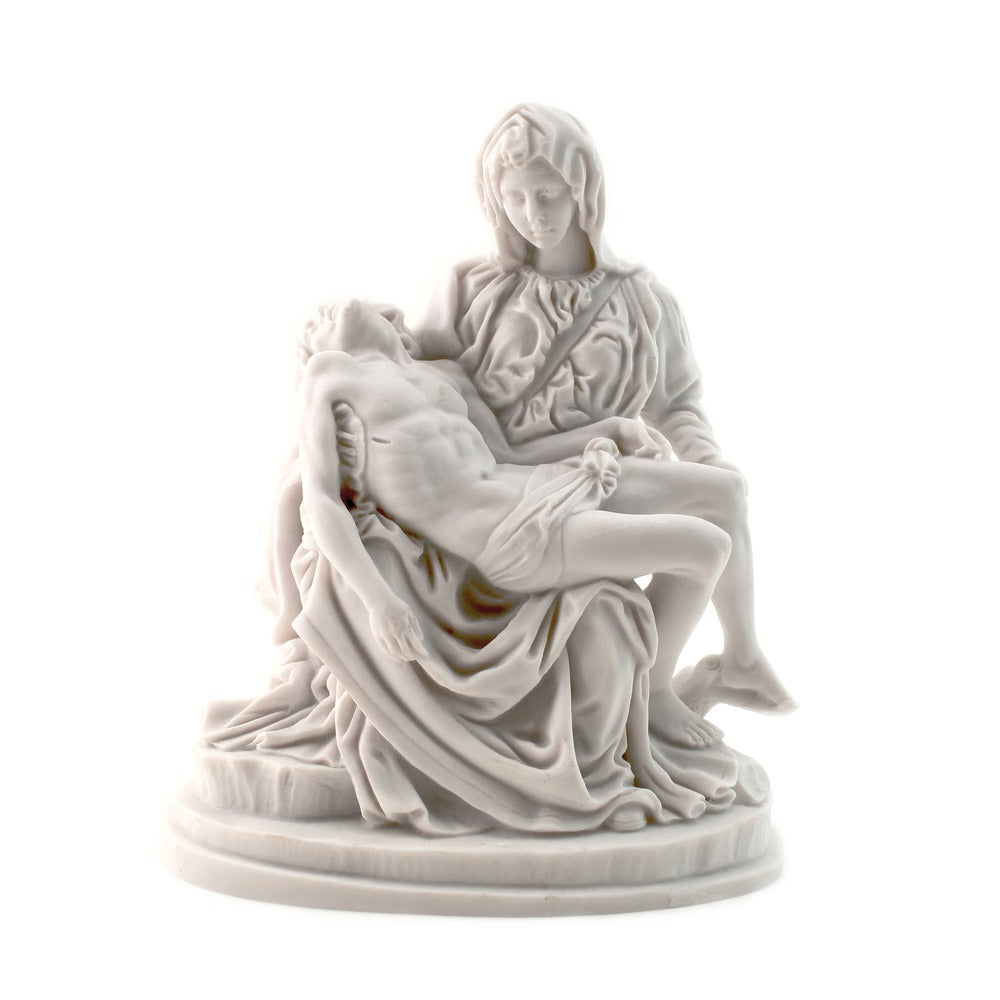
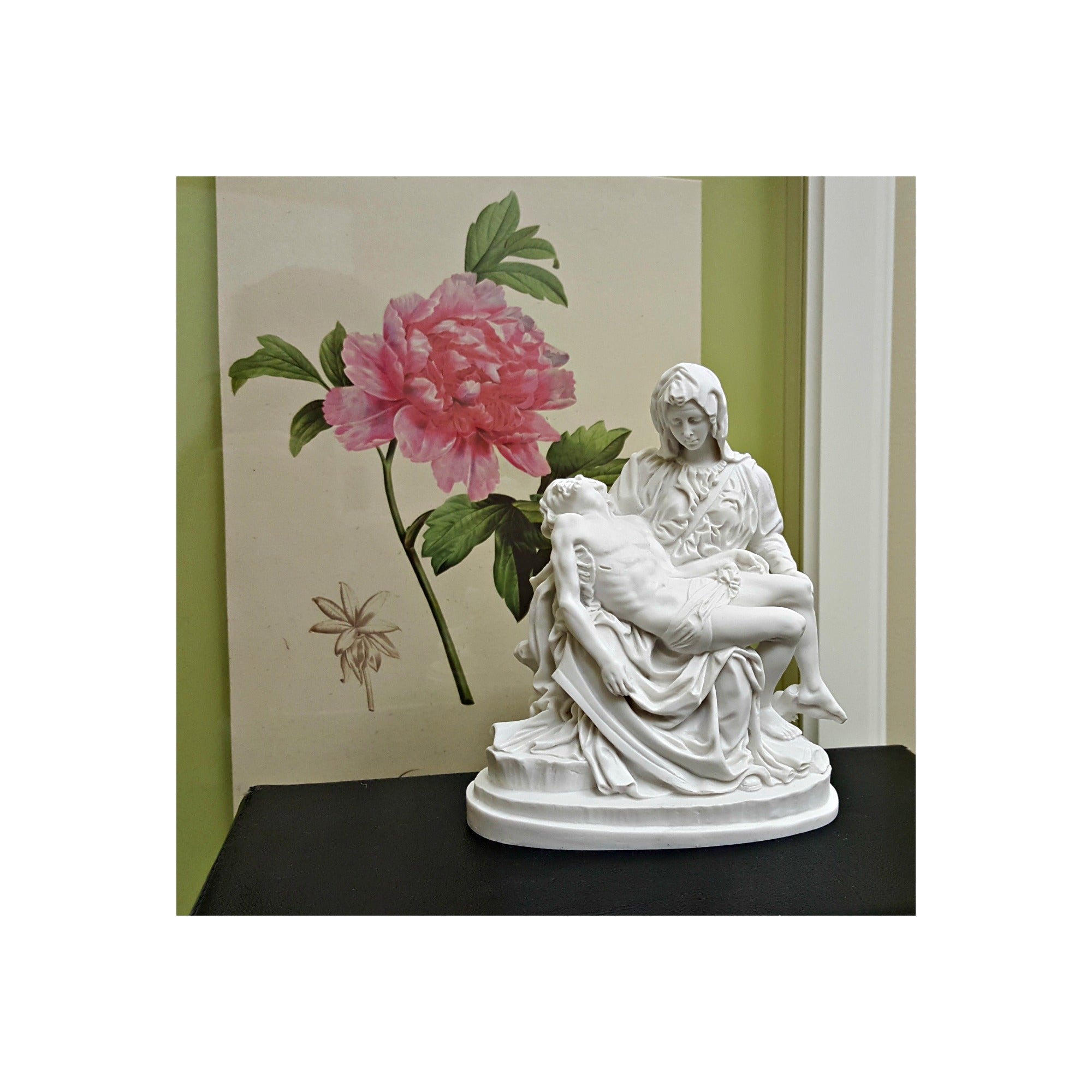
After Jesus dies, His body is removed from the Cross. Sacred art has represented this moment for centuries, most famously in the Pietà, where Mary holds the dead body of the Son she once held as a tiny babe.
Bethlehem and Calvary meet in Mary's arms. The hands that once wrapped Him in swaddling clothes now receive His wounded body from the Cross and cradle Him once more.
What Mary teaches us: Mary knows the pain of grief and loss. We can bring our own bereavement to a Mother who understands what it means to mourn someone we deeply loved. She can console us in every grief and sorrow.
7. Jesus Is Laid in the Tomb
Finally, in John 19:38-42 Mary sees Jesus laid in the tomb.
This last sorrow contains an important lesson for every Christian: Mary must live through Holy Saturday before she can experience Easter Sunday.
She has the promises of God, but everything she can see in the moment appears to contradict them. Still, she believes.
What Mary teaches us: We can remain faithful during our own "Holy Saturdays" - the times when God seems silent, His work is hidden, and faith and hope call us to trust in what we cannot yet see.
What Is the Seven Sorrows Chaplet?
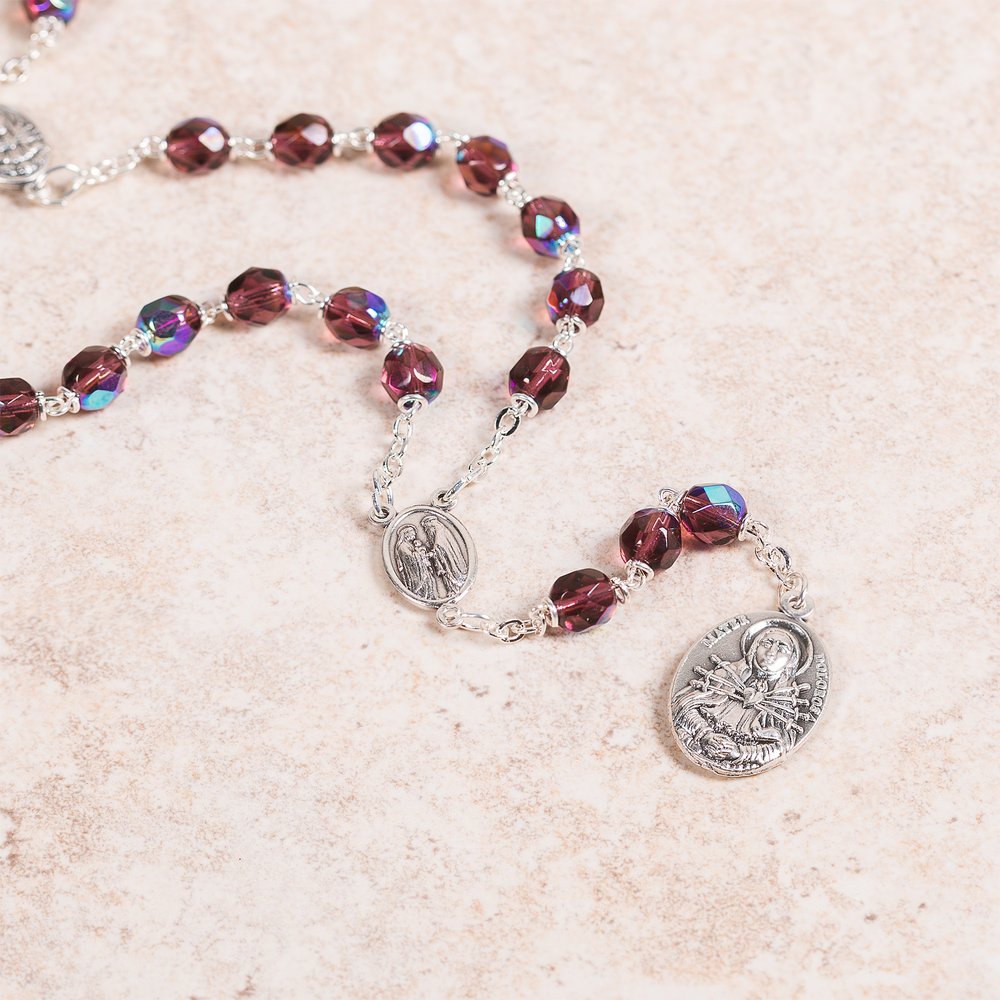
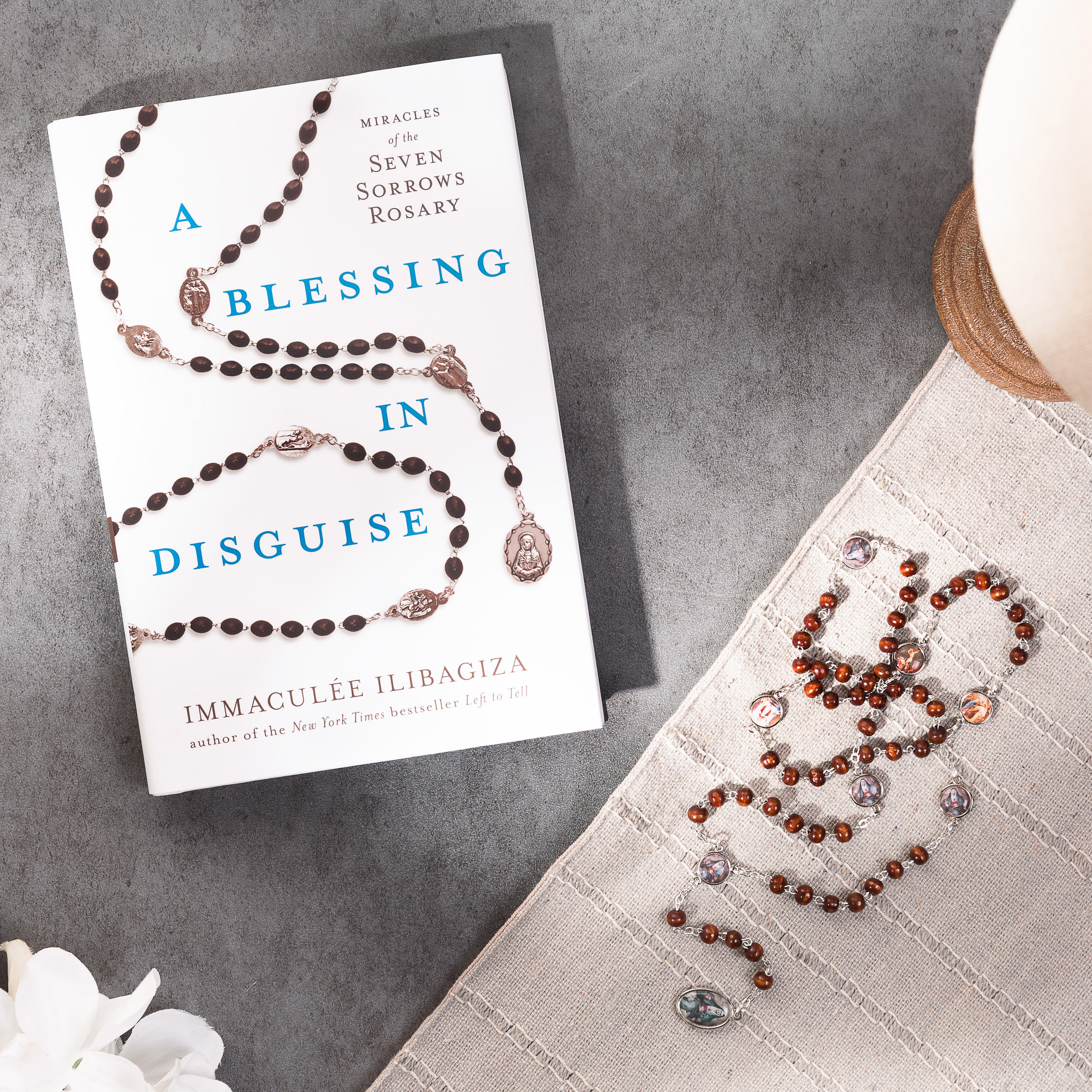
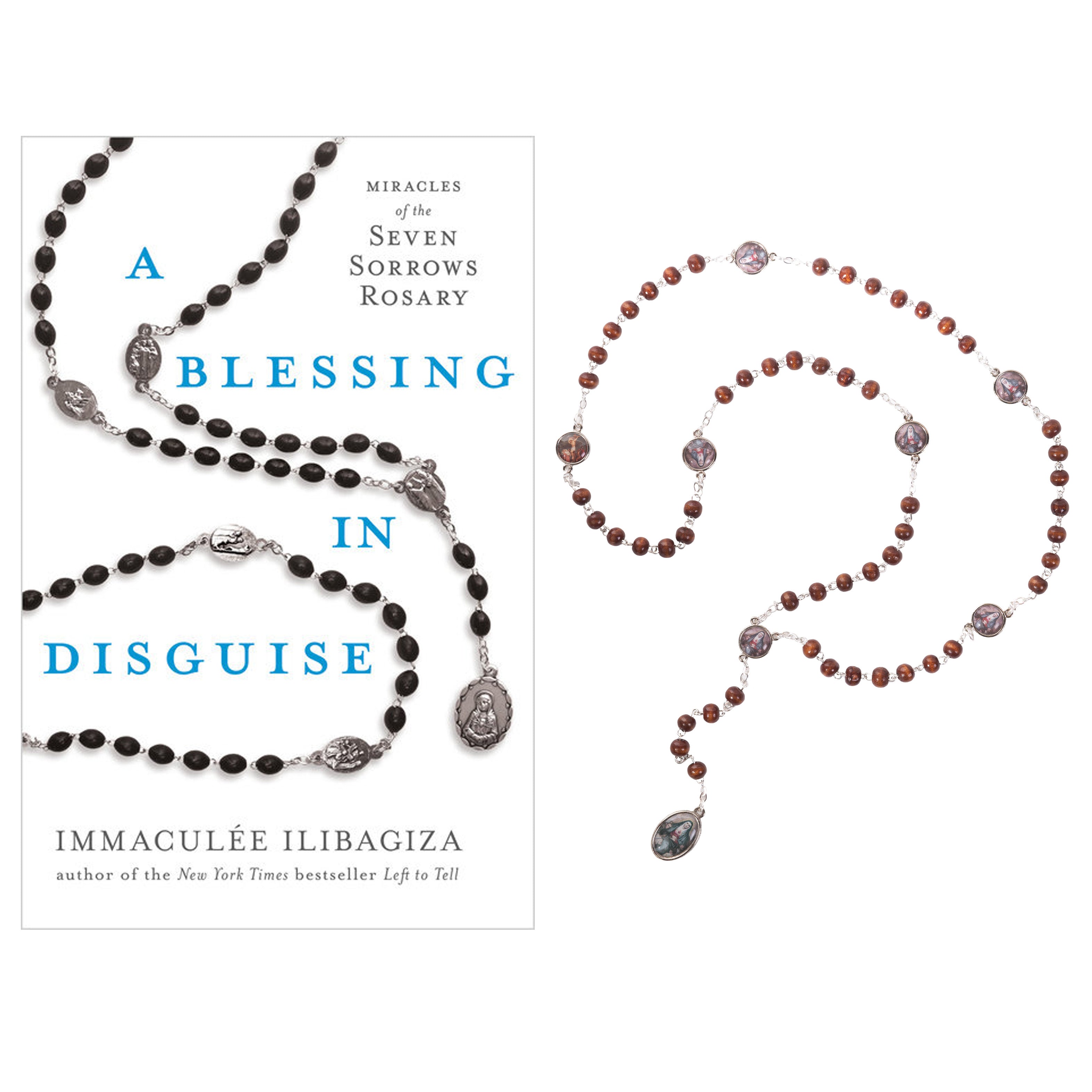
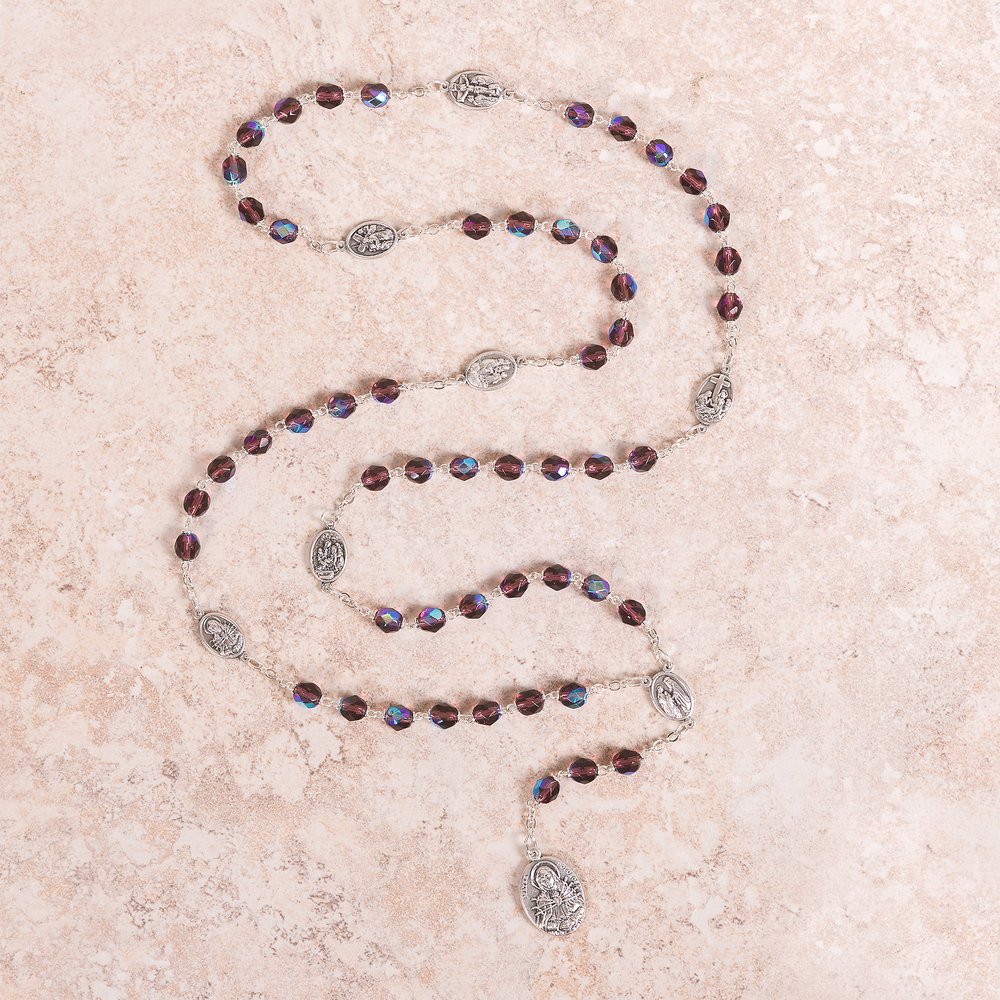
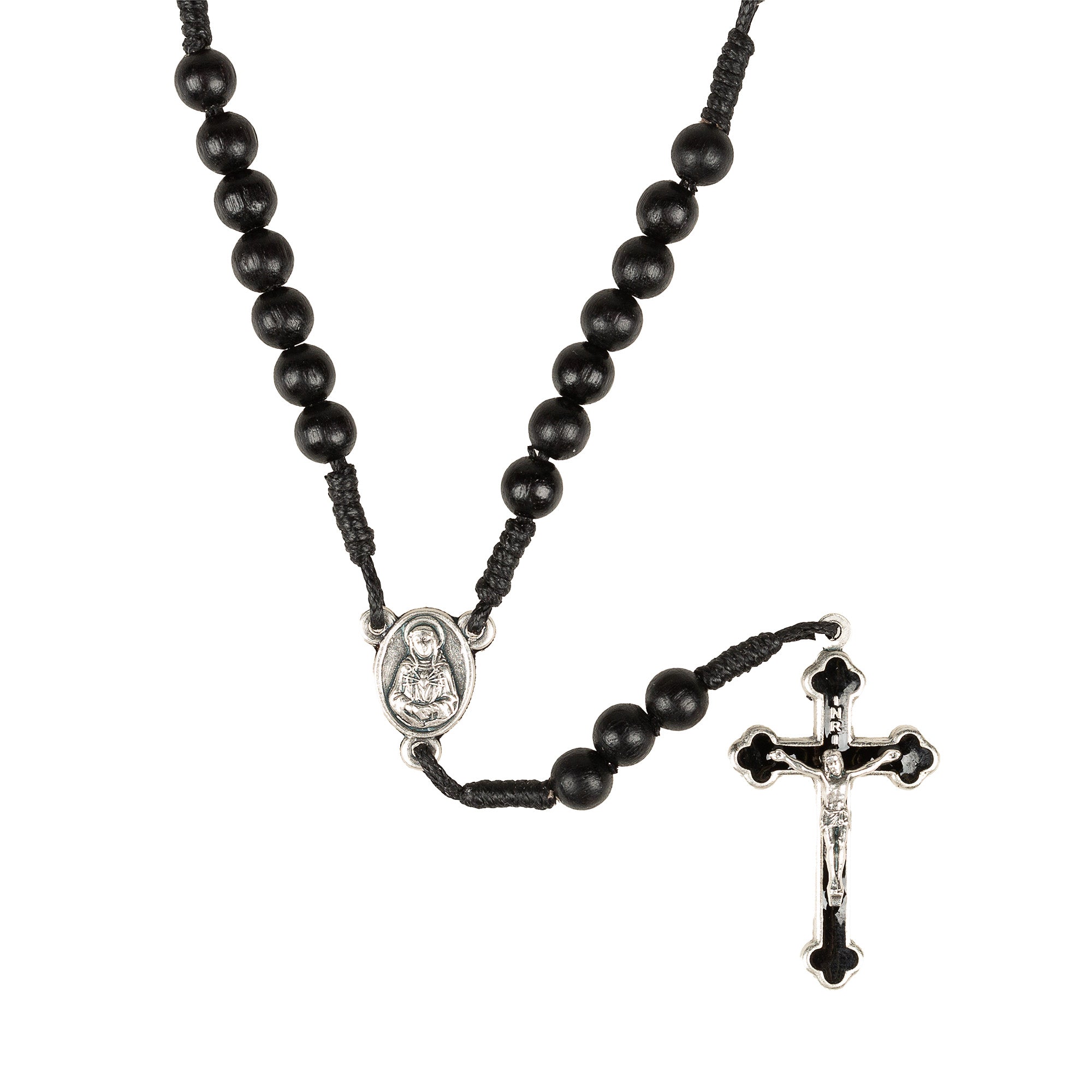
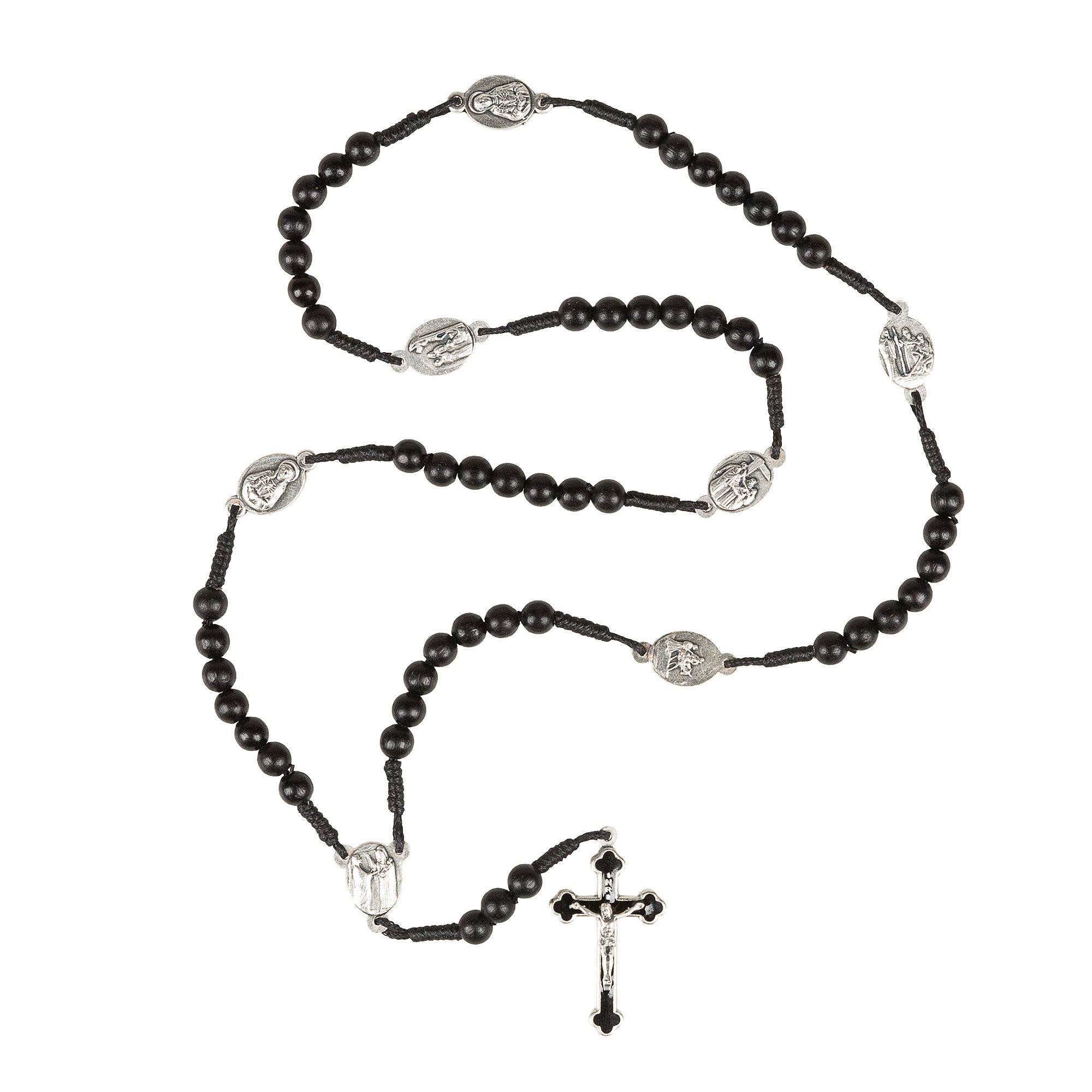
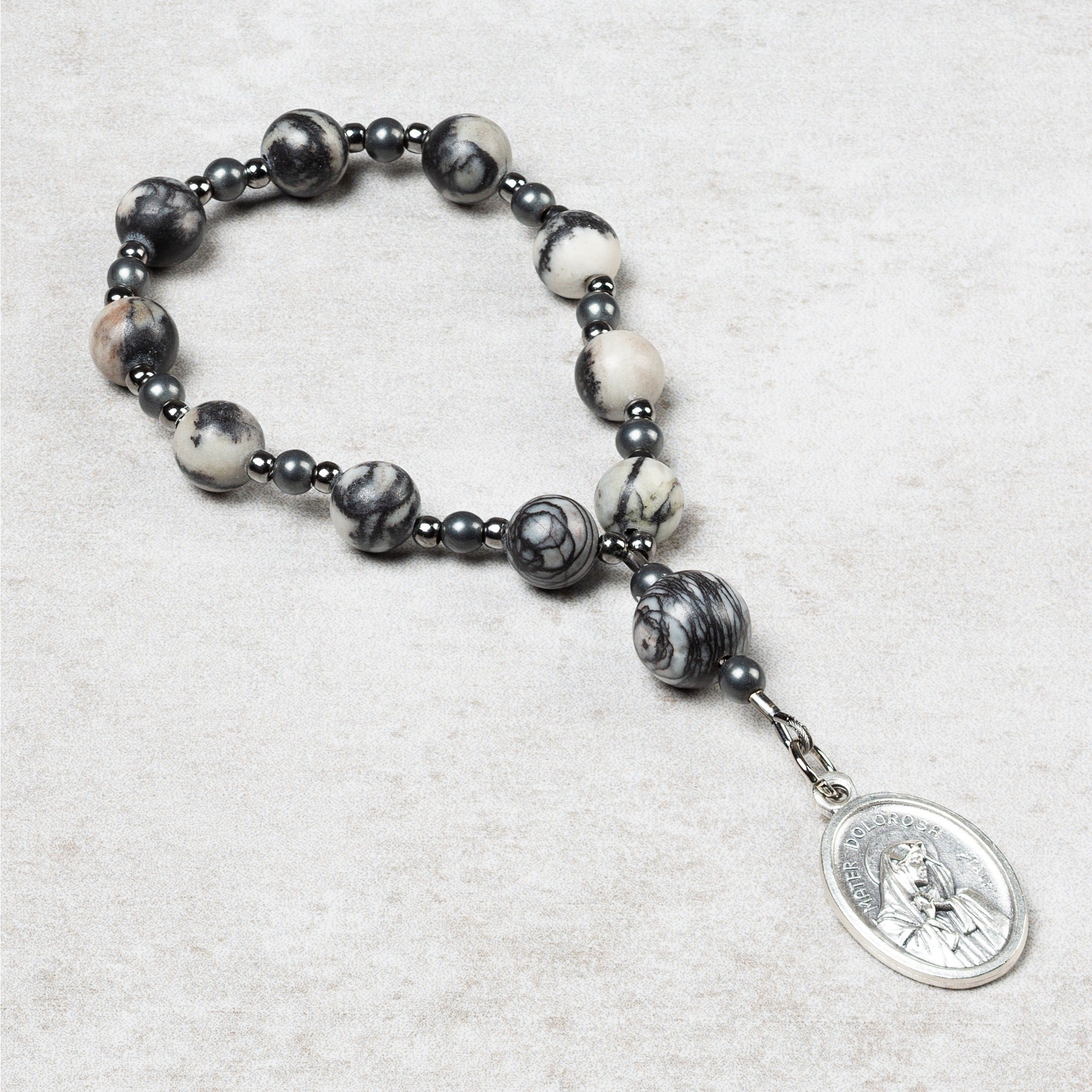
One traditional way Catholics honor Our Lady of Sorrows is through the Chaplet of the Seven Sorrows of Mary, also called the Seven Sorrows Rosary.
Like the Rosary, the devotion combines vocal prayer with meditation. In the Seven Sorrows Chaplet, we prayerfully accompany Mary through each of her sorrows, praying seven Hail Marys for each sorrow, for a total of 49 Hail Marys.
Praying the chaplet, we contemplate Christ through the eyes of His Mother, allowing Mary to lead us more deeply into the mysteries of her Son while learning from her example of faith.
How Do You Pray the Seven Sorrows Chaplet?
Forms of the devotion can vary somewhat, particularly in their opening and concluding prayers, but a common way to pray the Seven Sorrows Chaplet is:
1. Make the Sign of the Cross and begin with an opening prayer or Act of Contrition.
2. Announce the First Sorrow of Mary and meditate briefly upon it.
3. Pray one Our Father.
4. Pray seven Hail Marys while continuing to reflect upon that sorrow.
5. Repeat this pattern for each of the Seven Sorrows.
6. Conclude with the prayers prescribed by the particular form of the devotion you are using. Some versions include additional Hail Marys in honor of Mary's tears.
You can pray the chaplet at any time, but it is especially appropriate during September, on the Memorial of Our Lady of Sorrows, during Lent and Holy Week, or when you are carrying a particular sorrow of your own.
Why Are There Seven Swords in the Heart of Our Lady of Sorrows?
Images of Our Lady of Sorrows frequently depict Mary with swords piercing her heart. A single sword recalls Simeon's prophecy that a sword would pierce Mary's own soul. Seven swords represent her Seven Sorrows.
The image may seem startling until we understand what it represents. Mary's heart is pierced because she loves so deeply.
Christian holiness does not make us immune to suffering. Love makes us vulnerable to the suffering of those we love. The pierced heart of Our Lady of Sorrows therefore speaks not only about pain, but about the cost of loving completely.
Our Lady of Sorrows and the Apparitions at Kibeho
The Seven Sorrows devotion received renewed attention through the Church-approved Marian apparitions at Kibeho, Rwanda, which began in 1981, years before the devastating Rwandan genocide of 1994.
Among the spiritual themes associated with Kibeho were calls to repentance, conversion, prayer, and renewed devotion to the Rosary of the Seven Sorrows.
The devotion did not originate at Kibeho; it was already centuries old. Rather, Kibeho brought renewed attention to this ancient devotion and helped introduce the Seven Sorrows of Mary to a new generation of Catholics.
Why Do Catholics Honor the Sorrows of Mary?
Catholics honor Mary's sorrows because her suffering was inseparably connected to her love for Jesus.
Christ alone is our Redeemer; Mary's suffering does not replace or add to His saving sacrifice. Rather, she models what every Christian is called to do: unite our own sacrifices and sufferings to Christ and participate in God's plan for salvation.
Mary's "yes" at the Annunciation did not end when the angel departed. She continued giving herself to God's will throughout Christ's life and ultimately at Calvary, showing us how to remain faithful to God even when following Him leads to suffering.
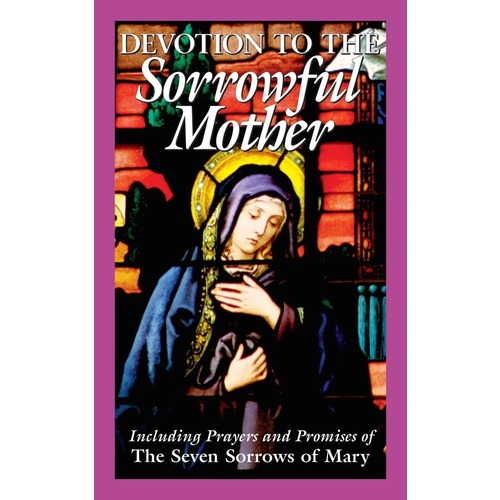
Read: Our Lady's Seven Promises to Those Who Meditate on Her Seven Sorrows
The Mother Who Stayed: What Mary Teaches Us at the Cross
One detail in St. John's account of the Crucifixion is especially powerful: Mary is standing beside the Cross. Her heart has been pierced just as Simeon foretold, yet she remains because she will not abandon Jesus.
There is a lesson here for anyone who has loved someone whose suffering they could not remove. Parents, spouses, friends, caregivers, and anyone who has sat beside a hospital bed, accompanied someone through grief, watched a child struggle, or prayed for someone while powerless to change the situation know this kind of love.
Sometimes there is nothing we can do to make everything better. We may not understand what God is allowing or see the greater purpose within it. She modeled for us how to respond in love and obedience even then.
Perhaps this is one reason Catholics have turned to the Sorrowful Mother for centuries: we naturally seek someone who understands. Sometimes we ask Mary to intercede so that suffering will end. Our Lady of Sorrows teaches us how to pray when it doesn't.
What Is the Stabat Mater?
Another beautiful devotion associated with Our Lady of Sorrows is the Stabat Mater, the great medieval hymn contemplating Mary at the foot of the Cross. Its title comes from the Latin opening words "Stabat Mater dolorosa" —"the sorrowful Mother was standing."
The hymn invites us to stand spiritually beside Mary at Calvary and enter more deeply into the Passion of Christ. At its heart is a simple desire: Mary, teach me not to look away from the Cross. Help me remain there with Jesus, always with Jesus.
The Seven Sorrows and the Seven Joys of Mary
Catholic tradition does not contemplate only Mary's sorrows. There is also an ancient devotion to the Seven Joys of Mary, particularly associated with the Franciscan Crown Rosary.
Together, these devotions remind us that Mary knew extraordinary joy and extraordinary sorrow, just as we do. Christian faith does not promise a life without suffering, but it does promise that suffering and death will not have the final word.
The Seven Sorrows end at the tomb—but Mary's story does not. She became the Queen of Heaven and Mother of all Mankind.
How to Practice the Devotion to Our Lady of Sorrows
The Memorial of Our Lady of Sorrows on September 15—and the entire month of September—offers a natural opportunity to rediscover this ancient devotion.
You might:
* Pray the Seven Sorrows Chaplet.
* Meditate on one of Mary's sorrows each day.
* Read the Scripture passages connected with the Seven Sorrows.
* Pray or listen to the Stabat Mater.
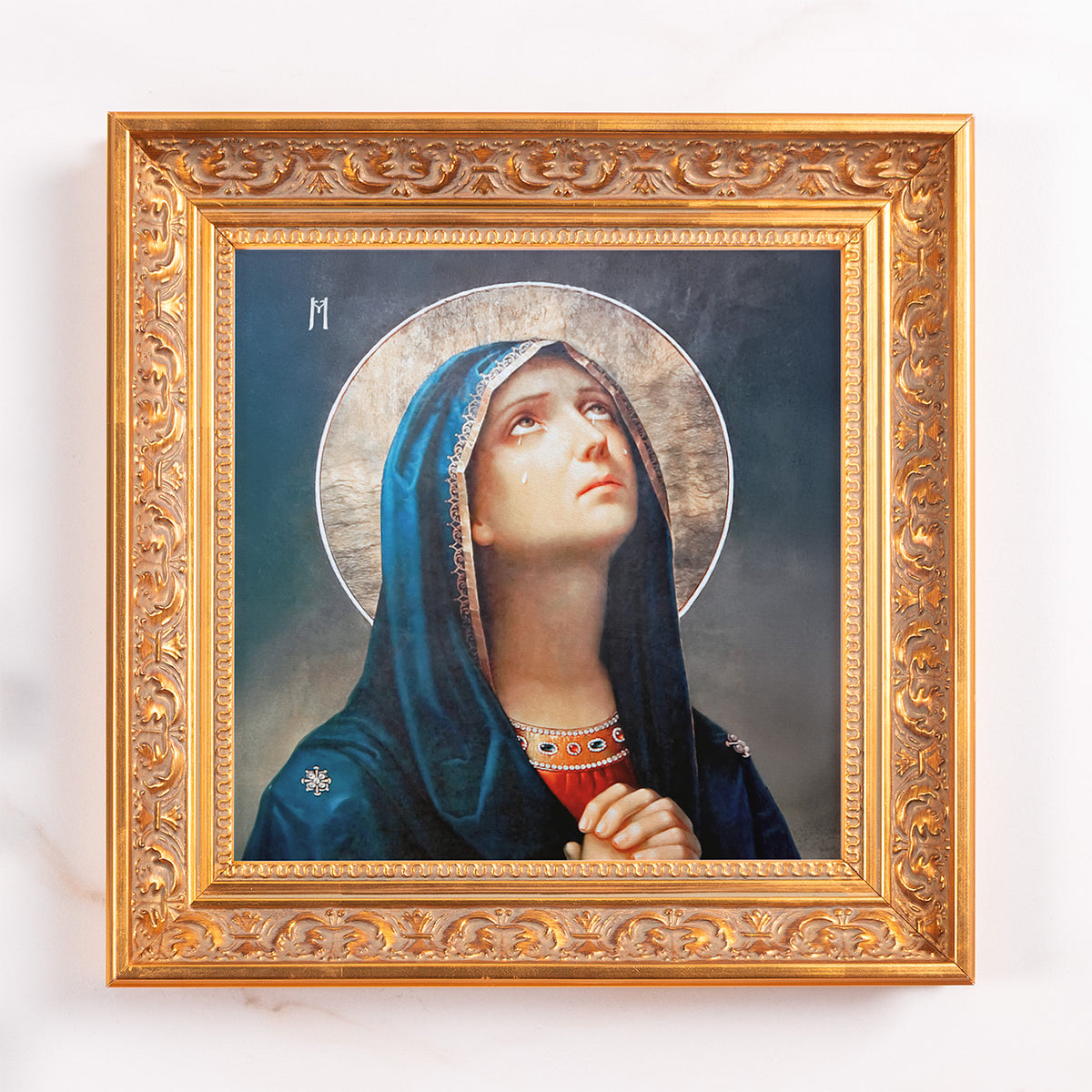
* Keep an image of Our Lady of Sorrows near your prayer space.
* Offer your own suffering to Christ through Mary's intercession.
* Pray especially for grieving parents and families.
* Reach out to someone who is carrying a cross and simply be present.
* Attend Mass on September 15 if possible.
The most important practice, however, may simply be learning from Mary how to stay close to Jesus when life becomes difficult.
Our Lady of Sorrows: A Devotion of Hope
At first glance, devotion to the Seven Sorrows of Mary can seem melancholy. Why deliberately spend time contemplating such pain?
As people of faith, we do not respond to suffering by pretending it isn't there. We look directly at the Cross, then we proclaim the Resurrection. This devotion teaches us that suffering can exist alongside faith, grief alongside hope, unanswered questions alongside trust.
Perhaps most importantly, Mary shows us that we do not have to understand what God is doing in order to remain faithful to Him.
The young woman of the Annunciation became the Mother of Sorrows, and her youthful fiat became a lifetime of faithfulness. That is why Our Lady of Sorrows is not a devotion to sadness. It is a devotion to faithful love, enduring hope, and continually entrusting all things to God.
Read Next: Our Lady's Seven Promises to Those Who Meditate on Her Seven Sorrows
Read Next: Why Does Mary Have So Many Titles? Catholic Teaching on Marian Titles Explained