




My family’s devotion to St. Joseph is woven into our Sicilian heritage and our story in America.
My parents were both born in the United States, but their roots were planted in Sicily. All of their grandparents arrived in America in the early 1900s, along with thousands of other immigrants who came seeking opportunity and a chance to build a new life.
They worked hard, and slowly but surely built stability for their families. My great grandfather sold water from wooden buckets to railroad workers from the time he was just twelve years old. My grandfather pushed a vegetable cart through the street, drove a bread delivery truck, was a butcher, an Army cook, and opened his own grocery store.
Many in my extended family owned small neighborhood businesses, including grocery stores, toy shops, bicycle stores, a family restaurant, and a beverage distribution company.
They served in the military during the War, labored long hours, and sacrificed so their children and grandchildren could build a new and better life in America.
Until my parents’ generation, no one in the family had attended college. Some didn’t finish high school, because they were already working to help support their families.
Mine is not an extraordinary story. It's a familiar history shared by many descendants of immigrants in the United States. Hardworking people building new lives while preserving the traditions that shaped their identity and faith.
Faith and Family in the Immigrant Community
My grandparents and great-grandparents lived in close-knit immigrant neighborhoods where faith and family were inseparable.
They sent their children to Catholic schools, worshipped together at their parish churches, attended festivals and dances at their parishes to socialize with other Catholic families, and kept alive the traditions they had carried across the ocean.
Many of the customs people associate with Italian families were simply a natural part of our lives. Sunday meant Mass together, followed by a long and delicious Italian family meal.
As a child, I loved waking up to the smell of homemade sauce - which we call sugo - simmering in the kitchen. Even today, when I “put the sauce on,” in the quiet of Sunday mornings, the fragrance fills the house and warms my heart with memories of family and belonging.
Among the traditions, one celebrating St. Joseph stands out as especially meaningful. Though my father's family is from a hill town in Sicily known as San Giuseppe Jato, I did not participate in this special celebration in childhood.
Years later, when my father recounted these memories from his youth, I asked why he had not continued the tradition.
He replied, "Back then, as we were growing up, we all wanted to fit in, be American, even though we had a strong identity as Italians and Catholics. I guess the new generation moved away from some of those customs over time. But I will cherish those memories forever."
When my children were little, I began the tradition again in my own family. I would invite friends and share the tradition of the feast of St. Joseph, and prepare a special meal.

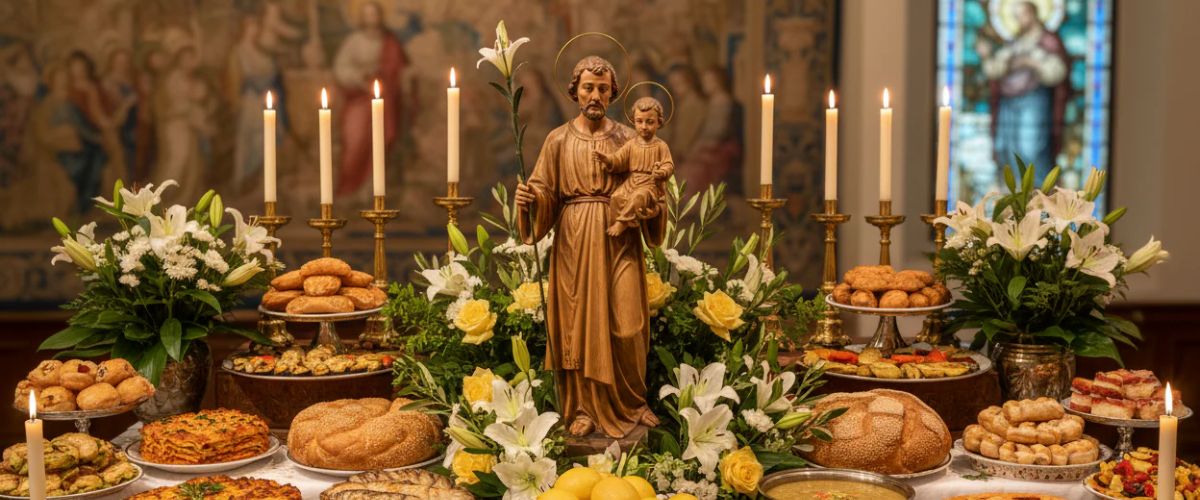
The celebration of St. Joseph's Day for Italians went like this: Families gathered at the home of the oldest relative who would host the celebration. It included a special altar, a St. Joseph's Table, prayer, and a wonderful meal. Even during Lent, the meal was a special one since St. Joseph's feast day is a Solemnity of the highest rank.
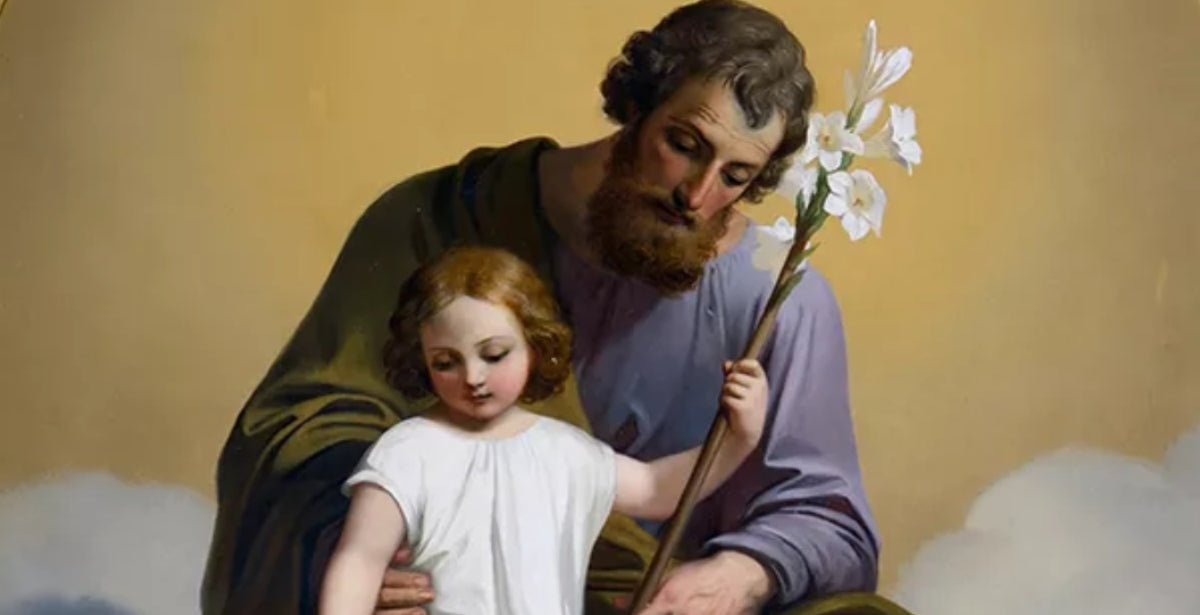
I still keep my St. Joseph's Altar every year, and remain devoted to the docile, humble and obedient earthly father of Christ. Though my own father passed into eternity many years ago, I have taken St. Joseph as my spiritual father.
The St. Joseph’s Table: A Tradition of Gratitude and Providence
Every year on March 19, the traditional celebration centered around the St. Joseph’s Table, a beautiful display of food prepared in gratitude for God’s providence and the protection of St. Joseph.
In Sicilian tradition, these tables originated when people prayed to St. Joseph for relief from a devastating famine. Food was scarce and Sicilians were starving during the medieval drought.
Their prayers were answered when crops of fava beans, used to feed their livestock, survived and produced abundantly.
The beans were the only crop that survived the harsh conditions, so the Sicilians ate them and thanked St. Joseph for providing for their needs.
In gratitude for his intercession, when the famine ended, Sicilians created large, decorative food altars honoring St. Joseph with celebrations and prayers of thanksgiving.
On his solemnity, they prepared large feasts to feed the poor, thank God for His blessings, and keep the tradition of honoring their Patron Saint.
For families like mine—descendants of laborers, immigrants, and working people—St. Joseph was more than a distant saint.
He was one of us.
St. Joseph was a worker, a provider, and a man who quietly carried the responsibility of providing for his family. My ancestors surely recognized their own struggles in his life. Like him, they worked with their hands, trusted God in uncertainty, and quietly devoted themselves to protecting and providing for their families.
Honoring St. Joseph was a way of acknowledging that their survival and success were not only the result of hard work, but primarily gifts of faith and divine providence.
The Joyful Family Tradition of “Tupa Tupa”
As part of the St. Joseph's Day festivities, the youngest children would participate in a ritual called tupa tupa. They would knock three times to gain entrance to the home, symbolically seeking shelter and hospitality.
The first time, they were turned away.
The second time, they were turned away again.
But when they knocked the third time, the door was opened wide and they were welcomed inside. Then the celebration and delicious feast day meal began.
This tradition recalls the Holy Family seeking shelter before the birth of Christ. It teaches something profound: God rewards our persistence, trust, and hope. The Lord hears our prayers and always has a plan, even when we cannot see it.
It also reminds us that hospitality, generosity, and faith are at the heart of the St. Joseph’s Table. They were hallmarks of the life of St. Joseph, who welcomed what he did not fully understand with a docility that remains a model for us all.
Why These Traditions Still Matter Today
Feast day celebrations like this one remind us where we came from. They honor the sacrifices of our ancestors. They pass on the timeless faith that sustains us through hardship and uncertainty. They also reaffirm our own faith, in a world often hostile to what we believe.
For Italian immigrant families who worked long hours and struggled to gain a foothold in a new country, devotion to St. Joseph represented something powerful:
A belief that God sees the labor of ordinary people.
A trust that He will bless faithful work, perseverance, and gratitude.
A reminder that our faith traditions and family customs hand down our Faith so that it remains timeless.
When St. Joseph’s Day arrives each year, I remember the generations who came before me - immigrants who worked hard, trusted God, and honored the saint who understood their lives.
They saw in him a model of faithful work, humble obedience, and deep devotion to God and family.
And through their traditions, they passed on the greatest inheritance they could give their children and grandchildren:
A true and living faith.