
I doubt if many of us think much about acedia, sometimes called the “noonday demon,” a kind of spiritual weariness or sadness toward the things of God. And yet, when I hear about the way it manifests itself, I realize that I am actually more familiar with it than I would have thought.
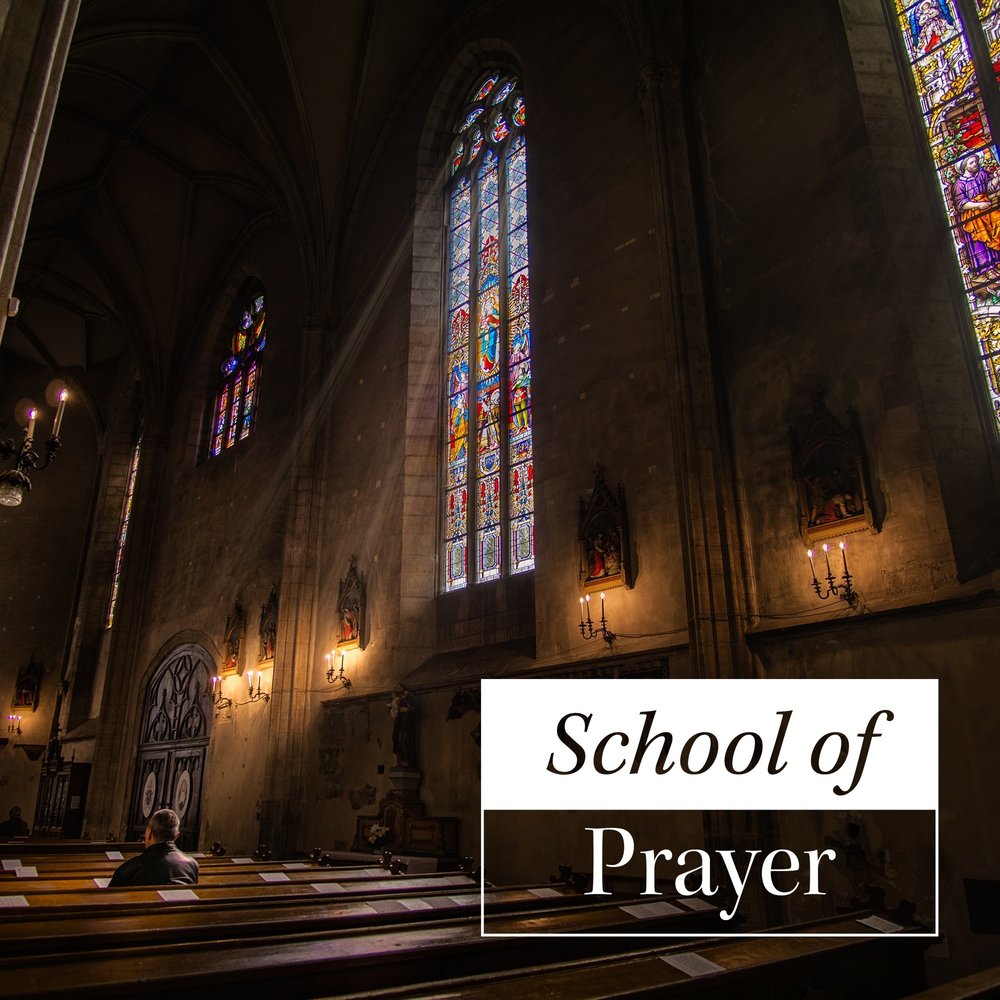
In the Good Catholic series, School of Prayer, Father Matlak describes acedia as a “type of spiritual sloth, weariness, and deep sadness that culminates in repulsion by the things of God, especially prayer.” None of us is immune to this trap set by the “noonday demon,” who, of course, would like nothing more than for us not to pray. But when we learn to recognize those traps, we are better prepared to resist them and return to prayer.
Who is this noonday devil?
The Desert Fathers identified this spirit as the one mentioned in Psalm 90 (Psalm 91 in newer translations):
"His truth shall compass thee with a shield: thou shalt not be afraid of the terror of the night. Of the arrow that flieth in the day, of the business that walketh about in the dark: of invasion, or of the noonday devil." (Psalm 90:6, Douay-Rheims Translation)
The Desert Fathers became familiar with this spirit and recognized its attack, calling its manifestation “acedia,” meaning “lack of care.” It refers to the spiritual inertia or torpor that tempts a monk (and all of us) to abandon his pursuit of holiness.
At first, acedia can sound like an ancient problem only for monks in the desert. The Desert Fathers saw it in a particular way because of their state in life. They lived in solitude, prayed for long hours, and worked with their hands.
They noticed that around midday, when the sun was high and the body was tired, a strange restlessness and sadness would settle over the monk: His cell would suddenly feel unbearable, prayer would seem pointless, and work would feel dull. Other places and other people would seem more interesting and more fruitful than where he was.
The temptation was not necessarily to do something obviously wrong. Sometimes it was simply to leave the place where God had asked him to be.
While this might seem like a small thing, the way it ultimately manifested itself was often in spiritual malaise or a kind of detesting of spiritual things. In this manner, it was considered quite serious.
Acedia is a sin we all will face
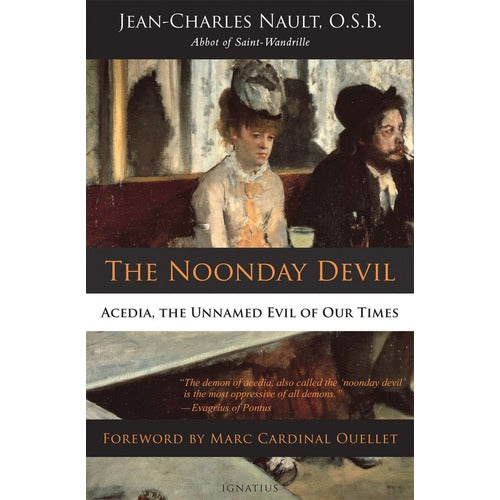
It has been said that prayer is as personal as the number of souls who pray, and yet there seems to be a universal quality about prayer that we all experience. I think this is explained well in the Catechism of the Catholic Church, which says that God initiates prayer and that our “own first step is always a response.” We respond to God, who created us, not only in our prayer life but also wherever we are called to be in life. Whether a monk in a cell, a nun in a convent, a single person, or a mother or father at home, we all “experience God in the sublimity of our vocation,” as Father John-Charles Nault says in his book The Noonday Devil: Acedia, the Unnamed Evil of Our Times.
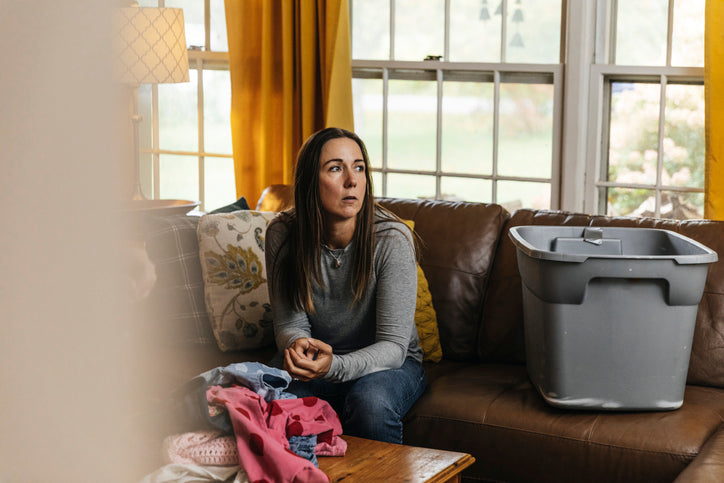
[[the-noonday-devil-acedia-the-unnamed-evil-of-our-times,the-magdalena-prayer-book]] I find it consoling to learn that it is within my own vocation as a wife and mother that I can best align myself with God’s will. This helps me to understand the fight against acedia and the other obstacles that can inhibit a life of prayer. It also shows why we are all susceptible. The duties of our vocation are often ordinary and repetitive, and without prayer, even the things God gives us as a path to holiness can begin to feel heavy, dull, or frustrating.
Acedia is not ordinary tiredness, the normal fatigue that comes after a long day of work, or the real need for rest that comes from serving others or fulfilling our responsibilities. And it is important not to confuse acedia with depression or other psychological suffering, which may require real medical and emotional care. The Church is not asking us to spiritualize every sorrow or call every heaviness of heart a sin.
And yet, there is a kind of heaviness we should learn to recognize. It is a spiritual sadness that makes the things of God feel burdensome rather than life-giving. It is the quiet interior resistance that says prayer will not matter, that faithfulness in our vocation is too much, that holiness is for other people, or that God is asking something unreasonable of us.
I believe this is why acedia feels so familiar today.
We might not be tempted to leave a desert cell, but we are often tempted to leave the place of prayer, or not to begin at all. I know how easily that can happen in my own life. I can be tempted to leave silence or to leave the duties of my state in life, at least interiorly, by becoming restless, distracted, resentful, or numb. I may still do what needs to be done on the outside, but inside, I can begin to withdraw from God.
In our time, this withdrawal can even disguise itself as productivity. I may look busy and responsible externally, but that does not always mean I am attentive to God. There are days when every hour is spent in activity, and yet I still avoid the one thing necessary. I might move from one task to the next while quietly neglecting the life of my soul.
This is why acedia feels especially relevant today, and why we need to be aware of it. Our connectivity gives us constant access to people and information, but it is easy to be busy and still spiritually sluggish. News, emails, calendars, and social media are always within reach, and social media in particular continually shows us carefully chosen glimpses of other people’s happiness, success, homes, families, travels, and accomplishments. Acedia is not the same thing as envy, but comparison can pull us toward the kind of restlessness and dissatisfaction that makes our own lives feel dull or inadequate. We may be exhausted by constant activity and surrounded by noise, yet still feel deeply bored, or worse, feel a strange spiritual malaise.
Instead of receiving the life God has given us as the place where He wants to meet us, we can begin to imagine that holiness or happiness must be somewhere else.
The two definitions of acedia by St. Thomas Aquinas
St. Thomas Aquinas gives two definitions of sloth (acedia). First, it is a “sadness about spiritual good”; second, it is a “disgust with activity”.
The first definition, “sadness about spiritual good,” arises from the fact that the soul afflicted with acedia loves the creature more than the Creator. When the soul realizes the lesser pleasures it must give up to grow closer to God, it makes the soul sad and dejected. What is, in fact, the source of a soul’s joy—friendship with God—is perceived as an evil because it would prevent the soul from enjoying what it wrongly perceives as being a greater good than God.
"The second definition, 'disgust with activity,' gets at the sluggishness or lethargy that acedia inflicts in the soul. Ironically, this can also drive the soul to incessant activity, if the activity allows it to escape from its spiritual sadness. Acedia undermines the love that should motivate our actions and replaces it with a sterile restlessness. It is a sin against the highest virtue that man is meant to strive for in this life: perfect charity." (Good Catholic series, School of Prayer)
[[manual-spiritual-warfare-book-st-michael-chaplet-corded-wood-gift-set,frequent-confession-its-place-in-the-spiritual-life]]
Aquinas says that sloth (acedia) is ultimately a sin against the gaudium de caritate (the joy of love, or charity), that is, the joy that is found in loving union with God.
“…it belongs specially to charity to have that spiritual joy whereby one rejoices in the Divine good. …but sorrow in the Divine good about which charity rejoices, belongs to a special vice, which is called sloth.” -St. Thomas Aquinas
We also have an excellent description of acedia given to us by St. John Cassian, a 4th-century monk and theologian who compiled the monastic wisdom of the Desert Fathers and brought it to the West. Here is an excerpt:
"And whenever it begins in any degree to overcome any one, it either makes him stay in his cell idle and lazy, without making any spiritual progress, or it drives him out from thence and makes him restless and a wanderer, and indolent in the matter of all kinds of work, and it makes him continually go round, the cells of the brethren and the monasteries, with an eye to nothing but this; viz., where or with what excuse he can presently procure some refreshment." - St. John Cassian
Although written about those in the 4th century, it is not difficult to see the relevance of this excerpt in our own time.
Remedies for acedia
St. John Cassian and other spiritual masters encouraged several remedies for fighting acedia:
Tears: the grace of compunction, by which we honestly acknowledge our sin, weakness, and need for God’s help. Confession is a great help.
Prayer and work: the habit of turning to God while faithfully doing the duties of our state in life.
Scripture: the practice of resisting tempting or discouraging thoughts with the truth of Scripture.
Meditation on death: the remembrance that life is short, and eternity is real.
Perseverance: the grace to remain faithful to prayer, duty, and vocation even when we feel restless, dry, or discouraged.
Gratitude: This one I have added, as I find that whenever I turn to the Lord with thanks for His great goodness, I am better able to see the many blessings already present in my life.
These remedies help us to remain where God has placed us. We pray when prayer feels dry. We do the work in front of us. We resist the urge to flee into distraction or complaint. We turn back to God as often as necessary, in prayer and by reading His Word. We consider the depth of our need for God in all things. And ultimately, we meditate on our own death and the fleeting nature of this life.
[[the-magdalena-prayer-book,school-of-prayer-good-catholic-digital-content-series]]
Think about the Incarnation of Christ
The Incarnation is one of the most beautiful answers to acedia, because Jesus shows us that God is not distant from our weariness. He entered human life with all its limits. He knew hunger, fatigue, sorrow, labor, rejection, and suffering. He sanctified ordinary life from within. If He has come so near, then the life of prayer is not an impossible ideal meant only for the heroic few. It is the life He offers to each of us.
This should give us hope.
The noonday demon wants us to lose heart in the middle of the day, in the middle of our vocation, in the middle of our lives. The devil wants us to believe that prayer is not worth the effort, that the pleasures we would have to surrender are too costly to give up, and that God is asking too much. St. Thomas Aquinas explains:
"…The Incarnation of God was the most efficacious assistance to man in his striving for beatitude. …the perfect beatitude of man consists in the immediate vision of God.
It might, of course, appear to some that man would never have the ability to achieve this state…and thus, in the search for beatitude, a man would grow cold, held back by very desperation.
But the fact that God was willing to unite human nature to Himself personally points out to men with greatest clarity that man can be united to God by intellect, and see Him immediately.
It was, then, most suitable for God to assume human nature to stir up man’s hope for beatitude. Hence, after the Incarnation of Christ, men began to aspire more after heavenly beatitude; as He Himself says: “I have come that they may have life and may have it more abundantly” (John 10:10).
[[12-life-lessons-from-st-thomas-aquinas-timeless-spiritual-wisdom-for-our-turbulent-times,st-thomas-aquinas-medal-with-prayer-card]]
Rest, not escape
God is not asking us to defeat acedia by our own strength. He is asking us to remain faithful in small things. He wants us to turn toward Him when everything in us wants to turn away.
Especially in our world today, escape is easy. It is all around us with the scroll of our phones. But true rest is not escape. Rest restores us so we can love God and others better. Escape pulls us farther from the life God is asking us to live. We may think this is a warning that we parents only have to issue to our children, but we are just as susceptible!
Technology is not the enemy per se. There are good and beautiful things we can access with technology, but it means we have to recognize and deal with distractions that other generations did not have.
The fight against acedia is really the fight to keep praying, to stay faithful to God, to keep showing up in our vocation, and to believe that God is present in the very place we are tempted to abandon.
This is why recognizing acedia matters. The devil works best when his tactics remain hidden. But when we name the temptation, bring it into the light, and turn back to Christ, even imperfectly, we humble ourselves and take the next step toward God.
And when we do, we will hopefully discover that the "cell" we wanted to escape from is actually the very place God is waiting for us.