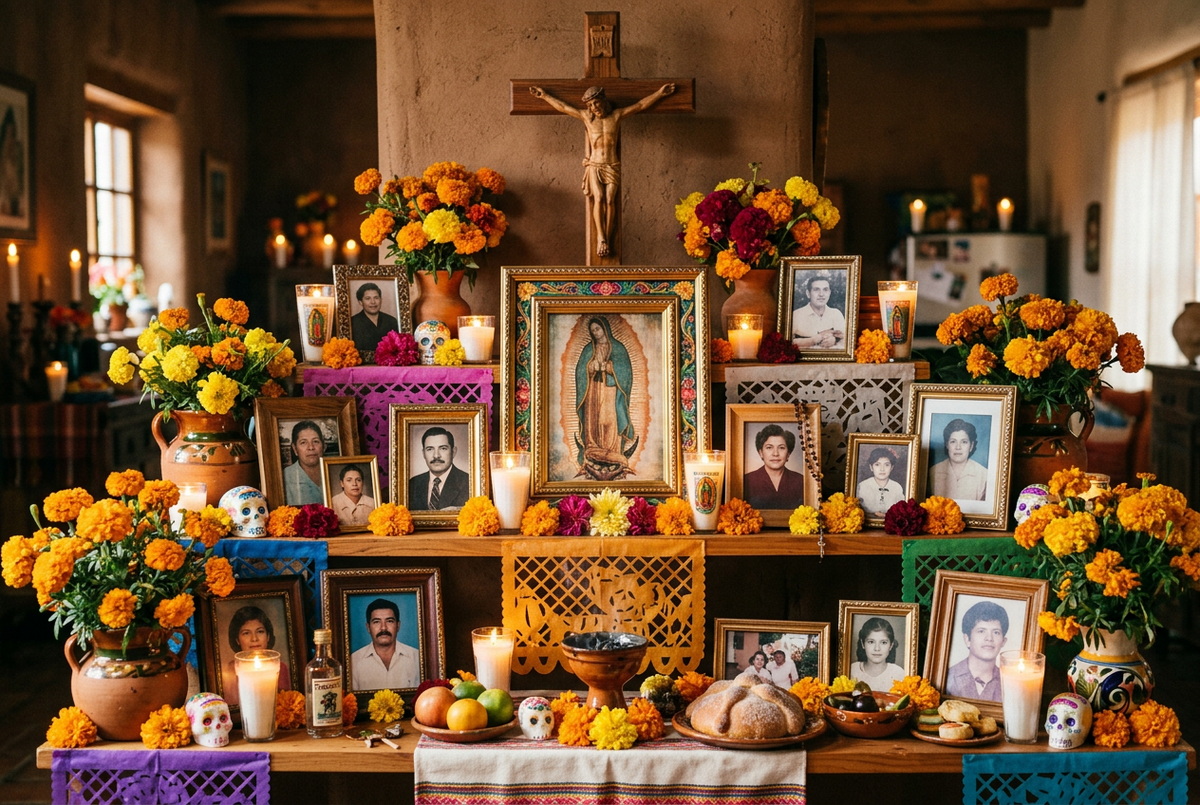
Every year, colorful flowers, candles, decorated skulls, and elaborate memorial displays appear throughout Mexico and in Mexican communities around the world for Día de los Muertos, or Day of the Dead.
Is Día de los Muertos a Catholic celebration? Does it have pagan origins? And what should Catholics make of traditions such as leaving food for deceased loved ones, decorating sugar skulls, and dressing as skeletons?
The answer requires distinguishing between authentic Catholic practices and the cultural traditions and customs of this day of remembrance.
What is Día de los Muertos?
Día de los Muertos is a rich and lively Mexican cultural tradition honoring deceased family members and loved ones, generally celebrated on November 1 and 2. It has the tone of a festive family reunion, built on the belief that love transcends death. Though the mood is festive, there is also a natural mix of grief, nostalgia and love.
The celebration includes colorful altars decorated with remembrances for loved ones, gathering in homes or cemeteries, playing music, telling stories, enjoying favorite foods, and remembering the lives of those who have died. Its observance combines elements of Mexico's pre-Christian indigenous cultures with Catholic traditions associated with All Saints Day and All Souls Day.
The first two days of November also contain two important feasts in the Catholic liturgical year. On November 1, All Saints Day, the Church celebrates all the saints in Heaven, both known and unknown. On November 2, All Souls Day, the Church remembers and prays for the faithful departed, especially the souls being purified in Purgatory in preparation for their union with God.
For Catholics, these celebrations are an opportunity to express our belief in the Communion of Saints and the enduring bonds of charity between the living and the dead.
Does Día de los Muertos Have Pagan Origins?
Some customs associated with Día de los Muertos have roots in pre-Christian indigenous traditions. Over time, these customs became intertwined with Catholic observances of the dead. Having pre-Christian origins does not automatically make every cultural tradition incompatible with Catholicism. The Church recognizes that different cultures express their faith in different ways.
In its Directory on Popular Piety and the Liturgy (257–258), the Vatican's Congregation for Divine Worship and the Discipline of the Sacraments addresses cultural customs surrounding remembrance of the dead, emphasizing that they must be evaluated to ensure they do not contradict Christian teaching.
The important distinction is that Día de los Muertos is a cultural celebration. It is not a feast established by the universal Catholic Church. Nevertheless, Día de los Muertos remains a cherished tradition among many faithful Mexican Catholics, both in Mexico and in communities throughout the United States. For these families, the celebration can be an expression of love, remembrance, and faith.
What are Ofrendas and Are They Catholic?
One of the most recognizable Día de los Muertos traditions is the ofrenda, a memorial display featuring photographs of deceased loved ones, flowers, candles, mementos, and sometimes their favorite foods and drinks.
These displays can serve as expressions of family remembrance and affection. Remembering loved ones through photographs, flowers, and meaningful family traditions is not contrary to Catholic teaching. However, Catholics should distinguish between remembering the dead and attempting to provide for or communicate with their spirits.
If a favorite food is displayed simply as a remembrance of a loved one's life, it need not imply anything contrary to the Faith. However, Catholics should not believe that departed souls require food or drink for nourishment, nor should they participate in rituals intended to summon or communicate with the dead. Such beliefs and practices are inconsistent with Catholic teaching.
The Church teaches that the souls of the departed are entrusted to God's judgment and mercy. Our responsibility is not to call them back into this world, but to pray for them and entrust them to the Lord.
There are many ways to encourage remembrance while keeping the focus on praying for the repose of their souls.
[[holy-souls-in-purgatory-rosary,personalized-memorial-prayer-candle]]
What About Sugar Skulls, Skeleton Costumes, and Other Traditions?
Colorful sugar skulls, painted faces, skeleton costumes, marigolds, and festive decorations are among the most recognizable symbols of Día de los Muertos, but are they Catholic?
Sugar skulls, (or calaveras), are traditionally decorated with bright colors and sometimes the names of deceased loved ones. Skulls also appear in traditional Catholic religious art and relic chapels as reminders of our mortality, reflecting the ancient Christian practice of memento mori, Latin for “remember that you must die.” Although sugar skulls are a distinct cultural tradition, their symbolism need not conflict with this Christian understanding of death.
Elaborate skeleton costumes and painted faces, often inspired by the vibrantly dressed skeletal figure known as La Catrina, are also common. Although their appearance may seem unsettling to those who do not embrace the tradition of Día de los Muertos, these costumes generally reflect Mexican folk art and cultural traditions, rather than the worship of spirits.
Other customs include decorating graves with brightly colored marigolds, hanging colorful paper banners known as papel picado, and sharing pan de muerto, a traditional sweet bread. These can all be meaningful expressions of remembrance to celebrate the lives of loved ones.
Some traditional beliefs go further, suggesting that marigolds guide returning spirits home, food and water nourish spirits who are allowed to return in search of their families, or particular rituals enable the dead to visit the living. Catholics can acknowledge the cultural history of these traditions, without accepting beliefs that contradict the Church's teachings about death, judgment, and eternal life.
The Church encourages us to remember our loved ones, celebrate the blessing of their lives, pray for their souls, and trust in God's promise of the Resurrection—not to attempt to summon or provide for departed spirits.
How Should Catholics Celebrate Día de los Muertos?
Catholics who observe Día de los Muertos can honor their cultural heritage during the celebration and enjoy the traditions while keeping Christ and the hope of eternal life at the center of their remembrance.
The Church encourages beautiful and meaningful practices for remembering the faithful departed, including:
- Attending Mass on All Souls Day and having Masses offered for deceased loved ones.
- Visiting cemeteries and decorating graves with flowers.
- Praying the Rosary or other prayers for the Holy Souls in Purgatory.
- Remembering loved ones with photographs, prayer candles, and family gatherings.
- Performing acts of charity and offering prayers for the deceased.
These practices are common to our entire Church and reflect an essential Catholic truth: Our love for those who have died does not end at the grave.
As the Catechism of the Catholic Church teaches, our prayers for the dead can help them on their journey toward Heaven (CCC 958).
Remembering the Dead With Christian Hope
At its heart, Día de los Muertos expresses the desire to remember those we love, to keep their stories alive, and to gather with family in gratitude for the lives we shared. For Catholics, that remembrance takes on an even deeper meaning through our faith in Jesus Christ and His promise of eternal life.
We believe that death does not have the final word. Through His Death and Resurrection, Christ has opened the way to Heaven, and through the Communion of Saints, we remain united in charity with those who have gone before us. Our prayers for them are not simply gestures of remembrance, but acts of love that can truly aid the Holy Souls.
As families gather to share stories, favorite foods, and treasured memories, they can also offer something of eternal value: their prayers, especially the Holy Sacrifice of the Mass. In this way, remembrance becomes an expression of faith, hope, and enduring love.
Through Día de los Muertos, All Saints and All Souls days, We remember our loved ones for the lives they lived, and with hope for the eternal life God has promised to us all. We entrust their souls to His mercy, praying that one day, by His grace, we are reunited with them in Heaven.
Eternal rest grant unto them, O Lord, and let perpetual light shine upon them. May the souls of all the faithful departed, through the mercy of God, rest in peace. Amen.

In Heaven We'll Meet Again: The Saints and Scripture on our Heavenly Reunion