


















Blessed Nicolas Steno is not a name most people recognize, but his work quietly changed the way we understand the world beneath our feet.
He was born in 1638 in Denmark and was trained as a scientist, particularly in anatomy. His early work focused on the human body, and he became known for his careful observation and precision. But his attention eventually turned to something unexpected. He began studying rocks, fossils, and layers of the earth, asking questions that few had seriously considered at the time.
What he discovered was simple in concept, but profound in its implications: the earth has a history.
At a time when many believed that fossils were merely random formations or tricks of nature, Steno recognized that they were the remains of once-living creatures. He observed that layers of rock were not placed randomly, but formed over time, with deeper layers laid down before those above them. From these observations, he developed what would become the foundational principles of geology.

Steno approached the natural world with the same seriousness and humility that the Church has always encouraged. He believed that truth, whether discovered through science or revealed through faith, ultimately comes from God. For him, studying the earth was not separate from his belief in God. It was another way of encountering the order and intelligence of creation.
What is less widely known is how his life changed.
Over time, his scientific pursuits led him into deeper philosophical and spiritual questions. His search for truth did not end with observation. It led him toward conversion. He eventually became a Catholic, was ordained a priest, and later consecrated as a bishop. He gave up much of his scientific career to dedicate himself more fully to the service of God and the Church.
That kind of transition can be difficult to understand today. It can seem like a departure from one world into another. But for Steno, it was a continuation. The same desire to seek truth that led him to study the earth led him to seek God more completely.
His life offers a challenge to a common assumption.
Faith and science are not in conflict. When pursued honestly, both are ordered toward truth. Steno did not abandon reason when he embraced faith. He followed it further.
He is now remembered not only as a pioneer of geology, but as a man whose intellectual curiosity was matched by spiritual depth. His work helped reveal the history written in the earth, and his life reflects the deeper truth that all creation points beyond itself.
The world carries within it signs of order, of purpose, and of a Creator who invites us to look more closely. Steno did exactly that, and in doing so, he found more than he expected.
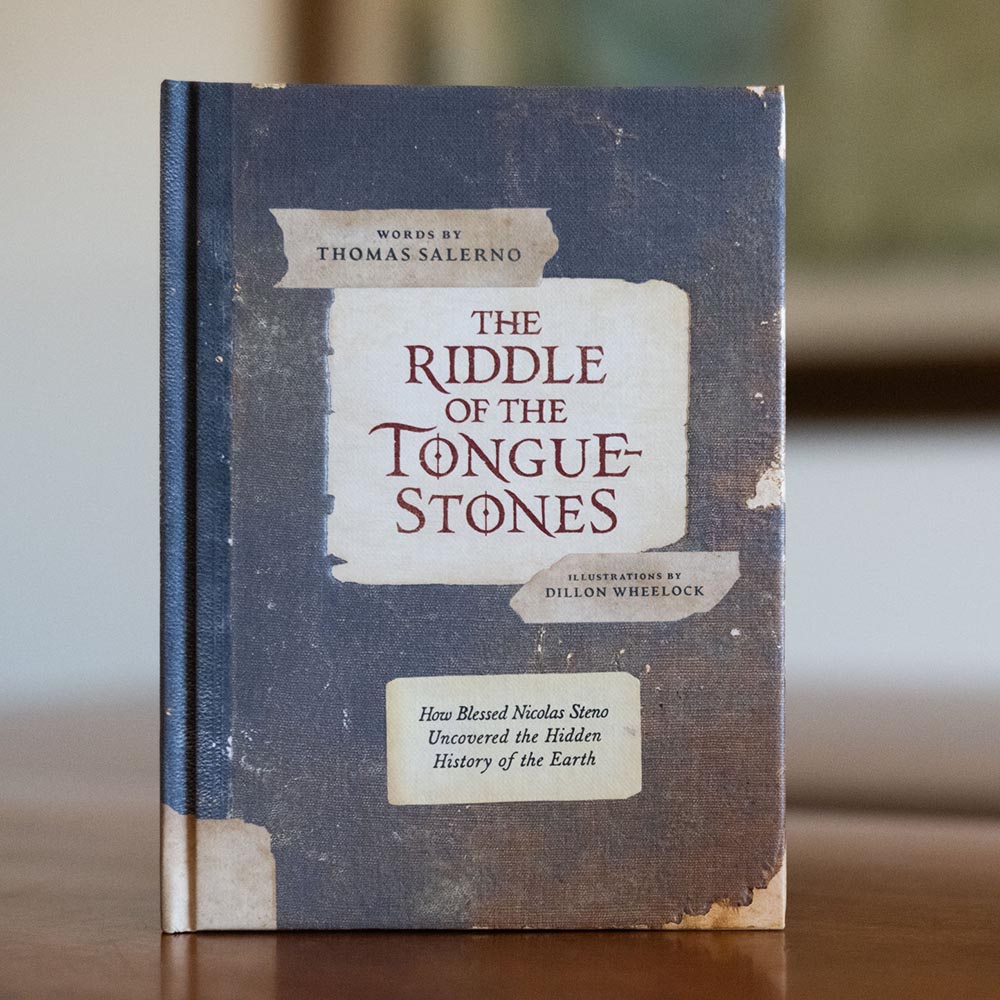
Explore the extraordinary life of Nicolas Steno, the father of geology, in "The Riddle of the Tongue Stones." and discover his incredible journey from scientist to Catholic bishop.