
It might feel as though the Rosary has always been part of Catholic life. But it actually developed over centuries, and the story of how we came to pray those familiar beads helps explain what the Rosary is really meant to do.
At its heart, the Rosary is not simply a series of prayers to Mary. It is a way of contemplating the life of Jesus with His Mother.
And its beginnings take us back hundreds of years.
1. The Rosary grew out of an ancient practice of praying the Psalms
Long before the Rosary took its present form, monks prayed the 150 Psalms. Christians who could not read the Psalter began using repeated prayers instead, sometimes counting them with stones, knotted cords, or beads.
There's even a little piece of history hidden in the word itself: our English word "bead" comes from the Old English bede, meaning "prayer."
Eventually, 150 Hail Marys came to be known as Mary's Psalter, echoing the 150 Psalms.
2. Tradition particularly connects the Rosary with St. Dominic
In the thirteenth century, St. Dominic was preaching against the Cathar or Albigensian heresy in southern France.
Catharism attacked some of the most fundamental truths of Christianity. Because its adherents considered material creation evil, they rejected the Incarnation and Christ's true humanity, along with the significance of Mary's motherhood.
According to the tradition recounted by St. Louis de Montfort in The Secret of the Rosary, Our Lady appeared to St. Dominic and instructed him to preach her Psalter of Hail Marys and Our Fathers.
De Montfort writes of what followed:
"In a very short time a great improvement was seen in the town; people began leading Christian lives and gave up their former bad habits."
There is something particularly fitting about the Rosary becoming a weapon against a heresy that denied the goodness of the Incarnation.
Again and again, the Hail Mary returned Christians to the extraordinary truth:
God really became man.

3. Much of the Hail Mary comes straight from Scripture
This sometimes surprises people.
When we say:
"Hail, full of grace, the Lord is with thee..."
we are repeating the words of the Angel Gabriel at the Annunciation (Luke 1:28).
And when we continue:
"Blessed art thou among women, and blessed is the fruit of thy womb..."
we repeat St. Elizabeth's words at the Visitation (Luke 1:42).
The familiar second half, beginning "Holy Mary, Mother of God, pray for us sinners," developed later.
Venerable Fulton Sheen offered a particularly interesting insight into the words "now and at the hour of our death." He connected their development with the devastation of the Black Death, when, as he put it, "the present moment and death were almost one."
Imagine praying those words while disease swept through medieval Europe.
They probably sounded very different.
4. The Our Father puts Christ's own prayer into every decade
Every decade begins with the prayer Jesus Himself taught His disciples.
Pope Benedict XVI explained that in teaching us the Our Father, Jesus does more than give us words to recite:
"He leads us into the interior dialogue of triune love."
—Pope Benedict XVI, Jesus of Nazareth
So within each decade, we have Christ's own prayer followed by the Scriptural words surrounding His Incarnation.
The Rosary is profoundly Christ-centered.
5. The Rosary we pray today took centuries to develop
The Rosary didn't appear all at once in precisely the form we know today.
The Glory Be, an ancient Trinitarian doxology used by monks after praying the Psalms, eventually became part of each decade. The second half of the Hail Mary developed over time. Later still came devotional additions such as the Fatima Prayer.
And in 2002, Pope St. John Paul II proposed the five Luminous Mysteries, giving us additional mysteries from Christ's public ministry to contemplate.
Yet the purpose has remained remarkably consistent.
As our fingers move across the beads and our lips repeat familiar prayers, our minds are meant to be contemplating Christ: His Incarnation, His ministry, His Passion, His Resurrection and glory.
Perhaps that's why the Rosary has remained such a powerful Catholic prayer. Its repetition isn't meant to be empty. It gives the mind and heart room to linger over the mysteries of Christ's life.
St. Padre Pio famously called the Rosary:
"My weapon."
And Pope Benedict XVI described it as a "spiritual weapon in the battle against evil."
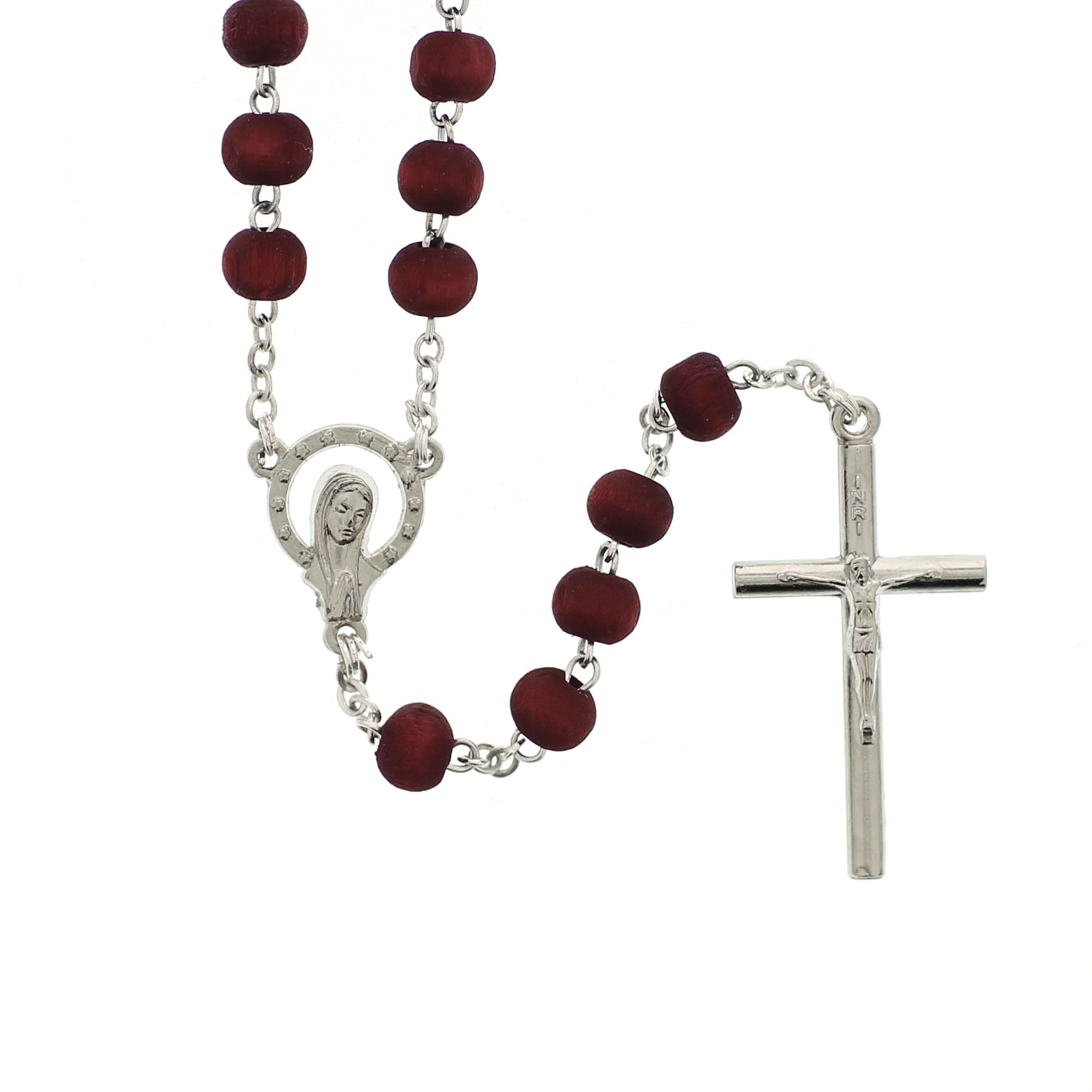
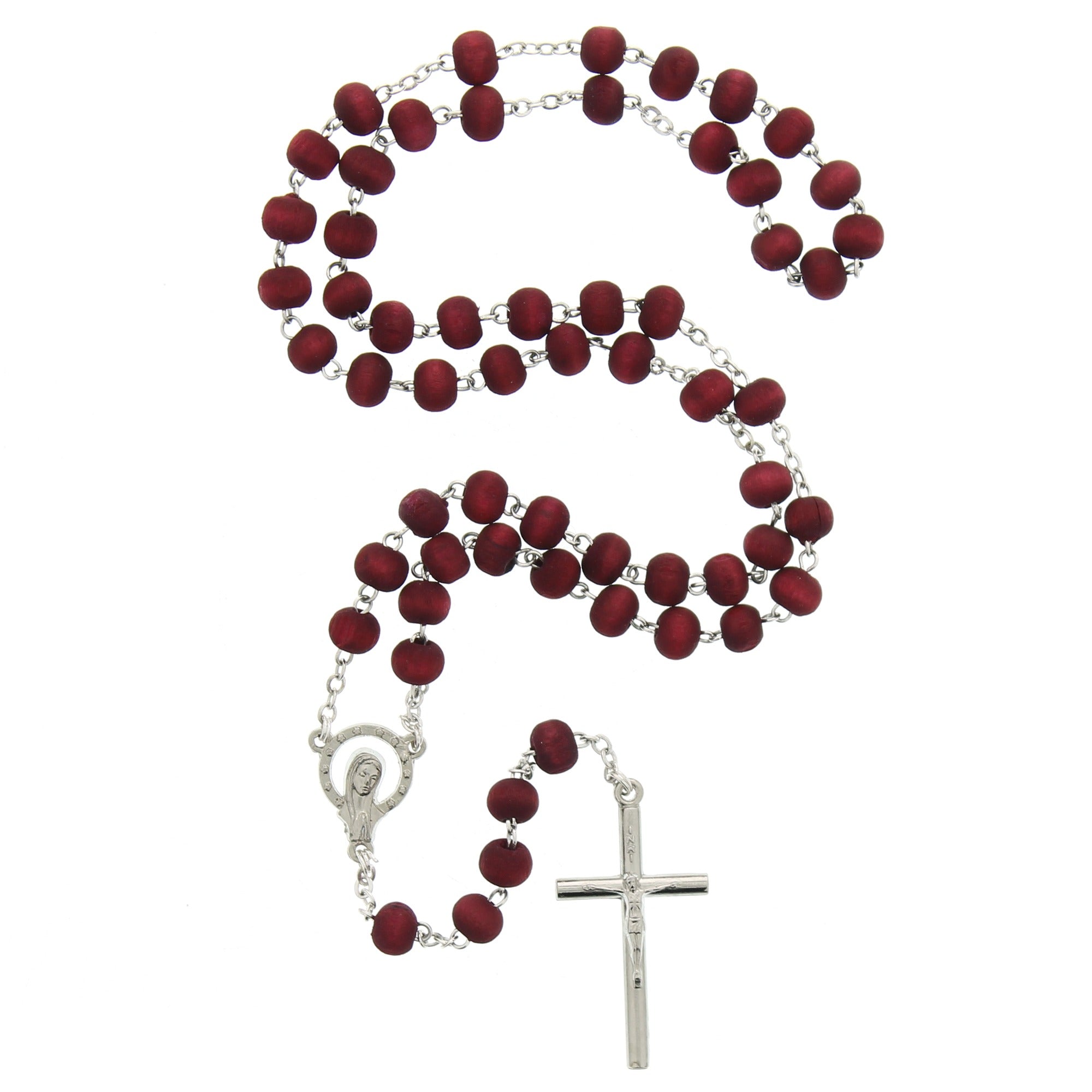
The Rose-Scented Red Wood Rosary offers a beautiful sensory reminder of the prayer traditionally associated with a "crown of roses" offered to Our Lady. With the gentle fragrance of roses accompanying the familiar movement from bead to bead, it can help draw us back to the real purpose of the Rosary: contemplating Jesus with Mary and allowing the mysteries of His life to take deeper root in our own. Purchase yours today at The Catholic Company!