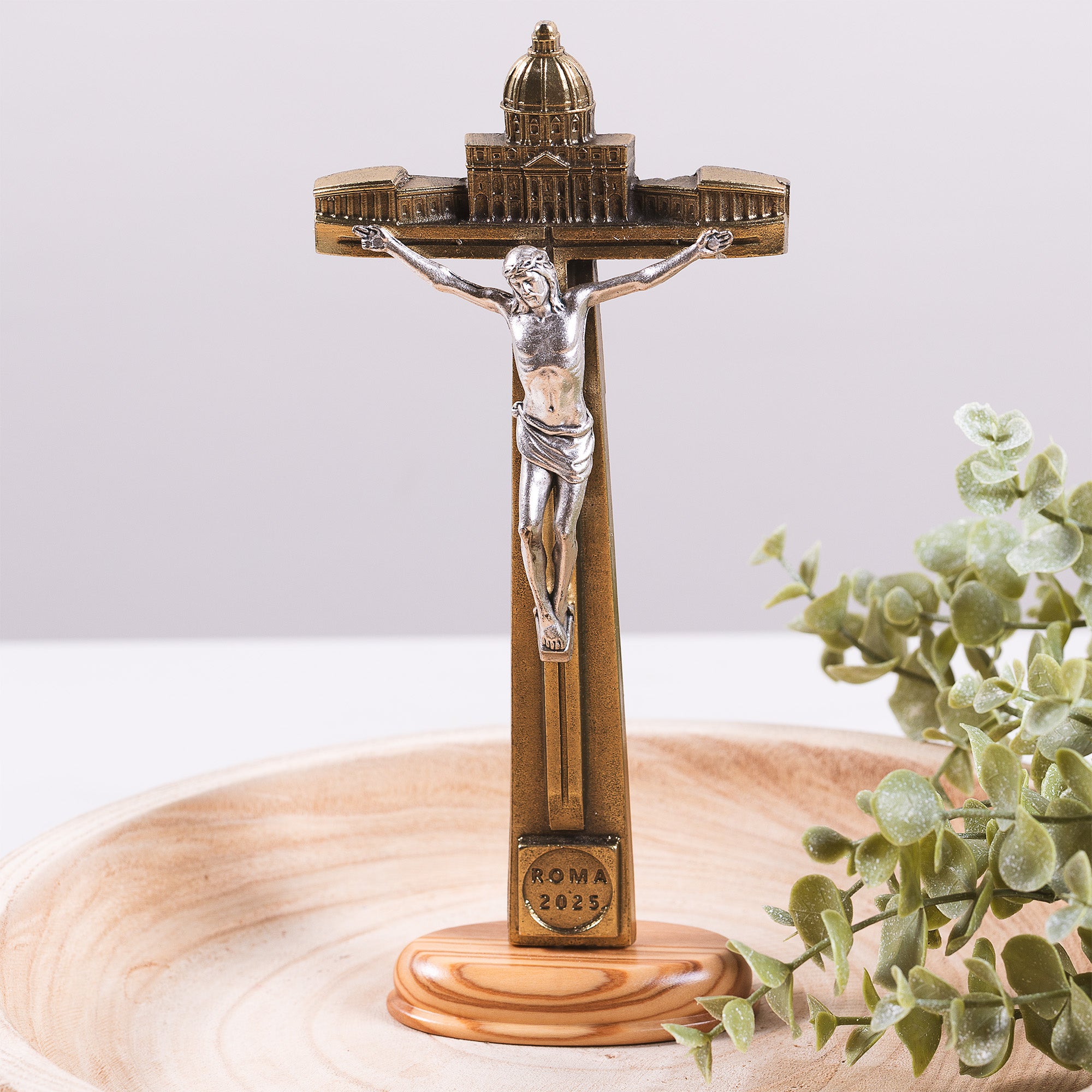


When most Catholics think of the Pope's church in Rome, they picture St. Peter's Basilica, with its magnificent dome rising above Vatican City. It is one of the most recognizable churches in the world, built over the tomb of St. Peter and visited by millions of pilgrims.
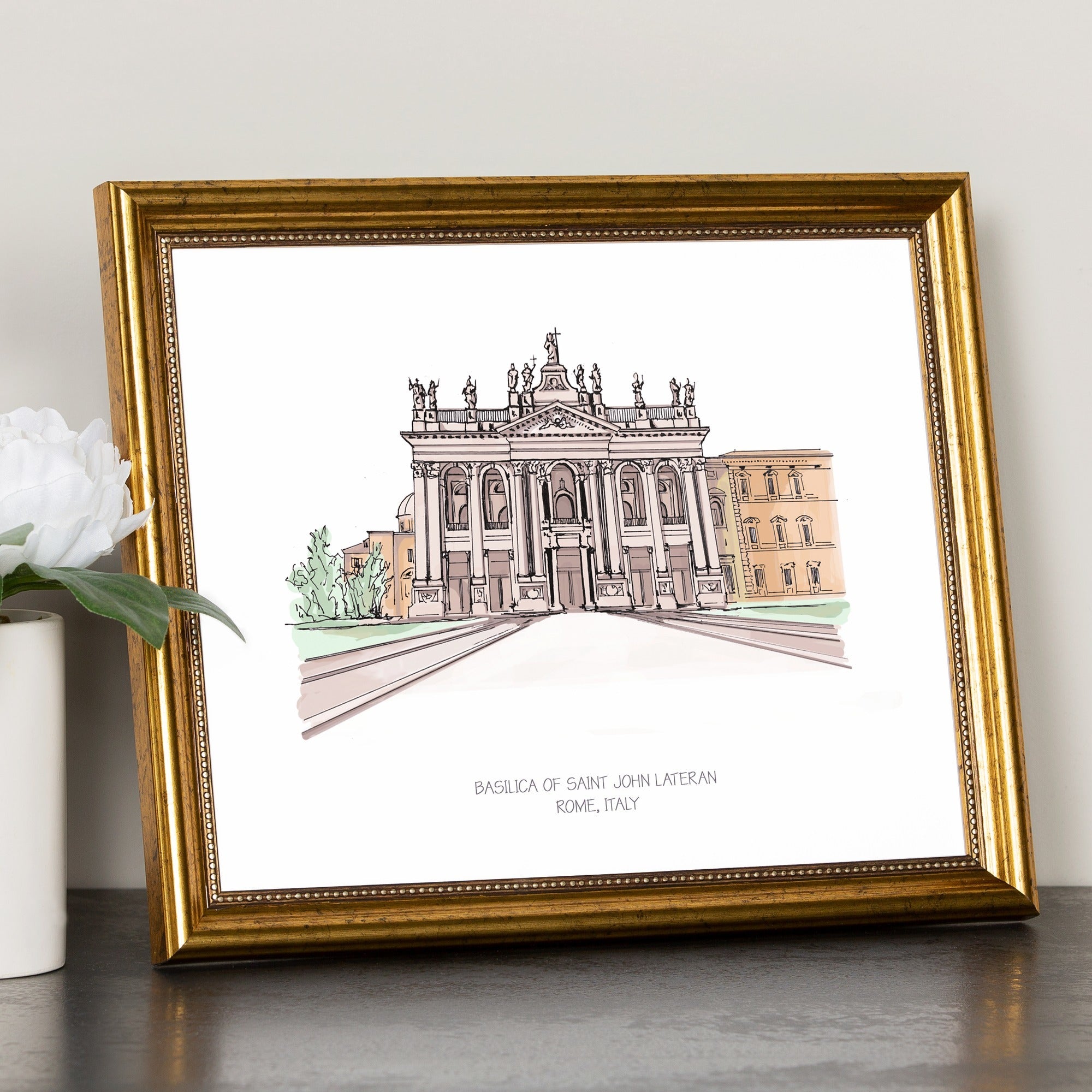
It may come as a surprise to many Catholics, but St. Peter's Basilica is not the Pope's cathedral. That distinction belongs to the Archbasilica of St. John Lateran, an ancient church in Rome that holds a unique place in Catholic history.
Every year on November 9, Catholics throughout the world celebrate the Feast of the Dedication of the Lateran Basilica, honoring a church whose history reaches back to the earliest centuries of Christianity. Why is this basilica so important, and what does its feast teach us about the history of the Catholic Church?
Why Is St. John Lateran Called the Mother of All Churches?
St. John Lateran is known as the "Mother and Head of All Churches" because it is the cathedral of the Bishop of Rome, who is also the Pope.
Every bishop has a cathedral, the principal church of his diocese, where his official teaching seat, or cathedra, is located. The word "cathedral" comes from this Latin term, which signifies the bishop's authority as shepherd and teacher of his people.
Although St. Peter's Basilica is closely associated with the papacy, St. John Lateran is the cathedral of the Diocese of Rome. It is here that the Pope's role as Bishop of Rome finds its particular liturgical expression. This distinction is more than an interesting historical detail. The Pope's ministry as successor of St. Peter is intimately connected to his office as Bishop of Rome, and his cathedral serves as a visible sign of the unity of the Universal Church.
The basilica's full name is the Archbasilica of the Most Holy Savior and Saints John the Baptist and John the Evangelist in the Lateran. Its principal dedication is to Christ the Savior, although it is commonly called St. John Lateran.
What is the History of St. John Lateran Basilica?
For nearly three centuries after the birth of Christ, Christians frequently endured persecution under the Roman Empire. Public Christian worship was not always possible, and believers often gathered in private homes and other places to celebrate the sacred mysteries.
That began to change in the early fourth century. In 313, Emperor Constantine and Emperor Licinius issued an agreement commonly known as the Edict of Milan, granting religious toleration to Christians and others throughout the empire.
The Laterani were a wealthy Roman family whose estate was confiscated by Emperor Nero during the persecutions. By Constantine’s reign, the property had become part of the imperial estate. Constantine donated the land to the Church, making possible the construction of the great basilica that would become the cathedral of the Bishop of Rome. St. John Lateran Basilica was dedicated during the pontificate of Pope Sylvester I, around the year 324.
Imagine what that moment must have meant to Christians whose parents and grandparents had lived through persecution! A faith that had once been practiced under the threat of death could now be celebrated openly in one of the greatest cities of the ancient world, within a church the Emperor sanctioned and help establish for his people.
St. John Lateran became a powerful symbol of Christianity's emergence into public life. For centuries, the Lateran complex also served as the principal residence of the popes. Over the course of its long history, the basilica endured fires, earthquakes, rebuilding, and restoration. Yet it has remained a remarkable witness to the endurance of the Catholic faith.
[[st-john-lateran-ink-watercolor-large-framed-prints,101-surprising-facts-about-church-history]]
Why Do Catholics Celebrate the Dedication of a Church?
At first glance, celebrating the dedication of a building might seem unusual. After all, the Church is not simply a collection of buildings. It is the Body of Christ, made up of the faithful united to Him through Baptism.
Still, Catholic churches are not merely ordinary buildings. When a church is dedicated, it is solemnly set apart for divine worship. Its altar becomes the place where the Holy Sacrifice of the Mass is celebrated, and its walls shelter the faithful as they encounter Christ in the sacraments throughout their lives, from birth until death.
The beauty of Catholic churches, from magnificent basilicas to humble chapels, is meant to lift our hearts toward heaven. Sacred architecture, stained glass, statues, and Catholic sacred art remind us that we are entering a place devoted to the worship of God.
Most importantly, in Catholic churches where the Blessed Sacrament is reserved, Christ Himself is truly present in the Eucharist. The Feast of the Dedication of St. John Lateran therefore reminds us not merely of a magnificent building in Rome, but of the sacred purpose of every Catholic church throughout the world.
What Does St. John Lateran Teach Us About the Church?
There is another beautiful meaning behind this feast. St. Paul reminds Christians that they themselves are God's temple:
"Do you not know that you are the temple of God, and that the Spirit of God dwells in you?" (1 Corinthians 3:16, NABRE)
Through Baptism, we become members of Christ's Body and dwelling places of the Holy Spirit. The visible church building points us toward this deeper spiritual reality. The stones of a basilica are joined together to form a beautiful place of worship. In a similar way, Catholics from every nation, language, and generation are united in the Body of Christ to form His Church.
This is why the dedication of St. John Lateran is celebrated far beyond Rome. The feast belongs to the whole Church, because it reminds us of our communion with the successor of St. Peter and with Catholics throughout the world. It recalls the victory of the Church in the face of persecution, and celebrates those who died so that future Christians could live and practice what we believe.
Our own parish churches participate in this same beautiful reality. Whether we worship in a centuries-old cathedral or a modest neighborhood parish, we gather around the same Eucharistic Lord.
Bringing the Beauty of the Church Into Our Homes
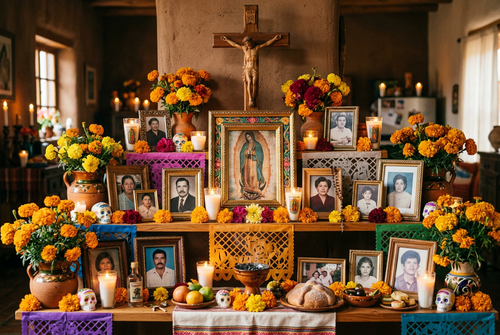
The reverence we show in church can also shape the way we live our faith at home. Catholic families have long surrounded themselves with reminders of God's presence: a crucifix in a prominent place, an image of the Sacred Heart, a statue of the Blessed Mother, or a holy water font near the door.
These sacramentals and sacred images do not replace the worship we offer to God in church. Rather, they help extend a spirit of prayer into our daily lives, reminding us that our homes, too, should be places where Christ is welcomed and honored.
Thoughtfully chosen Catholic home decor can become a quiet invitation to prayer, helping family members turn their thoughts toward God amid the ordinary activities, struggles and joys of every day.
A Feast That Reminds Us Where We Belong
The next time you see a photograph of St. Peter's Basilica, remember that another extraordinary church in Rome holds the title of the Pope's cathedral.
St. John Lateran has stood through centuries of change, witnessing the triumphs and trials of Christian history. Its feast reminds us that the Church is not defined by the beauty of her buildings, but by Christ, who dwells among His people.
On November 9, as Catholics around the world celebrate the dedication of this ancient basilica, we are invited to give thanks for the gift of the Church, for the sacred places where we encounter the Lord, and for the unity of faith that binds us together across centuries and continents.
For wherever Catholics gather around the altar in communion with the Church, they belong to something far greater than any single building: the living Body of Christ.
[[major-basilicas-coasters-set-of-4, a-history-of-the-church-in-100-objects]]
Read Next: These Sacred Walls - A Meditation on the Parish Church