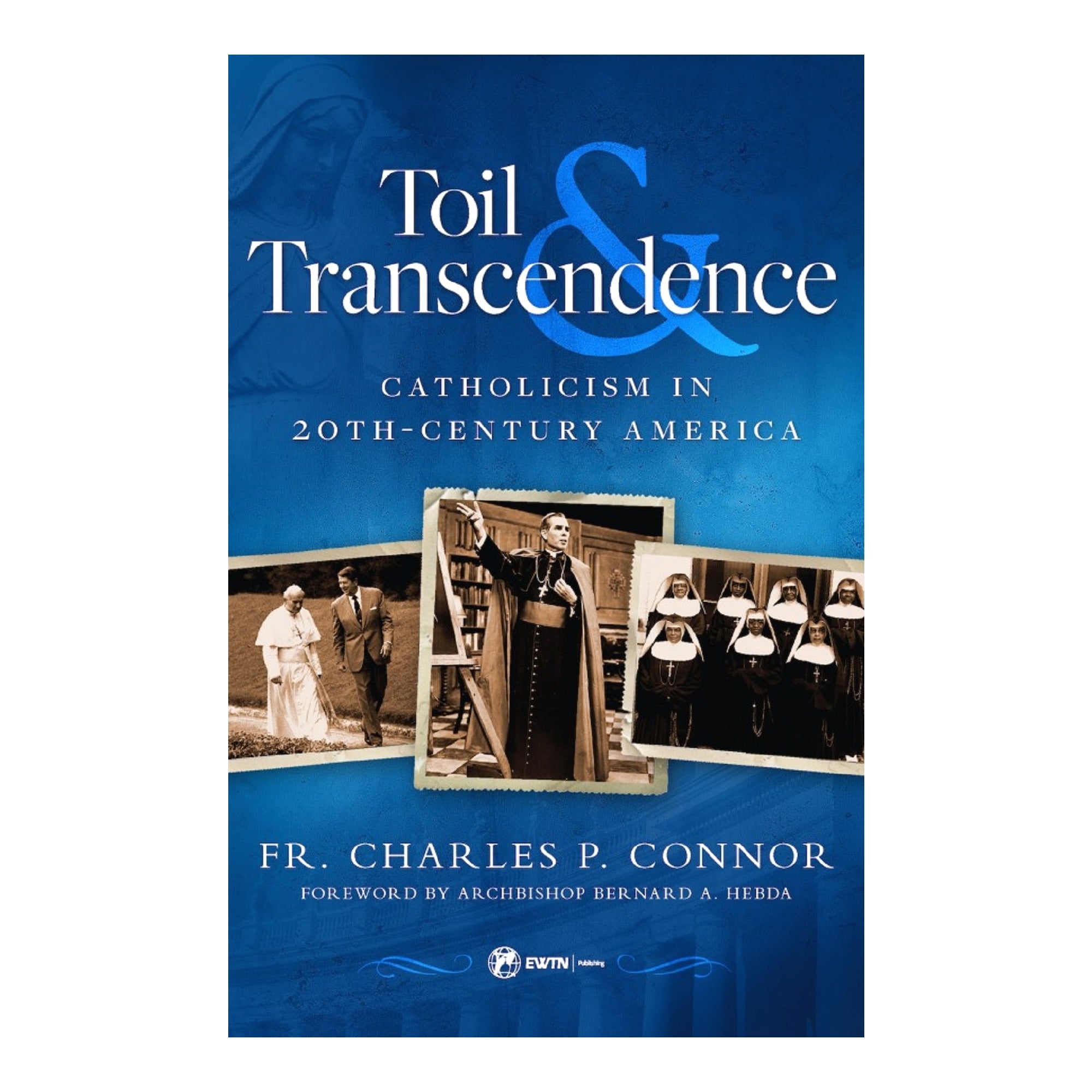
Toil and Transcendence: Catholicism in 20th-Century America

Final Sale!
Sale price$15.48 Regular price$19.99
Save $4.51

"Toil and Transcendence: Catholicism in 20th-Century America" by Fr. Charles Connor offers an in-depth look at the rise of Catholicism in America. Discover the roots of anti-Catholic sentiments, Notre Dame students' defiance against the KKK, Alfred E. Smith's influence on politics, and key events like FDR's interactions with the Vatican. Dive into this comprehensive exploration of Catholicism's growth and influence.


Order today and get it by: Dec 20 - 23, 2025
Money Back
Guarantee
Safe
Shipping
Easy
Returns
Quality
Guarantee

Description

  • In these informative and entertaining pages, you’ll learn:
  • What motivated the virulent anti-Catholicism of early twentieth-century America
  • The daring way Notre Dame students responded when the KKK held a rally in South Bend
  • And much more

By the end of the Civil War, barely four million Catholics lived on American soil. A century later, more than 43 million Americans were Catholic, making the Church a dominant force in American culture and politics.

The twentieth century was a springtime for the American Church, which witnessed the dramatic expansion of American dioceses, with towering new churches erected even blocks apart. Catholic schools were swiftly built to accommodate the influx of Catholic schoolchildren, and convents and monasteries blossomed as vocations soared.  

The Catholic hierarchy and laity factored into many of the great stories of twentieth-century America, which are told here by one of our country’s foremost experts on Catholic American history, Fr. Charles Connor.

In these informative and entertaining pages, you’ll learn:

  • What motivated the virulent anti-Catholicism of early twentieth-century America

  • The daring way Notre Dame students responded when the KKK held a rally in South Bend

  • One businessman’s bold attempt to build Catholic colonies in Nebraska and Minnesota

  • How, in 1928, the first Catholic major party nominee for president, Alfred E. Smith, turned New England into a reliable voting bloc for the Democrats

  • FDR’s response to New York’s Cardinal Spellman, who pleaded with the president to protect the Vatican and the pope from German forces during World War II

  • How Bishop Fulton Sheen’s phone call to a political operative accused of spreading anti-Catholic messages led to his conversion to the Faith

  • How, finally, in 1984, the United States was able to formalize diplomatic relations with the Holy See

  • and much more!


SKU: 1006746