Eternal Father, I offer Thee the Most Precious Blood of Thy Divine Son, Jesus, in union with the masses said throughout the world today, for all the holy souls in purgatory, for sinners everywhere, for sinners in the universal church, those in my own home and within my family. Amen.
St. Gertrude's Prayer
My brother-in-law, Terry, died a few years ago when his heart suddenly stopped. A faithful Catholic, Terry went to confession often and had a special devotion to St. Joseph. I spoke to him on the phone almost weekly, and he would occasionally share with me a quote from his favorite little book (I think it was the only book he owned): The Way, by St. Josemaría Escrivá.
We all miss Terry, and we pray for him as often as possible at Mass and in our daily prayers.
Others have died whom I carry with me in prayer as well. My father died by suicide, and I pray for his soul often. Over the years, I have learned a great deal from Fr. Chris Alar, particularly through his book on suicide and the Catholic Church (After Suicide: There's Hope For Them and For You). His explanations of the Church's teaching on God's mercy, our hope for those who have died by suicide, and the importance of praying for them have been a source of comfort to me. There is so much we cannot know about another person's final moments, but we can entrust them to God's mercy. And we can pray.
Last summer, a dear friend died after a battle with cancer. She was a mother of eight children and learned she had cancer when she delivered her eighth baby. She was a woman of deep faith, and toward the end of her life, she asked me to pray to St. Joseph for her husband. I think of her often, and when I pray for her husband, I also pray for her soul. It is consoling to be able to do that. I cannot change what happened or take away the sorrow her family has endured, but I can continue to love her through my prayers.
The mystery of life after death
I think that is one of the beautiful things about praying for those who have died. We may no longer be able to speak to them, or care for them in the way we once did, but we can still express our love for them through prayer. In fact, our faith tells us just how important those prayers can be.
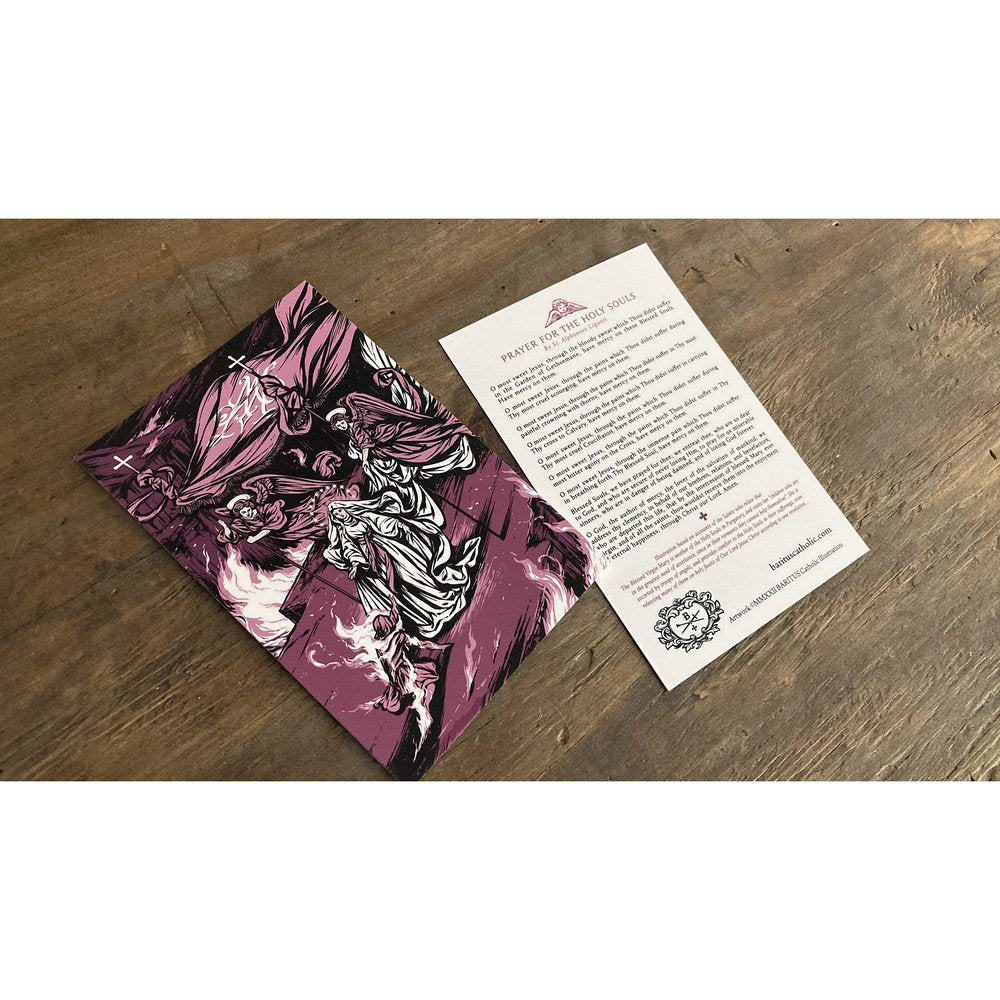
The prayer traditionally attributed to St. Gertrude the Great (above) is a beautiful way to pray for our loved ones, both living and deceased, entrusting them to God's mercy through the Precious Blood of Jesus
My brother-in-law Terry struggled for most of his life with addictions and dealt with a lot of regrets.
Every so often, while praying for him, I recall Terry’s sense of humor. I can almost imagine him telling me some joke about dying first or about what he now knows that I don’t. (He would often tease me and call me his spiritual director).
While I might get a chuckle out of thinking about him in this way, there is in fact a certain mystery that I should also acknowledge.
What does he understand now that I cannot? How are we still connected in the Body of Christ?
[Read Twenty Ways to Pray for the Poor Souls in Purgatory]
What does the Mystical Body of Christ really mean?
Not long ago during a homily at Mass, the priest expounded on the beauty of the Communion of Saints. It made me think about how often I recite the Apostles’ Creed. Each time I do, I claim that I believe in the Communion of Saints. I say the prayer so often that I don’t necessarily think about what I am saying. What exactly is the Communion of Saints?
If we look to the Catechism of the Catholic Church, the answer is straightforward: “The communion of saints is the Church” (946). A simple definition for what I now realize is a treasured reality of the Church!
This reality is also referred to as the Mystical Body of Christ. Christ is the Head of this Body and the Body is composed of the Church Triumphant in heaven, the Church Suffering in purgatory, and the Church Militant on earth (that’s you and me).
The Catechism explains how the Mystical Body produces and encourages charity among the faithful: “From this it follows that if one member suffers anything, all the members suffer with him, and if one member is honored, all the members together rejoice” (CCC 949).
As the Church on earth, we can aid the souls in purgatory by offering our own prayers and sufferings since they cannot help themselves.
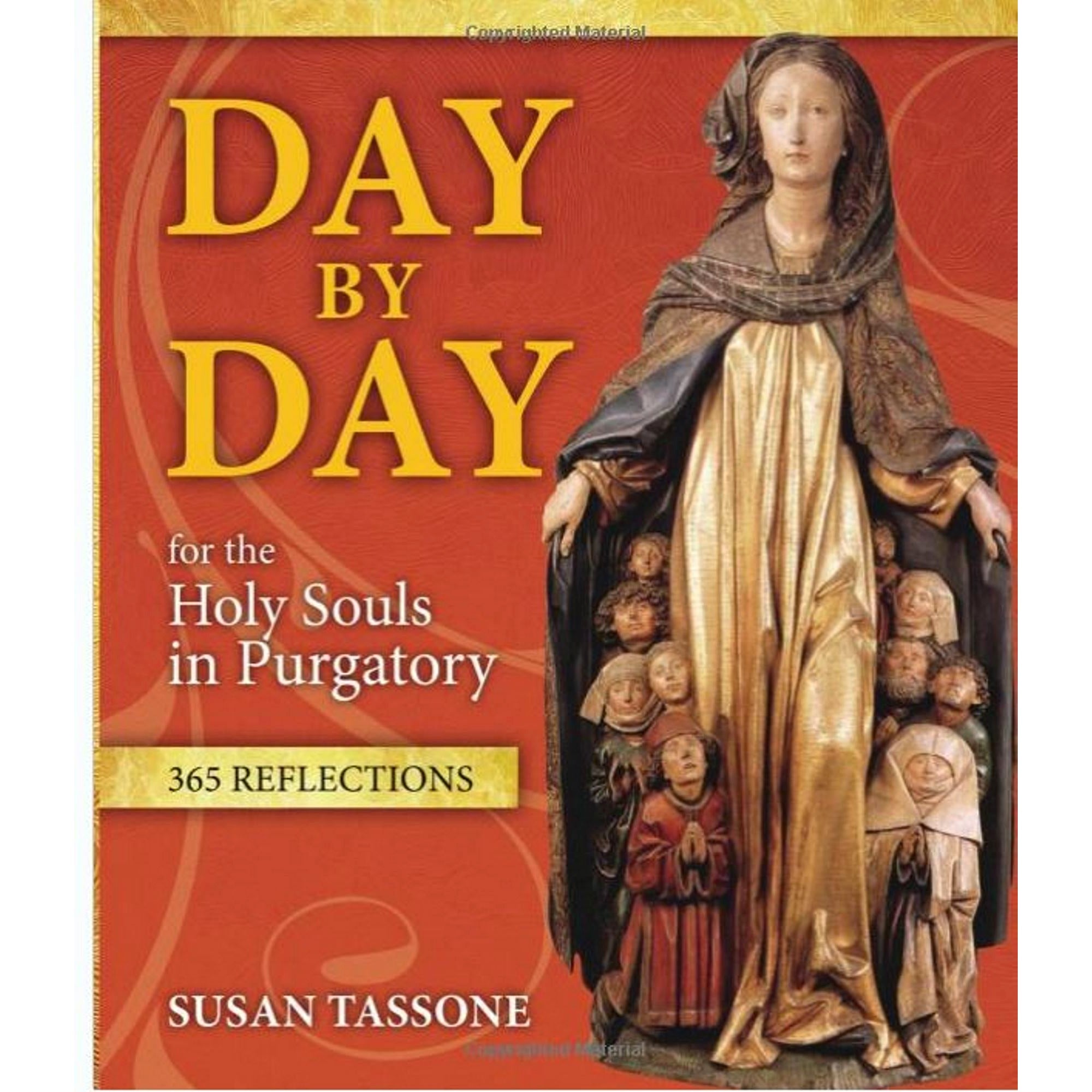
[[holy-souls-rosary,day-by-day-for-the-holy-souls-in-purgatory-365-reflections]]
Truly, this teaching should bring us great consolation.
Pope Benedict XVI beautifully explains the power of charity within the Communion of Saints and how it extends even after death:
The belief that love can reach into the afterlife, that reciprocal giving and receiving is possible, in which our affection for one another continues beyond the limits of death—this has been a fundamental conviction of Christianity throughout the ages and it remains a source of comfort today…
Pope Benedict XVI, Introduction To Christianity
How do our prayers reach beyond death?
I’ve realized, as I have prayed for my loved ones who have died, that we truly are enfolded in a great mystery. Although time does not exist in the same way after death, in some way they are ahead of me on this journey and in that way “know” more than I do. Still, through my prayers, I am connected to them. In fact, I have an obligation to pray for them in charity as a sister in the Body of Christ.
We cannot know for certain where our dead loved ones are, nor should we presume to know. But we do know that to have faith is to have hope. Hope extends beyond the here and now. Hope is also part of the duty we have towards those we love and, in some ways, it is a precursor to our prayers. (If we have no hope, why pray at all?)
Pope Benedict spoke about this truth regarding purgatory in his encyclical Spe Salvi:
Now a further question arises: if “Purgatory” is simply purification through fire in the encounter with the Lord, Judge and Saviour, how can a third person intervene, even if he or she is particularly close to the other? When we ask such a question, we should recall that no man is an island, entire of itself…No one lives alone. No one sins alone. No one is saved alone. The lives of others continually spill over into mine: in what I think, say, do and achieve. And conversely, my life spills over into that of others: for better and for worse.
So my prayer for another is not something extraneous to that person, something external, not even after death. In the interconnectedness of Being, my gratitude to the other—my prayer for him—can play a small part in his purification.
Pope Benedict XVI, Spe Salvi
As with so many aspects of our faith, we can stand in awe at the mystery here. Especially during the upcoming month of the Holy Souls (November), let us bring this mystery to mind often and pray for ALL the Holy Souls.
My belief in the Mystical Body of Christ allows me to rest in the hope that my prayers for my loved ones and all the faithful departed may assist them in their journey toward heaven and that, one day, they may also intercede for me from heaven.
Find our Holy Souls Collection at The Catholic Company here.
This article first appeared in the Good Catholic series, Purgatory: Cleansing Fire. Discover this acclaimed series now.
[[after-suicide-theres-hope-for-them-and-for-you-divine-mercy-decade-rosary-chaplet-gift-set,the-chaplet-of-the-divine-mercy-prayer-card]]